

Key Takeaways
- Illinois pest activity shifts with temperature, moisture, and access to food and shelter.
- Spring and summer prevention focuses on standing water, food sources, and developing nests.
- Fall sealing and exterior repairs help limit the number of rodents and insects seeking winter shelter.
- Winter inspections can uncover hidden activity around plumbing, appliances, and storage areas.
- Repeated sightings, damage, droppings, or nearby nests warrant identification and, when needed, professional assessment.
Illinois homeowners see pest activity change with the weather, from damp spring foundations and humid summer patios to chilly fall evenings around garages and basements. A seasonal approach makes it easier to spot conditions that attract pests before a small issue turns into a recurring problem. For homeowners who need help evaluating a persistent concern, Pointe Pest Control is a family-operated pest management company serving Illinois, including the Chicago area, with residential services for common household pests, rodents, mosquitoes, bed bugs, and termites. That local service experience makes the company a relevant resource when a home needs more than routine prevention.
This calendar is not about reacting to every insect that appears indoors. One bug near a door or window may have wandered in by chance. Repeated sightings, new damage, droppings, nests, or pests appearing in several areas of the home are more useful signs that it is time to investigate.
Why Pest Activity Changes With the Seasons
Temperature, moisture, daylight, food, and shelter all influence where pests spend their time. When the ground warms and rain increases, ants may become more noticeable around foundations and moisture-prone rooms. In hot weather, mosquitoes, flies, and stinging insects may be more active around yards, patios, and trash areas. Once temperatures drop, mice and overwintering insects often look for protected gaps in homes, garages, and outbuildings.
Illinois properties also vary widely. A shaded yard with dense landscaping may hold moisture longer than an open lot. A home near a wooded area, field, alley, pond, or mature tree canopy may have different pest pressures than a home in a newer subdivision. Watching patterns around a specific property is usually more useful than relying on a single calendar date.
Spring: Watch for Ants, Termites, Mosquitoes, and Wasps
Spring rain and warming soil can bring ants closer to homes, particularly where water collects near the foundation or plumbing leaks create moisture indoors. Kitchens, bathrooms, laundry rooms, and utility spaces are worth checking if ants repeatedly appear along baseboards or counters.
Spring is also a time to watch for termite swarmers, which are winged reproductive termites that may emerge near windows, doors, lights, or wooden structures. Seeing swarmers does not identify the source on its own, but mud tubes, damaged wood, or repeated activity around the home deserve closer attention.
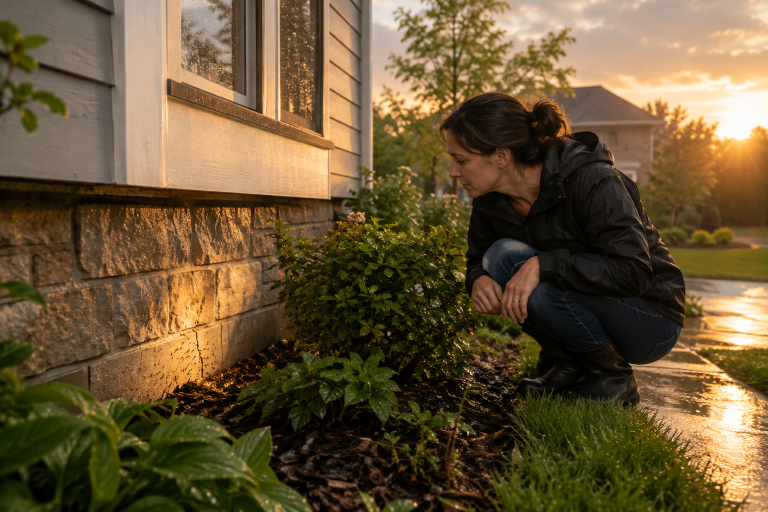
Mosquitoes need water to develop, and even small outdoor containers can hold enough water to become breeding sites. The University of Illinois Extension notes that clogged gutters, toys, old tires, pot trays, and birdbaths can all hold water, so removing standing water around the home is an important early-season habit. Wasp queens may also begin looking for sheltered nesting sites under eaves, in sheds, behind shutters, and around decks.
Spring Home Checklist
- Inspect foundation walls, siding, and utility openings for cracks, gaps, mud tubes, or soft wood.
- Clean gutters and make sure downspouts carry water away from the house.
- Repair torn window screens and worn door sweeps.
- Empty water from containers, tarps, planters, toys, and low spots in the yard.
- Trim branches and plants that touch siding, windows, or rooflines.
Summer: Reduce Mosquitoes, Flies, Ants, and Stinging Insects
Summer heat can speed up insect activity, and outdoor food sources often make patios and yards more inviting. Crumbs under a grill, open pet food bowls, spilled drinks, overflowing garbage, and sticky recycling can attract ants and flies. Closing trash containers and cleaning outdoor eating areas promptly can reduce those opportunities.
Mosquitoes commonly rest in shaded, humid vegetation during the day and may become especially bothersome around dawn and dusk. Keep grass trimmed, thin overly dense vegetation near seating areas, and use insect repellents only according to their label directions. Outdoor fans can also make patios less comfortable for mosquitoes, as mosquitoes are weak fliers.
Wasps and yellowjackets may become more visible near eaves, decks, outdoor dining areas, and garbage bins. Avoid swatting at or disturbing a suspected nest. A nest near a frequently used entrance, play area, or living space calls for careful assessment, especially for households with someone who has a known sting allergy.
Summer Yard and Patio Tips
- Empty water-holding items at least weekly.
- Keep garbage lids closed and rinse food containers before recycling.
- Clean grill grease, spills, and outdoor dining surfaces after use.
- Store ripe fruit, pet food, and birdseed in ways that limit easy access.
- Look around eaves, railings, sheds, and play equipment for developing nests.
Fall: Prepare for Rodents and Overwintering Insects
As nights become cooler, mice and other pests may seek steadier shelter indoors. Boxelder bugs, stink bugs, and cluster flies can gather on sunny exterior walls before slipping through small openings. Mice can use gaps around garage doors, basement windows, vents, pipe penetrations, and damaged siding.
Fall is a practical time to reduce cover close to the home. Firewood, leaf piles, dense mulch, and stored items stacked against exterior walls can create sheltered pathways or hiding areas. Move these materials away from the foundation when possible, and inspect the exterior before colder weather makes repairs less convenient.
Fall Exclusion Checklist
- Replace worn garage-door seals and check door sweeps.
- Inspect attic vents, crawl-space openings, and foundation penetrations.
- Store food, birdseed, and pet supplies in sealed containers.
- Move firewood and yard debris away from exterior walls.
- Watch for droppings, gnaw marks, nesting material, or scratching sounds.
Winter: Hidden Indoor Activity Still Matters
Cold weather may limit outdoor insect activity, but it does not eliminate pests already inside. Rodents can remain active in walls, attics, garages, crawl spaces, and storage areas. Cockroaches and other indoor pests may also persist where warmth, moisture, and food are available.
During winter, check under sinks, around appliances, beside water heaters, and near plumbing lines for leaks or moisture. Reducing clutter and repairing water problems makes it easier to inspect these areas and removes some of the conditions pests use for shelter.
A Simple Year-Round Pest Prevention Plan
A practical plan combines inspection, sanitation, exclusion, moisture control, and targeted response. The EPA describes integrated pest management principles as an approach built around monitoring, accurate identification, prevention, and the selection of an appropriate control method when action is needed.
- Inspect: Check exterior walls, entry points, moisture-prone rooms, and storage areas.
- Identify: Confirm what pest is present before choosing a treatment.
- Remove: Limit food, water, clutter, and cover.
- Seal: Close gaps around doors, vents, pipes, wires, and siding.
- Monitor: Note where pests appear, when activity occurs, and whether it is increasing.
When Professional Help Makes Sense
Professional evaluation can be useful when sightings persist after cleanup and sealing efforts, when a hidden nest or colony is suspected, or when signs indicate rodents in walls or attics. Persistent droppings, chewed materials or wires, strong odors, repeated termite swarms, and stinging insect nests near entrances should not be ignored.
Conclusion: Use the Calendar as a Reminder
Seasonal pest prevention does not require a complicated routine. A few focused checks in spring, summer, fall, and winter can reveal standing water, food sources, entry points, and moisture issues early. By responding to the conditions around their own homes, Illinois residents can make each season less welcoming to unwanted pests.