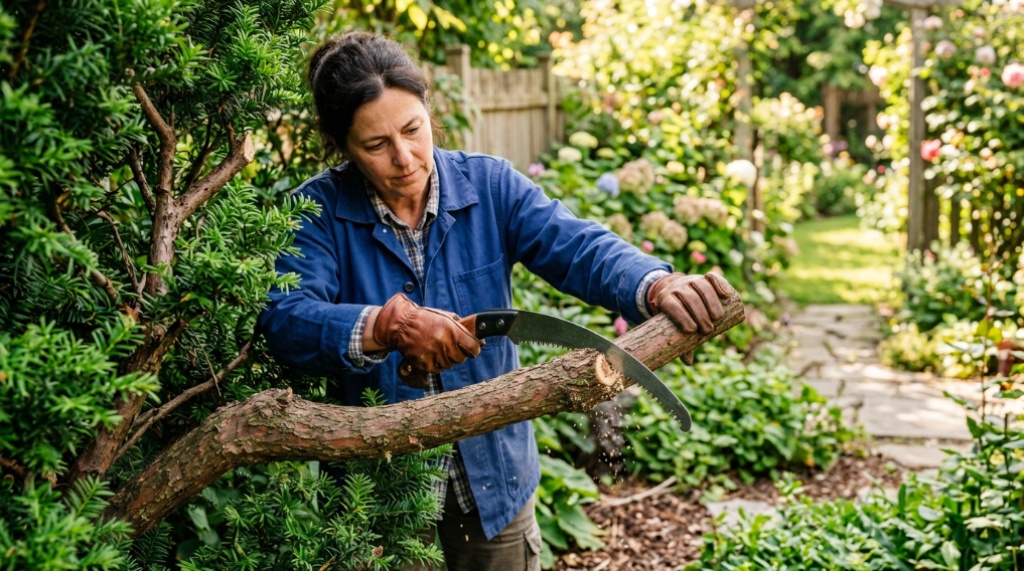
The wrong pruning saw turns a ten-minute cleanup into an afternoon of frustration. You either fight a dull blade through every branch, or you grab a tool so heavy your forearm gives out before the hedge is halfway done. Most homeowners eventually realize that a lightweight battery powered pruning saw for yard work hits the sweet spot between reach, power, and fatigue-free control. But battery saws are not the only option, and picking the wrong style for your branches wastes money. Here is how to match the saw to the job.
Quick Answer
Match the saw to branch thickness, not to brand loyalty. Use bypass pruners for anything under 1/2 inch, a pruning saw or lopper for 1/2 to 2 inches, and a battery-powered chainsaw or reciprocating saw for branches over 2 inches. Choose battery power over gas or corded models when you need quiet operation, low vibration, and access to tight spaces. Match blade teeth to wood type: coarse teeth for green wood, fine teeth for dry, hard branches.
Key Takeaways
- Branch diameter is the single most important factor when choosing a pruning saw — it determines whether a hand tool, reciprocating saw, or chainsaw is the right fit.
- A lightweight battery powered pruning saw is the best all-around choice for most home landscapes because it balances portability, cutting power, and reduced hand fatigue.
- Blade tooth count matters: 6–8 teeth per inch cuts green wood fast, while 10–12 TPI handles dry, dense limbs cleanly.
- Corded and gas saws have legitimate roles, but for most residential pruning jobs, battery models now match or exceed their practical performance.
- A clean pruning cut heals faster than a ragged one — a sharp, appropriate saw is a tree-health decision, not just a convenience decision.
Start With the Branch, Not the Saw
Most people buy a saw first and then discover it does not match their trees. Flip that process. Walk your yard and estimate the thickest branch you realistically need to cut. That single measurement eliminates about half the options on any store shelf.
Pruning cuts fall into rough categories:
- Under 1/2 inch: Hand pruners (bypass style) handle this cleanly and quickly. A saw is overkill and can leave a ragged cut on thin stems.
- 1/2 to 2 inches: This is the classic pruning saw and lopper range. A folding hand saw or a compact battery reciprocating saw works well here.
- Over 2 inches: Hand saws become slow and tiring. A battery-powered chainsaw or a recip saw with a pruning blade is the practical choice.
If your yard has ornamental shrubs and a few small fruit trees, you may never need anything beyond a hand saw. If you maintain mature shade trees, storm-damaged limbs, or dense hedges, a powered saw pays for itself in time and effort saved.
Saw Types Compared: Which One Fits Your Yard
There are five saw categories homeowners commonly consider for pruning. Each has a real use case — and a real limitation.
| Saw Type | Best For | Main Advantage | Main Limitation |
|---|---|---|---|
| Hand pruning saw (folding or fixed) | Branches up to 2 inches | Lightweight, inexpensive, no power source needed | Slow on thick limbs, tiring on large jobs |
| Battery-powered pruning saw / mini chainsaw | Branches 1–6 inches | Quiet, low vibration, one-hand control | Limited runtime per battery, bar length restricts cut size |
| Corded electric chainsaw | Continuous cutting near an outlet | Unlimited runtime, consistent power | Extension cord limits reach and creates trip hazards |
| Gas chainsaw | Large limbs, heavy-duty jobs | High power, no cord or battery limit | Heavy, loud, requires fuel mixing and maintenance |
| Reciprocating saw (sawzall style) | Mixed pruning and demolition tasks | Versatile, easy blade changes | Less precise than a chainsaw for clean pruning cuts |
For most homeowners, a battery-powered pruning saw occupies the most useful middle ground. It cuts faster than a hand saw, weighs far less than a gas saw, and does not tether you to an outlet like a corded model.
Why Battery Power Has Become the Default Choice
Battery technology has changed the pruning tool market in the last decade. Modern lithium-ion platforms deliver enough torque to cut through 4-inch green limbs without stalling, and the tools themselves often weigh under 5 pounds. That matters more than most shoppers expect.
Pruning involves awkward positions. You reach overhead, lean into hedges, and cut at angles that put strain on your wrist and shoulder. A heavy saw becomes exhausting within minutes. A lighter tool lets you work longer, cut more branches, and keep better control — which reduces the risk of a messy cut or a kickback.
Battery saws also start instantly. There is no pull cord, no choke, no warm-up. If you only need to remove two dead branches, you can grab the saw and be done in 90 seconds instead of spending five minutes coaxing a gas engine to life.
The trade-off is runtime. Most compact battery pruning saws run 20–40 minutes per charge depending on the battery size and wood hardness. For a typical residential pruning session, that is plenty. For all-day tree work, you would want spare batteries or a larger platform, For more great lifestyle tips and gear ideas, check out our guide on how to style your teen’s Voyager Skateboard in FL.
Blade and Chain Details That Affect Cut Quality
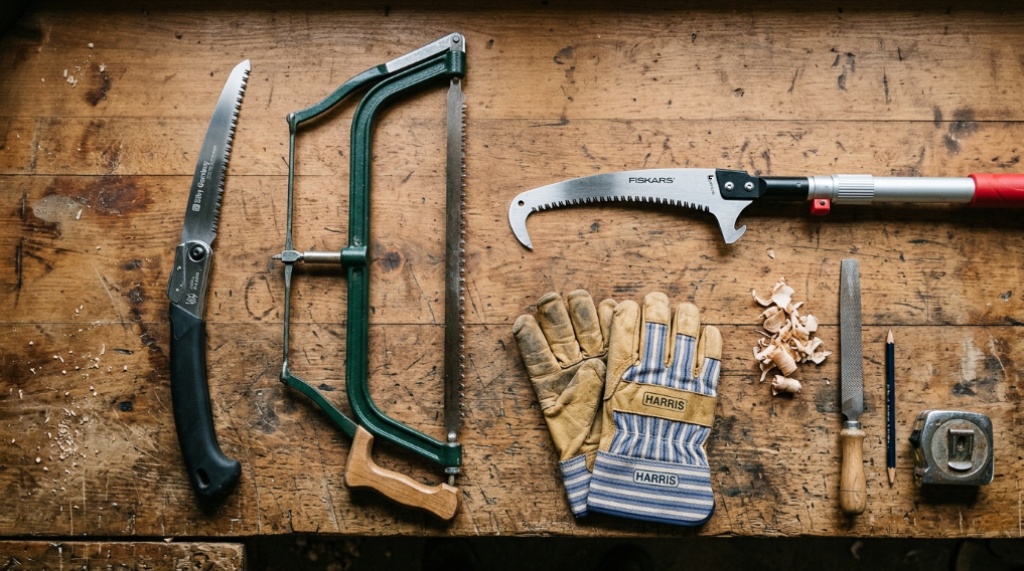
Two saws with similar power can perform very differently based on their cutting edge. This is where most buyers overlook important details.
Tooth Count (TPI)
Teeth per inch determines how the saw bites into wood. Low TPI (6–8) creates a fast, aggressive cut ideal for green, sappy wood. High TPI (10–12) cuts more slowly but leaves a smoother finish on dry, hard branches. For general yard work, 8 TPI is a reasonable compromise.
Blade or Chain Sharpness
A sharp saw cuts in a few strokes; a dull one requires pressure and creates a ragged wound. Ragged cuts expose more inner wood to disease and insects, and they heal more slowly. Sharpening a hand saw or replacing a chain costs little compared to the damage a dull blade can do to a tree.
Bar Length
On a battery chainsaw, bar length determines the maximum branch you can cut in one pass. A 6-inch bar handles branches up to roughly 6 inches, though cutting at the bar’s limit is slow and strains the motor. Choosing a bar slightly longer than your thickest expected branch gives you margin.
Matching the Saw to the Plant
Different plants respond differently to pruning, and the saw you choose affects how well they recover.
- Ornamental shrubs (boxwood, hydrangea, azalea): Thin stems and dense growth. Bypass pruners and a small hand saw are usually enough. Powered saws can bruise thin stems if you are not careful.
- Fruit trees (apple, pear, cherry): Require clean cuts on branches 1–3 inches. A sharp pruning saw or compact battery chainsaw works well. Avoid crushing cuts that damage the branch collar.
- Shade trees (oak, maple): Larger limbs, often 3–6 inches. A battery chainsaw is the practical tool. For anything over 6 inches, consider a professional arborist.
- Hedges and privacy screens: Many small cuts rather than a few large ones. A lightweight battery saw or reciprocating saw with a pruning blade speeds this up significantly.
- Storm-damaged limbs: Often twisted and under tension. A reciprocating saw handles awkward angles better than a chainsaw because the blade reaches into tight spots.
Common Mistakes When Buying a Pruning Saw
Several recurring errors lead to disappointing purchases.
- Buying based on bar length alone. A long bar does not help if the motor lacks torque. Power and chain speed matter as much as reach.
- Ignoring weight. A 2-pound difference feels minor in the store and enormous after 20 minutes of overhead cutting.
- Choosing a saw that is too big. A heavy gas chainsaw for a few shrubs is overkill and increases safety risk.
- Choosing a saw that is too small. A mini saw that stalls on every 4-inch limb wastes time and overheats the motor.
- Skipping safety gear. Even small battery chainsaws can cause serious cuts. Eye protection, gloves, and secure footing are non-negotiable.
- Neglecting maintenance. Chain tension, bar oil, and blade sharpness determine how long any saw lasts.
Practical Tips for Cleaner Cuts
The tool matters, but technique determines the outcome.
- Cut just outside the branch collar — the swollen area where the branch meets the trunk. Cutting flush into the trunk removes the tree’s natural healing tissue.
- For branches over 2 inches, use the three-cut method: an undercut, a top cut further out, and a final clean cut at the collar. This prevents bark tearing as the limb falls.
- Do not force a dull blade. Pressure causes kickback and ragged cuts.
- Clean sap and debris off the blade or chain after each session to prevent rust and maintain cutting efficiency.
- Prune in late winter or early spring for most species, when the tree is dormant and healing is fastest.
Frequently Asked Questions
What size pruning saw do I need for most yard work?
A saw with a 6 to 8-inch cutting capacity covers the majority of residential pruning tasks, including shrubs, small trees, and medium limbs. If your yard has large shade trees, a saw with a 10-inch or longer bar may be necessary, but those limbs often warrant professional attention.
Is a battery pruning saw strong enough for thick branches?
Modern battery pruning saws can cut through branches up to 4–6 inches depending on the model and battery. Beyond that, motor strain and slow cutting make them impractical. For larger limbs, a gas chainsaw or professional arborist is the better path.
Can I use a reciprocating saw for pruning?
Yes, with the right blade. A pruning-specific reciprocating blade cuts green wood efficiently and reaches into tight spaces where a chainsaw bar cannot fit. The cut is slightly less clean than a chainsaw, so reserve it for rougher work or storm damage cleanup.
How often should I sharpen or replace a pruning blade?
Sharpen a hand pruning saw after roughly every 10–15 hours of use, or when it starts requiring noticeable pressure. Replace a chainsaw chain when teeth become rounded or the saw cuts in a curve. Sharp tools cut faster and leave healthier wounds on the tree.
Do I need a chainsaw for pruning shrubs?
Usually not. Most shrubs have thin, dense stems that hand pruners and loppers handle faster and more precisely. A chainsaw is more appropriate for hedges with woody stems over 1 inch or for renovation pruning where many thick branches need removal at once.
What safety gear should I wear when pruning?
At minimum: safety glasses, work gloves, and closed-toe shoes with good grip. When using a chainsaw, add hearing protection and cut-resistant chaps. Never cut overhead without eye protection, and keep both hands on the tool whenever the design allows it.
Conclusion
Choosing the right pruning saw comes down to matching the tool to your branch sizes and the amount of work you do. Hand saws handle light tasks cheaply, gas saws power through heavy jobs, but a lightweight battery pruning saw covers the widest practical range for most homeowners thanks to its low weight, quiet operation, and instant startup. Buy slightly more power than your current needs require, keep the blade or chain sharp, and use proper cutting technique. That combination keeps your trees healthy and your pruning sessions short.