
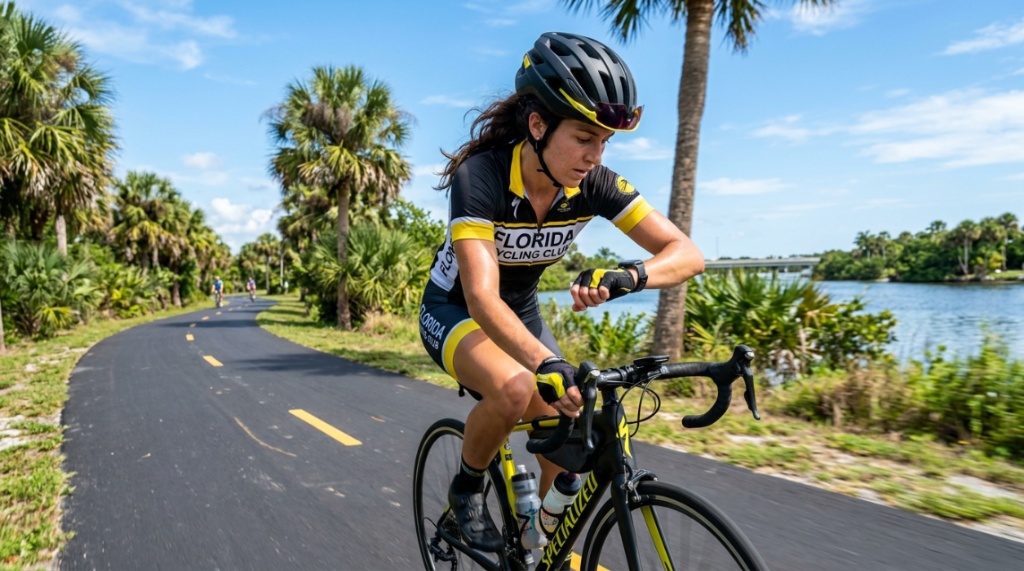
You live in Florida, and you know the deal. The sun hits hard, the humidity is relentless, and the last thing you need is a cheap watch that fogs up, dies on a long run, or can’t lock onto a satellite under a canopy of oaks. Finding budget-smart GPS watches and Florida fitness options that actually survive the heat and track your pace accurately feels like a gamble. Most affordable trackers fail the real test: they overheat, the touch screen jitters with sweat, or the battery drains before you finish your morning bike ride. The real challenge isn’t just finding a cheap watch—it’s finding one that works for Florida’s specific conditions. You need a device that handles direct sunlight, tracks your route in the Everglades, handles a sudden afternoon storm, and stays comfortable in 90% humidity—all without breaking the bank.
What Makes a Smartwatch Suitable for Florida Fitness?
Florida fitness is not the same as fitness in Oregon or Colorado. It is a unique combination of heat, humidity, and location-specific activities like beach runs, swamp trails, and poolside workouts. A budget smartwatch for this environment must prioritize water resistance, screen visibility, and GPS accuracy above flashy extras.
Water Resistance Is a Non-Negotiable Feature
You will sweat buckets. will get caught in a sudden downpour. might even jump in a spring or the ocean after a run. Look for a watch rated at least IP68 or 5ATM. Without this, moisture will kill the device in weeks. For Florida fitness, IP68 is the absolute minimum, and 5ATM is far safer for swimming or heavy rain exposure.
Screen Visibility Under Direct Sunlight
There is no cloudy day relief in Florida summer. The sun is brutal. Transflective displays (like those in Garmin or Amazfit models) reflect ambient light rather than fighting it. They actually become easier to read as the sun gets brighter. AMOLED screens, while beautiful indoors, often require you to crank brightness to max, draining the battery quickly.
GPS Lock Speed in Dense Canopy
Many budget watches struggle to acquire a GPS signal under thick tree cover. Florida is full of live oaks, palm canopies, and overhanging vegetation. A watch with dual-band GPS (like Xiaomi or Coros budget models) will lock faster and maintain accuracy when you run through shaded trails or along tree-lined routes.
Why Is GPS Accuracy Critical for Florida Trails and Beaches?
GPS accuracy determines whether your distance, pace, and route data are useful or garbage. In Florida, the open beaches and dense flatwoods create opposite problems: signal reflection off water and signal blocking by foliage. A budget watch must handle both.
Beach Running and Signal Reflection
Open water reflects GPS signals, causing the watch to think you are running into the ocean or zigzagging erratically. Watches using older GPS chips (like the Airoha or Sony) tend to drift badly here. Look for models featuring the newer Airoha AG3335M chip, which handles multipath reflection far better.
Trail Running Under Florida’s Canopy
Florida trails like the Flatwoods or the Santos trails are covered by dense oak and pine. Budget watches without GLONASS or Galileo support will lose signal every few minutes. Your watch should support multiple satellite systems (GPS + GLONASS + Galileo) to compensate for weak signals under leaves.
Auto-Pause and Coastline Tracking
When you stop at a water break or wait for a crossing, a good watch auto-pauses. This prevents your average pace from dropping unnecessarily, which is crucial if you are using your data to track improvement.
How Much Battery Life Do You Really Need for Florida Fitness?
Battery life is one of the most overlooked factors when picking budget smartwatches GPS Florida fitness options. A watch that dies halfway through a weekend adventure is useless. You need at least five to seven days of regular use and enough power for a full day of GPS tracking, After a long day of outdoor training, ensure proper muscle recovery by using an Orthopedic Wedge Pillow for Maximum Bed Support.
GPS-On Runtime: The Real Number
Manufacturers often quote “standby time” which is meaningless. Look for the GPS-on runtime. For Florida fitness, you want at least 8 to 10 hours of continuous GPS tracking. This lets you do a long Saturday run or hike without panic checking the battery icon.
Quick Charging for Active Lifestyles
Florida fitness is often spontaneous. A sudden afternoon thunderstorm clears, and you want to run immediately. A watch that takes two hours to fully charge is annoying. Look for models that support quick charging (15 minutes for a day of use). Some Amazfit models charge fully in under an hour, which is a lifesaver.
Heat’s Effect on Battery Performance
Lithium-ion batteries drain faster in high heat. That 10-hour GPS estimate can drop to 6 hours on a 95ºF day. Plan for this. Buy a watch with a slightly larger battery than you think you need to account for Florida’s heat battery penalty.
Which Budget Smartwatch Brands Are Reliable for Active Florida Lifestyles?
Not all budget brands are created equal. Some focus on step counting and notifications, while others prioritize sports tracking and durability. For Florida fitness, you need the latter. Here are the brands that consistently deliver value in hot, humid conditions.
Amazfit: The Sweet Spot of Features and Price
Amazfit watches, particularly the Bip and T-Rex lines, offer excellent GPS accuracy, long battery life, and transflective screens. The Amazfit T-Rex 2 even meets military durability standards, so it can handle drops, dust, and water immersion. They are often under $150, making them a top contender for budget smartwatches GPS Florida fitness.
Xiaomi: Reliable GPS for the Price
Xiaomi’s Smart Band Pro and Watch S1 Active offer surprisingly good GPS performance for under $100. They support multiple satellite systems and have decent battery life. The main downside is the smaller screen, but for runners focused on data, this is a fine trade-off.
Coros: The Pacing King on a Budget
Coros is known for ultra-runner watches, but their Pace 2 model is regularly priced under $200. It offers exceptional GPS accuracy and a battery that lasts for weeks. The interface is more focused on performance metrics than smart features, which suits serious athletes in Florida perfectly.
Can a Budget Smartwatch Handle Florida’s Humidity and Sweat?
Humidity and sweat are the silent killers of electronics. Salt from sweat corrodes charging ports and buttons. Humidity can fog up the display from inside. A budget watch must have solid sealing and sweat-proof materials to survive Florida summers.
Look for Metal or Fiber-Reinforced Bezels
Plastic bezels can warp and degrade under constant UV exposure and sweat. Watches with metal or fiber-reinforced polymer bezels (like the Amazfit T-Rex series) resist corrosion and stay rigid. Avoid watches with soft rubber bezels that degrade quickly.
Button Protection and Charging Port Design
Touchscreens become frustrating when wet or sweaty. Physical buttons are far more reliable for starting a run when your fingers are slippery. Also, look for watches with magnetic charging pucks that do not require you to open a rubber flap. Flaps break and let humidity in.
Ventilation for Skin Comfort
Sweat trapped under a silicone strap can cause rashes. Look for watches with perforated straps or sport bands that breathe. Nylon hook-and-loop bands are popular in Florida for exactly this reason—they dry fast and allow airflow.
How to Evaluate GPS Accuracy Without Spending More?
You do not need to spend $400 to get accurate GPS data. You just need to know what to look for in the specs sheet. A few key technical details separate accurate watches from frustrating ones.
Verify Multi-Band Support in the Chipset
Multi-band GPS (L1 + L5) significantly improves accuracy in challenging environments. It costs more to implement, but some budget watches like the Coros Pace 2 include it. Check the user manual or tech forums to confirm multi-band support before buying.
Check Real-World User Tests for Your Area
Read reviews from users who test in urban or forested areas. A watch that works great in an open field may struggle in downtown Miami or under the canopy of the Ocala National Forest. YouTube reviews that show split-screen comparisons are gold for this.
Use the Watch’s Calibration Features
Many budget watches allow you to calibrate the stride length or adjust GPS sampling frequency. Using these settings can improve accuracy without upgrading the hardware. Take 10 minutes after unboxing to set these up properly.
Which Features Are Worthless on a Budget Fitness Smartwatch?
Brands often pack budget watches with bloated features to justify lower prices. Many of these are useless for Florida fitness and actually hurt battery life and reliability. Avoid watches that glorify these features.
Built-in Music Storage Without Bluetooth Headphones
You do not need 4GB of MP3 storage if you use your phone for music. This feature drains battery and adds cost. Bluetooth music streaming from the watch to earbuds is also a battery drain. Just connect your phone and save the money.
Voice Assistants That Work Poorly in Noise
Voice assistants on budget watches rarely work well outdoors, especially in windy Florida conditions. They drain the battery and are usually slow. Skip any watch that advertises voice assistant as a key fitness feature.
Blood Oxygen Monitoring During Sleep
SpO2 monitoring all night is a battery killer. If you train during the day, you do not need continuous overnight SpO2 tracking. It adds no value to your fitness performance and will require you to charge your watch twice as often.
What Is the Ideal Price Range for a Durable Fitness Smartwatch in Florida?
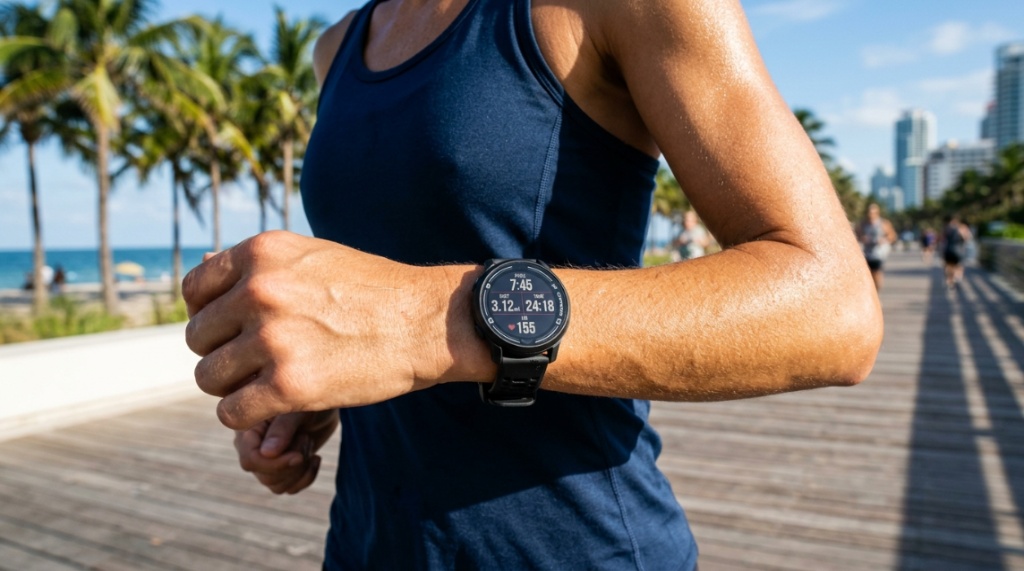
You can get a highly capable, durable fitness smartwatch for between $80 and $180. Staying within this range gives you the best balance of reliable GPS, good battery, and sufficient water resistance without paying for luxury extras.
Under $80: What You Sacrifice
Watches under $80 often lack multi-band GPS, have weaker water resistance (IP67 instead of ATM), and use older chipsets that lose signal in foliage. They are fine for casual walkers but not for serious Florida runners or cyclists.
$80 to $120: The Sweet Spot for Most Athletes
In this range, you find Amazfit Bip 3 Pro, Xiaomi Watch S1 Active, and similar models. These have decent GPS, good battery life, and at least 5ATM water resistance. They are the best value for most Florida fitness enthusiasts.
$120 to $180: Near-Premium Performance
Here you get Coros Pace 2, Amazfit T-Rex 2, and sometimes refurbished Garmin Forerunner 55. These offer military-grade durability, excellent GPS, and battery life that lasts for weeks. If you can stretch your budget, this range is the best investment.
How to Maintain Your Budget Smartwatch in Florida’s Climate?
Even the best budget watch will fail quickly if you do not maintain it properly. Florida’s salt air, sand, and high heat accelerate wear. A simple maintenance routine can double the lifespan of your device.
Rinse the Watch After Every Sweaty Workout
After every run or bike ride, rinse the watch with fresh cool water. This removes salt from sweat and any sand. Dry it with a soft cloth. This takes 10 seconds and prevents corrosion of the charging contacts and button seals.
Avoid Leaving It in Direct Sunlight When Not Use
The dashboard of a car in Florida can reach 140ºF. Never leave your watch in direct sun. The battery can swell or the screen can separate. Always store it in a shaded, cool place.
Replace the Strap Every 6 to 12 Months
Silicone straps degrade from UV and sweat. They become brittle or start to smell. Nylon straps last longer but collect salt. Replace the strap regularly to keep the watch comfortable and the housing secure on your wrist.
Which Activities Benefit Most from a GPS Watch in Florida?
Certain Florida activities rely heavily on GPS data to be safe and effective. A budget GPS watch is not just a gadget; it is a safety and performance tool for specific local adventures.
Beach Running and Route Pacing
Running on soft sand versus hard-packed sand changes your pace dramatically. GPS lets you track your distance accurately and manage your effort. Without it, you risk fading early on a long beach run.
Cycling on the Overseas Highway or Flatwoods
Long cycle routes in Florida, like the Overseas Highway, have few landmarks. GPS tracking helps you measure your distance and pace over long, flat stretches. It also aids in navigation if you take a wrong turn.
Kayaking or Paddleboarding in Coastal Waters
Many budget watches now have GPS tracking for kayaking or paddleboarding. This helps you measure your distance across open water and track your speed. It is also useful for navigating back to your starting point if you drift.
What Are the Hidden Costs of a Cheap Fitness Smartwatch?
Buying a watch that is too cheap often leads to hidden costs that make it more expensive overall. Poor fit, unreliable data, or short lifespan can negate the initial savings. Think of the long-term value, not just the sticker price.
Poor Customer Support for Water Damage
Many ultra-budget watches have no real warranty or customer support. If your watch dies from sweat ingress after two months, you are out the full price. Stick to brands with at least a one-year warranty and US-based support.
Inaccurate Data Leading to Poor Training Decisions
A watch that overestimates your distance by 10% will lead you to believe you are running faster than you are. This can cause overtraining or incorrect pacing in a race. Accurate GPS is not a luxury; it is a necessity for structured training.
Short Battery Life Requiring Frequent Charging
Watches with tiny batteries ( <200mAh) die every day or two. Over a year, the time spent charging and frustrations add up. Pay for a larger battery once, rather than being annoyed every single day.
Frequently Asked Questions
Do I need a smartwatch with always-on GPS for Florida fitness?
Yes, if you track outdoor activities. Always-on GPS is essential for accurate distance, pace, and route mapping. Without it, you only get step counts, which are useless for real training.
Can I use a budget smartwatch for swimming in Florida springs?
Only if it has a 5ATM or IP68 rating. Many budget watches are only splash-resistant. Always check the water resistance rating before submerging the watch in springs, pools, or the ocean.
How often should I charge a budget GPS smartwatch in high heat?
Expect to charge it 20-30% more often in Florida summer heat. Battery drain accelerates above 90°F. Plan to charge every 3 to 4 days instead of every 7 in cooler conditions.
Which is more important for Florida running: GPS or heart rate?
GPS is more important for outdoor running. Heart rate data can be inaccurate on budget watches, especially with sweat. Focus on GPS accuracy first, then consider heart rate as a secondary metric.
Is a touchscreen reliable when hands are sweaty?
No, touchscreens are notoriously unreliable with sweaty or wet hands. Physical buttons are far more practical for starting a run or changing settings during a Florida workout. Prioritize watches with physical buttons.
Does a metal case make a watch heavier for running?
Not significantly. Most metal cases on budget watches are aluminum, which is very light. The weight difference versus plastic is negligible on your wrist and often improves durability and heat dissipation.
Will a budget smartwatch last more than one year in Florida?
Yes, if you maintain it properly. Rinse it after workouts, avoid extreme heat storage, and replace the strap. Many Amazfit and Coros models last 2 to 3 years with regular care.
Final Takeaways
Picking the right budget watch for Florida fitness comes down to focusing on the features that matter most in this specific climate: water resistance, GPS accuracy under canopy, battery life that accounts for heat drain, and physical buttons that work when wet. Skip the useless extras like voice assistants or music storage. Rinse your watch after every workout, replace the strap yearly, and you will get excellent value from a $100–$150 device. Check out reliable options in this budget smartwatches GPS Florida fitness category before making your final decision to ensure you get a device that matches your active lifestyle.