Why Most People Wait Far Too Long Before Seeing a Podiatrist

We’ll put up with pain in our feet in a way we wouldn’t elsewhere in our body. We can endure three months of heel ache or let a toenail issue ruin our summer. We try plasters or home remedies for ages before deciding we need the help of a professional.

But there’s more to this reluctance than meets the eye. Waiting so long before seeking help has repercussions – both financially and physically. An ingrowing toenail or damaged ligament might seem like a localised problem, but if left untreated, it sets off a cascade through the body.

We don’t realise we change our gait to protect a painful bit of ourselves, yet our brain makes an automatic shift to alleviate the stress. That leads to another part bearing greater pressure and becoming painful, and so it goes on through the rest of the body: up from the ankle to the knee to the hip to the lower back. Someone who complains of heel pain in January might end up with knee problems in March and lower back pain by June, never even linking the two.

This sets the bar far too high in terms of what we have to suffer before we go see a specialist. As a result, people visit a podiatrist not because they have a problem, but because it has become impossible to ignore and is spoiling their daily lives. For a Podiatrist Worcester, visit www.propodiatry.co.uk/podiatry/podiatrist-worcester/

The vast majority of foot complaints get better with less invasive, less expensive treatment if patients visit sooner rather than later.

Our two feet carry all of our body’s weight, yet we treat them as the poor cousins of the medical world. It’s about time we gave our feet the help they needed earlier, rather than later.


What Makes a Fishing Pole Perfect for Young Beginners

Fishing can be a magical experience for children, but the wrong equipment often turns it into frustration. In 2026, over 50% of parents report that their child’s first fishing trip ended early due to poorly chosen gear. The right setup can transform a challenging outing into a memorable adventure. A well-designed pole makes all the difference for young anglers.

The Pre-Listing Conversation That Determines Whether a Sale Goes Smoothly

The pre-listing conversation that no one wants to have is usually the one that determines whether a sale goes smoothly or is stressful.

The conversation that needs to happen before the property goes to the portal, before the photos are taken, and before the For Sale board goes up is often the one that no one wants to have. The conversation about price.

The discussion about market reality, about comparable properties, and about whether the vendor’s timeline works for achieving a sale. It’s the conversation that everyone wants to avoid because nobody likes to talk about their own market, because nobody wants to tell someone that their price might be too high, and because nobody likes to have an uncomfortable conversation before the fun begins. For Gloucester Estate Agents, visit https://www.mwea.co.uk/

However, agents who can have this conversation, even though it’s difficult, are usually the ones who set their property up for success. Accurately priced from the outset encourages buyers to take the property seriously from the very first day, which usually results in more offers, better offers, and fewer price reductions over the course of the listing. Conversely, every buyer and agent who sees the property on the portal over the coming months and notices the price reductions is unlikely to think very highly of the property.

In most cases, trying to make the vendor happy by pricing the property high for their benefit will, in the end, result in a lower sale price many months later and very often with little or no sale activity in between. So the smoothest sales are usually the ones that are decided before the photos are taken.

A beginner’s guide to fire risk assessments

If you’re responsible for a workplace, rental property or shared building, you’ll probably have heard of the term fire risk assessment. It sounds technical, but the purpose is pretty straightforward. The assessment helps you to identify fire hazards, understand the risks and decide what steps you need to take to keep people safe.

What is a fire risk assessment?

A fire risk assessment is a review of a building and the way it is used. You’ll look at anything that could start a fire, how a fire might spread and who could be affected if one were to happen. The assessment also considers your escape routes, fire alarms, emergency lighting and fire-fighting equipment. The aim is to spot potential problems before they become serious risks.

What happens during the process?

The assessor will usually inspect the building, identify hazards and consider the people who use the premises. You might have staff, customers, visitors or residents who would need extra assistance during an evacuation.

If you’re researching a fire risk assessment Cheltenham, you could use useful resources such as https://www.apmfireandsecurity.com/fire-risk-assessment/cheltenham/ that explain the process for you in more detail.

Why should assessments be reviewed?

A fire risk assessment isn’t something you’ll complete once and just forget about. The building may change, your staff numbers may increase or you might buy new equipment. You can find additional guidance through UK government fire safety guidance, which explains the responsibilities that apply to many businesses and organisations.

Regular reviews help you to ensure the assessment still reflects the way the premises are used.

These things make your kitchen look outdated

A timeless kitchen is one that can’t be dated – it just always looks on-trend, fresh and inviting. Achieving a timeless kitchen is simple when you eliminate the things that make your kitchen look outdated.

Simple updates to enhance your kitchen

High level, wall mounted cabinets became commonplace after WW2 as homeowners used surplus steel to build strong storage cabinets, trays and baskets and to hide their bins.

An excess of high level storage in a kitchen, therefore, looks dated and can make a kitchen feel cramped. Removing some wall-mounted storage and replacing it with open shelving can make a space feel airier and inject a timeless quality.

While you’re removing wall-mounted storage is a good time to refresh your lighting too. A long batten light, while casting plenty of light, is incredibly outdated, and if you have one of these, now is the time to replace it. Layered light schemes that incorporate a mix of statement lighting, ambient light and pendants deliver equal or greater functionality but look and feel much more welcoming.

Finally, consider investing in custom kitchen doors such as those offered by https://www.happy-doors.co.uk/shop/products/kitchens. Not only will you be able to give your kitchen a total refresh at a fraction of the price of replacing it, but you can also inject some bold colours, add modern hardware and create a really cohesive picture.

In conclusion

It doesn’t take much to bring a kitchen into the 21st Century, so if yours is looking a bit tired, now might be the perfect time to give it a bit of love.

How to Buy Wedding Shoes for Kids Online Without Regret

Online shoe shopping for adults is risky enough — for kids attending a wedding, one wrong size or uncomfortable pair means a crying child, wasted money, and a shipping-return cycle that might not resolve before the event date. Wedding shoes for kids purchased online result in returns 45% of the time, nearly double the adult return rate, because parents face a triple uncertainty: unpredictable sizing between brands, inability to test comfort before the event, and children’s feet that may grow between ordering and wearing. But buying in-store limits your options to whatever bland selection the local department store carries — and children’s wedding shoes deserve better than generic black patent leather as the only choice.

How to avoid five common medication mistakes at home

Mistakes when handling medication not only make it less effective; they can be actively dangerous. That is why it is important to familiarise yourself with the following best practices.

Follow instructions

Professionals take courses in the safe handling of medication, such as those at https://www.tidaltraining.co.uk/health-and-social-care-courses/safe-handling-of-medication-training. This means that when they give you instructions on the best way to take your medication, you should follow them. You should also follow the instructions on the label.

Store appropriately

Keep medication in its original container with the label. Do not expose yourself to excess heat or humidity. A locked cupboard may keep it out of the sight and reach of children and pets.

Do not change dosage without medical advice

Follow your prescription even if you experience side effects or symptoms desist, otherwise you may create new side effects or cause symptoms to return. Talk to your doctor before making any change. Do not share your prescribed medication with others.

Track potential interactions

By recording all your medications, including not just prescriptions but also over-the-counter drugs, supplements and herbal remedies, it will be possible to identify any negative interactions that dilute effectiveness or cause side effects.

Know when to ask for help

Doctors, pharmacists and other professionals are available to answer questions regarding your medication. This is particularly important if there is an accidental ingestion, overdose, allergic reaction or other serious side effect.

There are many ways to avoid common medication handling mistakes, but in case of doubt, you can always talk to your doctor or another healthcare professional.

The Odd Work of Keeping Updates Quiet

In early July 2024, a software update was automatically pushed by CrowdStrike to Windows PCs around the world. Within hours, problems started to manifest on around 8.5m computers worldwide. In due course, the update caused enough problems that flights were grounded and patients sent elsewhere in the world’s hospitals.

This is the case against the auto-update.

The common misconception that keeping your IT up to date with the latest software patches is the epitome of good IT support. Waiting for the necessary testing to be completed before deployment is the true hallmark of a professional IT support team. If you want Managed IT Support Near Me, https://www.majestecltd.co.uk/managed-it-support/ is a good place to start.

This process is known as change management or staged deployment. The method whereby an update is distributed to a test group of machines first, then a wider group of machines or a ‘canary ring’ of machines, and then distributed to all machines. Typically this would occur in the middle of the night and would be scheduled in advance. The window in which updates are deployed is a precious commodity and should be used wisely.

The NCSC’s vulnerability management guidance states that the aim of update deployment is to carry out a controlled and tested release of changes to software or systems, as a poorly deployed patch can cause more problems than the bug it was trying to fix.

When someone types in “Managed IT Support Near Me” they typically are envisioning someone who can rush to their location to fix a problem when it happens. They rarely want to have to deal with the aftermath of a major problem. However, the great work of Managed IT Support happens in the dead of night on a Tuesday at 2am when all is quiet. A careful IT technician is watching a single test machine reboot to see if the rest of the office will have a normal morning.

Bouldering Warm Up Before Your First Session

Bouldering Warm Up Before Your First Session

A good warm up before entering a bouldering session is crucial, especially for the tendons and finger joints as they take longer to warm up than the rest of the muscles in the body.

Get Your Blood Moving First

Before heading out on the wall to start bouldering for the session, do 3-5 minutes of general cardio to get your heart rate up slightly. This can be done by jogging on the spot, skipping rope, using the rowing machine, or even just going for a jog around the bouldering floor to get your blood pumping to your hands.

Work Through Your Joints

Warm up your joints with some dynamic mobility. Most bouldering involves the shoulder, wrist and hip, so make sure to perform the following drills for 10 reps each: Arm Circles – Hold your arms straight out from your sides and make small circles with your hands. Gradually increase the size of the circle as you continue for the specified amount of reps. Reverse direction after completing half of the reps and repeat on the opposite side of your body. Wrist Rotations – Hold your arm straight out in front of you with your palm facing downwards. Rotate your wrist in a circular motion, starting from a neutral position and moving your wrist in an upwards direction. Reverse the rotation and repeat for the specified amount of reps on the opposite side of your body. Hip Circles – Stand with your feet shoulder width apart and your hands on your hips. Move your hip in a large circle, first in one direction and then in the opposite. Ankle Rolls & Shoulder Rolls – Finally, perform some ankle and shoulder rolls to loosen up the remaining joints. Make sure to keep all of the movements dynamic and within a range that allows you to maintain control throughout. Avoid locking any of the joints and do not allow the mobility to become static.

Wake Up Your Fingers Gradually

It is particularly important to warm up your fingers and pulleys before you start bouldering as they take longer to warm up than the rest of your muscles. For this reason, a good warm up for your fingers is to start off by traversing along the very easiest coloured route on the wall for about 5 minutes. The moves should be really gentle and you should try to do them slowly and deliberately and keep your fingers in the correct position.

Try Some Controlled Footwork

Use your first easy route to warm up your feet slowly and deliberately. Climb the route slowly and place each foot on the holds slowly and deliberately. Hold a balance position for a few seconds on each foothold before moving up to the next one. Climbing a route slowly with controlled footwork is the most efficient way to warm up your feet for bouldering and to rehearse the movement needed for your other climbs throughout the session.

If you are looking for bouldering near me, it’s likely that you will find a host of climbing gyms close to where you live. More on Bouldering Near Me can be found at https://www.270climbing.com/bouldering/.

By spending 10 minutes to warm up prior to your first bouldering session you will find that you can climb much better and feel much more comfortable throughout your session.

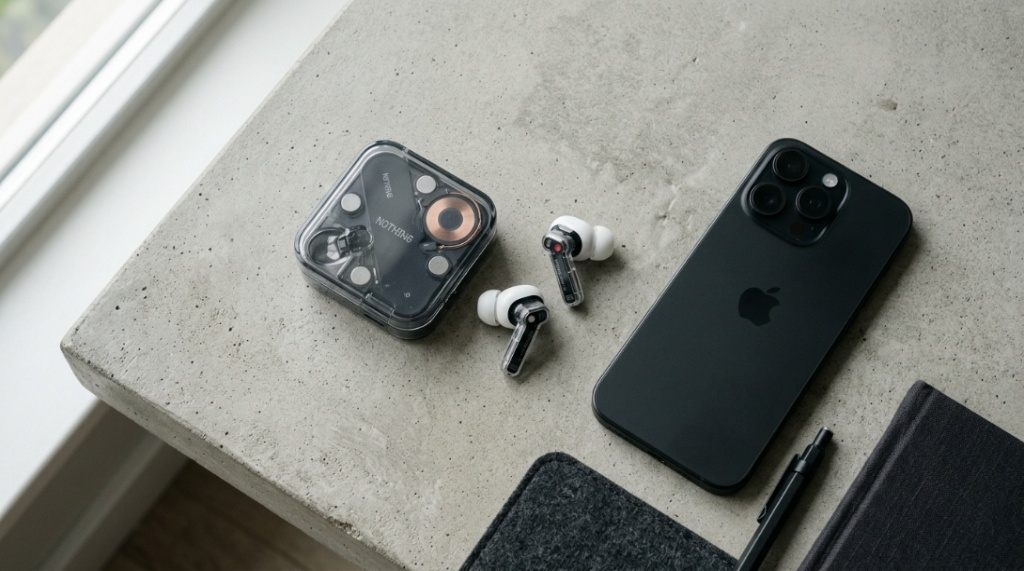
How to Choose Affordable Nothing Headphones Without Wasting Money

Nothing’s product lineup looks simple until you try to buy — then you realize there are four models within a $70 price spread, all with overlapping features that make the wrong choice feel like wasted money within a month. Affordable Nothing headphones range from $49 to $149, and paying more doesn’t always mean getting more value for YOUR specific use case. The money-wasting trap isn’t buying cheap — it’s buying features you’ll never use while underspending on the one capability that would’ve made the headphones perfect for your daily routine.