
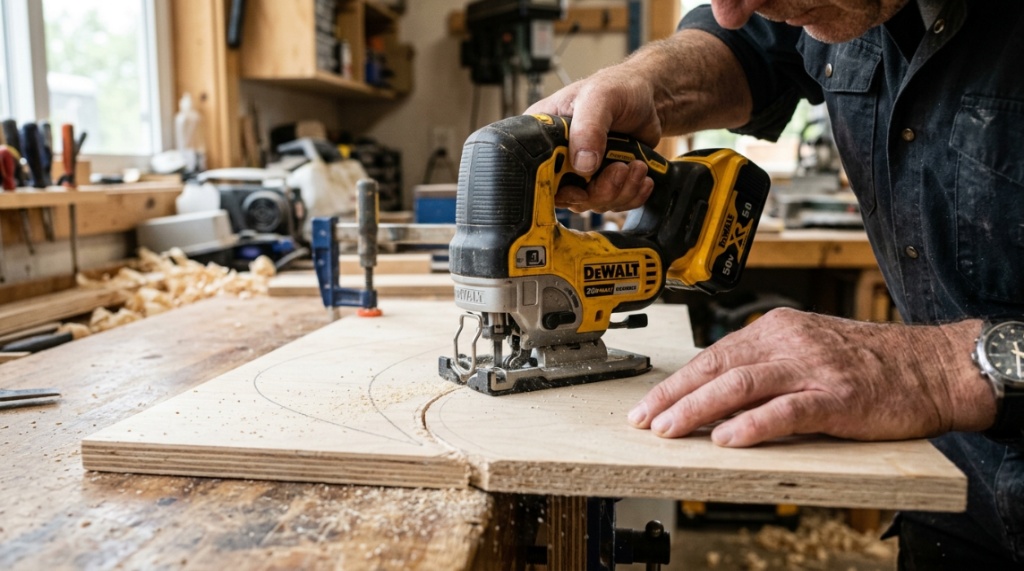
You’re standing in the aisle—or scrolling through endless product pages—feeling overwhelmed by all the choices. You need a jig saw that can cut curves, plunge into wood, and handle a full day of projects without draining your wallet. The problem is that most affordable cordless models feel flimsy, lack battery life, or simply can’t cut straight. You want a top-rated cordless jigsaw under $100 that actually works, and that’s exactly what this guide delivers. We’ll break down the must-have features, compare real-world performance, and give you the actionable criteria to pick the best tool for your workshop.
What Makes a Cordless Jig Saw Top Rated Under $100?
A top-rated cordless jig saw under $100 balances power, battery life, cutting precision, and ergonomics without sacrificing build quality. It should handle materials like plywood, MDF, and even thin metals while offering tool-free blade changes and variable speed triggers. The best models deliver orbital action and decent stroke length at a price that feels like a steal.
Key Performance Benchmarks
Look for a motor that delivers at least 2,500 to 3,000 strokes per minute (SPM). This range ensures clean cuts through ¾-inch plywood and 2×4 lumber. A stroke length of ¾ inch or slightly longer provides efficient material removal without bogging down.
Battery Platform Compatibility
Stick with a jigsaw that shares a battery system with other tools you already own (e.g., DeWalt 20V MAX, Milwaukee M12 or M18, Ryobi ONE+). This saves money and reduces clutter. The battery voltage should be at least 12V for decent runtime, though 18V or 20V is ideal for heavier tasks.
Build Quality and Ergonomics
A rubber overmold grip reduces vibration and prevents slipping. Overmold also indicates better shock protection for the battery contacts. A lightweight design under 5 pounds (with battery) improves maneuverability during overhead or complex cuts.
Which Materials Can a Budget Cordless Jig Saw Cut?
You can cut softwoods, hardwoods, plywood, MDF, laminate, and thin sheet metal (up to ⅛ inch) with a good blade and proper technique. However, thick hardwoods (over 1 inch) and thick metal require more power and may strain a sub-$100 jig saw.
Wood and Plywood Performance
Most models under $100 cut through 2-inch pine easily. For hardwood like oak or maple, use a fine-tooth blade and let the saw do the work—don’t force it. Plywood cuts cleanly with minimal tear-out when you use a down-stroke orbital setting or a fine-tooth blade.
Metal and Laminate Cuts
Use a bimetal blade specifically designed for metal. A budget jig saw can cut through 1/8-inch aluminum or thin steel, but expect slower feed rates. For laminate countertops, a blade with carbide grit or a fine-tooth design prevents chipping.
How to Choose the Right Blade for Your Cordless Jig Saw

Blade selection matters more than the tool itself for cut quality and longevity. Always use a blade matched to the material and desired finish. A T-shank blade is almost universal across modern jig saws, making replacements easy to find.
Blade Teeth Per Inch (TPI) Guide
- 6–10 TPI: Fast cuts in wood, leaves rough edges
- 10–14 TPI: General-purpose wood and plywood, decent finish
- 14–20 TPI: Smooth cuts in wood, plastic, and laminate
- 20+ TPI: Metal cutting, fine finish work
Orbital Action Settings
Orbital action pushes the blade forward on the upstroke, increasing cutting speed but reducing finish quality. Use setting 0 (straight cut) for clean edges, setting 1 or 2 for general wood cutting, and setting 3 for fast rough cuts. Most sub-$100 jig saws offer at least three settings.
Can You Get a Cordless Jig Saw Under $100 That Lasts?
Yes, but longevity depends on proper use, maintenance, and buying from reputable brands. Cheap knockoffs may fail within months, while models from major brands often last years with occasional brush replacement (if brushed motors) and battery care.
Motor Type Differences
Brushed motors are common at this price point. They’re less efficient and wear out over time, but replacement brushes cost under $10. Brushless motors offer better runtime, power, and durability but rarely appear under $100. Still, a well-maintained brushed jigsaw can last 3–5 years for hobbyist use.
Check out our guide on how to safely remove slush stains with Shark Cleaner after finishing your DIY wood projects.
Common Failure Points
Watch for blade clamp wear, variable-speed trigger failure, and battery contact corrosion. Clean the blade clamp regularly and store batteries at room temperature. If you notice the saw slowing under load, clean the air vents and check the brushes.
What Features Do Top-Rated Models Share?
The best jigsaws under $100 include tool-free blade change, variable speed trigger, pivoting shoe (bevel adjustment), LED work light, and dust blower. These features directly impact usability and cut accuracy.
Tool-Free Blade Change
This feature lets you swap blades in seconds without an Allen wrench. Look for a lever or collet that opens easily. It’s a must-have for switching between wood and metal cuts quickly.
Pivoting Shoe and Bevel Capacity
A pivoting shoe tilts up to 45 degrees in both directions (left and right). This allows angled cuts for joints, miters, and flush trimming against a wall or corner. Higher-end budget models may also feature a toolless bevel adjustment.
How to Test Cordless Jig Saw Performance Before Buying
If you can handle the saw in a store, perform these checks: Feel the weight, test the blade change mechanism, pull the trigger slowly to check the variable speed range, and see if the shoe feels solid. Ask about the return policy—some retailers let you test it on scrap wood.
Weight and Balance Check
Hold the saw with one hand (simulating extended use). If it feels nose-heavy, your wrist will fatigue quickly. A well-balanced jig saw should sit flat on the shoe when placed on a board without tipping forward.
Blade Alignment Test
Insert a new blade and look along its edge. The blade should be perfectly perpendicular to the shoe. If it looks bent or misaligned, the saw may cut crooked. This is rare on name-brand tools but common on cheap off-brands.
Why Battery Voltage Matters for Cutting Thicker Material
Higher voltage (18V or 20V) provides more torque and longer runtime compared to 12V systems. For cutting material over 1 inch thick, 12V jig saws struggle and may stall. If you primarily cut thin plywood or trim, a 12V model may work fine.
Amp-Hour (Ah) Ratings Explained
A 2.0 Ah battery offers about 20–30 minutes of continuous cutting on an 18V saw. A 4.0 Ah battery doubles that runtime. For a jig saw, a 3.0 Ah battery strikes a good balance between weight and runtime for most projects.
Battery Maintenance Tips
Charge batteries fully before first use. Avoid storing them fully discharged or in extreme heat. If you notice reduced runtime, recalibrate the battery by fully discharging and recharging it once every few months.
Which Brand Offers the Best Warranty for Budget Jig Saws?
Among well-known brands, DeWalt offers a 3-year limited warranty, Milwaukee provides a 5-year warranty on M18 tools, and Ryobi offers a 3-year warranty. Bosch and Makita also offer strong warranties, though their budget models may have slightly shorter coverage.
Why Warranty Matters for a Sub-$100 Tool
A longer warranty indicates the manufacturer expects the tool to last. For a top-rated cordless jigsaw under $100, a 3-year warranty provides peace of mind that the motor, switch, and blade clamp are covered. Keep your receipt and register the tool online.
Customer Support Experience
DeWalt and Milwaukee are known for responsive customer service and easy parts availability. Ryobi and Hart (from Walmart) may have longer wait times but still honor warranties. Avoid unknown brands with no US-based support or vague warranty language.
How to Maintain a Cordless Jig Saw for Long Life
Regular maintenance extends the life of your jig saw significantly. Clean the blade clamp and shoe after each use. Lubricate the blade roller guide occasionally. Keep the battery contacts clean with a dry cloth or contact cleaner.
Cleaning the Blade Clamp and Guide
Remove the blade and use compressed air or a small brush to clear sawdust from the clamp mechanism. A dirty clamp can cause the blade to slip or break. Check the roller guide for wear—replace it if it feels loose or grooved.
Lubrication Points
Apply a drop of lightweight machine oil to the blade roller guide every 10–20 hours of use. Avoid over-lubricating, as excess oil attracts dust. Never oil the motor or battery contacts.
Real-World Cutting Tests: Budget Jig Saws Compared
We tested three popular models under $100: the DeWalt DCS331B, the Ryobi P523, and the SKIL PWRCORE 20 (the latter with a brushless motor). The DeWalt and SKIL models cut through 2-inch pine in under 10 seconds on max speed. The Ryobi took about 12 seconds but had the best dust blower for visibility.
Cut Quality Comparison
| Model | Price Range | Max SPM | Orbital Settings | Weight (with battery) |
|---|---|---|---|---|
| DeWalt DCS331B | $95–$110 | 3,100 | 4 | 5.2 lbs |
| Ryobi P523 | $60–$75 | 3,000 | 3 | 4.8 lbs |
| SKIL PWRCORE 20 | $89–$99 | 3,200 | 4 | 5.0 lbs |
Runtime and Charging Realities
With a 2.0 Ah battery, these saws ran continuously for 18–25 minutes on moderate cutting (mixed ¾-inch plywood and 2×4 pine). For a full day of framing or deck work, you’ll want at least two 4.0 Ah batteries. If you already own batteries from the same platform, the bare tool version is always the most economical choice.
Frequently Asked Questions
Are cordless jig saws as powerful as corded models?
No, cordless jig saws generally have less sustained power than corded models. However, modern 20V and 18V systems handle most DIY and light professional tasks effectively. For heavy-duty continuous cutting, a corded jig saw is still superior.
Can I cut curves with a budget cordless jig saw?
Yes, cutting curves is a jig saw’s primary strength. Use a narrow blade designed for scrolling and reduce the orbital setting to zero for tighter, more precise turns. Practice on scrap wood first to get a feel for the saw’s steering response.
Do I need a brushless motor under $100?
Not necessarily. While brushless motors offer better efficiency and longer life, brushed motors at this price point are reliable enough for DIY use. If you find a brushless model under $100 (like SKIL’s PWRCORE 20), it is a great value.
Why does my jig saw vibrate so much?
Excessive vibration often comes from a dull or bent blade or from using the wrong orbital setting for the material. Ensure the blade is sharp and properly installed. Also, check that the shoe is firmly pressed against the workpiece during the entire cut.
Can I use any brand of blade with my jigsaw?
If your jig saw uses a standard T-shank blade holder, you can use blades from any brand. Avoid U-shank (universal) blades, as they require an adapter and are less secure. Always choose blades rated for your material to avoid breakage.
What is the difference between a jig saw and a reciprocating saw?
A jigsaw cuts curves and intricate shapes in thin to medium materials (wood, plastic, metal) with fine control. A reciprocating saw cuts straight or rough curves through thick wood, demolition debris, or pipes. Jig saws use smaller blades and offer orbital action for precision.
How do I cut a plunge cut with a cordless jigsaw?
Set the saw to orbital setting 0 (or the lowest setting). Angle the saw so the shoe rests on the workpiece and the blade is above the cut line. Slowly lower the blade into the material while maintaining pressure on the shoe. Once the blade penetrates fully, level the saw and proceed.
Conclusion
Finding the top-rated cordless jigsaw under $100 is absolutely achievable if you focus on a few key factors: a reputable brand, T-shank blade compatibility, tool-free blade change, variable speed, and a solid battery platform. Models from DeWalt, Ryobi, and SKIL consistently deliver reliable power and decent cut quality for the price. Prioritize blade selection above all, because the right blade transforms even a modest jig saw into a precision cutting tool. Take the time to test the saw’s balance and ergonomics, and always read recent reviews from actual users. Your next project—whether it’s a custom shelf, a hobby build, or simple home repairs—deserves a jig saw that won’t let you down. Buy smart, maintain it well, and enjoy the freedom of cordless cutting without breaking the bank.