
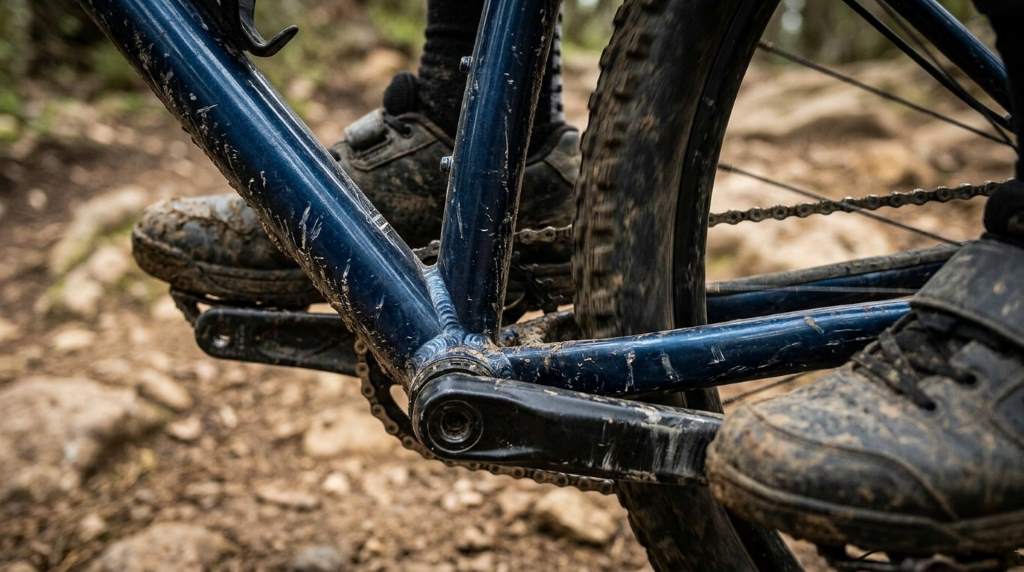
Used hardtail frames can crack in Sedona because repeated impacts, fatigue, poor maintenance, and hidden damage combine over time. Sedona offers more than 300 miles of trails, while its elevation reaches roughly 4,350 feet. Even a giant boulder se value example shows why terrain demands careful bike selection. Therefore, riders should inspect an older frame before trusting it on technical red-rock trails.
Key Takeaways
- Repeated rock impacts can accelerate fatigue in an older hardtail frame.
- Aluminum frames can develop fatigue cracks after many high-load cycles.
- Carbon frames can hide impact damage beneath an apparently clean surface.
- Used frames deserve closer inspection around welds, joints, and mounting points.
- Incorrect fit can increase harsh impacts and transfer more force into the frame.
- A professional inspection can identify structural problems before a serious failure.
Why Sedona Puts Extra Stress on Used Hardtail Frames
Sedona creates a demanding environment because riders frequently encounter rocks, ledges, slickrock, drops, and abrupt terrain changes. Consequently, a hardtail receives direct impact forces without rear suspension absorbing part of the load.
Hardtails remain efficient and predictable on many trails, but their simplicity changes how forces travel. Each rear-wheel impact moves energy through the axle, stays, seat tube, and top tube.
Used frames face another challenge because their previous riding history remains unknown. A bike may look excellent while carrying thousands of unnoticed stress cycles.
That history matters because fatigue develops gradually rather than appearing after one ordinary ride. A frame can survive years of moderate use before one additional impact exposes an existing weakness.
Before buying a used bike, riders should also understand how equipment choices affect overall safety. This helmet fit save money guide provides useful context about choosing protective equipment wisely.
Why Hardtails Feel Impacts Differently
A full suspension bike allows the rear suspension to manage repeated vertical movement. Conversely, a hardtail transfers more impact energy through the rear triangle and frame.
That design does not make hardtails fragile. Instead, it means aggressive riding places greater importance on tire pressure, technique, wheel strength, and frame condition.
In Sedona, poor line selection can make those forces substantially harsher. Hitting square edges repeatedly can create larger loads than smoothly rolling over the same obstacle.
Five Common Reasons Used Hardtail Frames Crack
Frame cracks rarely come from one simple cause. Usually, several factors combine until a vulnerable area finally exceeds its fatigue limit.
1. Repeated High Impact
Repeated impacts represent one of the biggest concerns with an older hardtail. Rocks and ledges can produce sharp loading when the rear wheel lands poorly.
Furthermore, aggressive braking before obstacles can reduce suspension from the rider’s body. The resulting impact can travel directly through the rear wheel and frame.
Over time, these cycles can create microscopic damage. Eventually, that damage can develop into a visible crack around a stressed area.
2. Aluminum Fatigue
Many hardtails use aluminum because it offers low weight, stiffness, corrosion resistance, and affordable manufacturing. However, aluminum frames can accumulate fatigue from repeated loading.
Unlike some materials, aluminum does not provide an unlimited fatigue life under ordinary cycling stresses. Therefore, an older aluminum frame deserves careful examination before hard trail use.
Cracks often develop near welds, junctions, and areas where the frame changes shape. Those locations can experience concentrated stress during repeated impacts.
3. Previous Crashes
A used hardtail may have survived crashes that the seller never mentions. Even a repaired or apparently harmless impact can alter the frame’s structural condition.
For example, a collision can create dents, scratches, alignment changes, or localized deformation. Later riding may then expand that weakened area through repeated loading.
Therefore, buyers should ask directly about crashes, jumps, racing, bike parks, and major trail use. Honest history provides valuable context when evaluating an older frame.
4. Incorrect Setup
Frame stress does not depend only on terrain. Tire pressure, wheel condition, rider weight, cockpit setup, and riding technique also influence impact forces.
Overinflated tires can transmit sharper impacts through the frame. Meanwhile, underinflated tires can increase rim strikes and create other mechanical problems.
Likewise, a poorly adjusted cockpit can make riders land awkwardly. That technique can increase repeated loading because the rider cannot distribute impacts efficiently.
5. Manufacturing or Repair Problems
Not every crack results from riding abuse. Manufacturing defects, incomplete welds, poor repairs, and previous modifications can also create structural weaknesses.
A used frame with suspicious welds deserves additional attention. Uneven repairs, unusual grinding marks, fresh paint, or unexplained discoloration can justify professional inspection.
Where Hardtail Frames Usually Crack
Knowing common crack locations makes a used-bike inspection much more effective. Instead of checking only the largest tubes, examine every major load transition.
Head Tube and Top Tube Junction
The head tube carries steering loads while the top tube connects it to the rest of the frame. Hard braking and repeated front impacts can stress this junction.
Look for thin lines around welds, paint separation, unusual dents, or changes in surface texture. However, never assume a small line represents harmless paint damage.
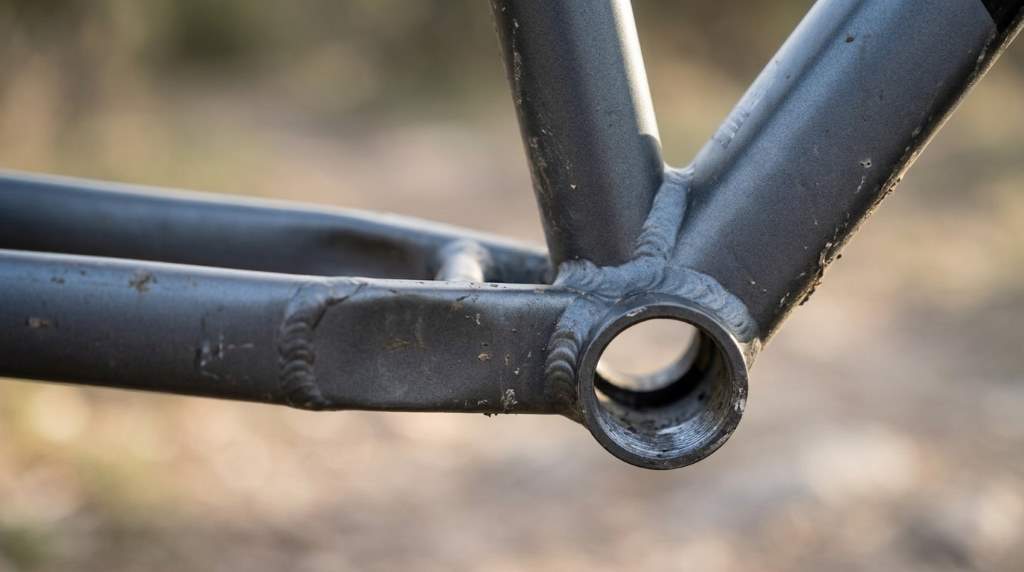
Bottom Bracket Area
The bottom bracket experiences substantial pedaling forces and frame movement. Hard climbing and technical riding can add repeated loads around this region.
Inspect both sides carefully, especially around welds and tube junctions. Dirt can hide small defects, so clean the frame before performing a serious inspection.
Seat Tube and Top Tube Junction
This junction can experience significant stress because the rider’s weight enters the frame through the saddle and seatpost. Repeated impacts can increase that loading.
Also inspect the seatpost area for scratches, crushing, corrosion, or unusual marks. A damaged seatpost can sometimes create additional stress inside the frame.
Chainstay and Seatstay Junctions
The rear triangle receives direct loads from the rear axle during impacts. Therefore, cracks can appear around chainstay bridges, pivots, welds, and dropout areas.
Pay special attention after rocky rides because repeated rear-wheel strikes can concentrate stress near these components. A professional mechanic can inspect suspicious areas more accurately.
How Riding Style Accelerates Frame Fatigue
Riding style strongly influences how quickly a used frame accumulates stress. Two riders can use identical bikes on identical trails and produce very different loads.
For instance, a rider who floats over rocks reduces impact severity. Conversely, a rider who lands heavily on square edges creates sharper and more frequent loading.
Technical climbing can also stress the frame through repeated torque. Meanwhile, fast descents increase the frequency and intensity of impacts across rough terrain.
Riders should also consider protective equipment when preparing for demanding trails. A lightweight mountain bike helmet can improve comfort during longer rides.
Why Braking Technique Matters
Heavy braking before rough sections can change how the bike responds to obstacles. Smooth braking allows the rider to maintain better control and prepare for impacts.
Additionally, locked wheels cannot roll naturally over obstacles. That behavior can create abrupt forces that increase stress throughout the bicycle.
Therefore, controlled braking and active body positioning help reduce unnecessary frame loading. Good technique protects both the rider and the equipment.
How to Inspect a Used Hardtail Before Buying
A careful inspection can reveal warning signs before you spend money on a questionable frame. Start with a clean bike because dirt can conceal important details.
Use bright lighting and inspect the frame from multiple angles. Then compare both sides of the frame for symmetry, damage, and unusual surface changes.
Use This Inspection Checklist
- Check every weld for cracks, gaps, or unusual lines.
- Inspect the head tube and bottom bracket carefully.
- Look around both rear dropouts for damage.
- Examine chainstays and seatstays from several angles.
- Check for dents near major tube junctions.
- Inspect paint chips that expose deeper material damage.
- Look for evidence of sanding, repainting, or structural repair.
- Check frame alignment before committing to purchase.
Do not rely on photographs when buying an expensive used frame. Whenever possible, inspect the bike physically before completing the transaction.
If the seller refuses a reasonable inspection, treat that refusal as a warning. A good seller should understand why structural condition matters.
Check the Frame History
Ask when the bike was purchased and how frequently the owner rode it. Then ask about crashes, jumps, racing, bike parks, and transportation damage.
Request maintenance records when available. Those records can reveal how consistently the previous owner maintained wheels, bearings, tires, and other components.
Also ask whether the frame ever received warranty service or professional repair. Previous warranty claims may provide important clues about the frame’s history.
How to Prevent Cracks on Sedona Trails
Prevention starts before the ride begins. A suitable tire setup, correctly maintained wheels, and appropriate riding technique can reduce unnecessary frame stress.
Choose tire pressure based on rider weight, tire construction, terrain, and riding style. Avoid copying another rider’s pressure because setup requirements vary significantly.
Maintain wheels carefully because loose or damaged spokes can change how impacts reach the frame. Likewise, worn tires can reduce control and increase harsh landings.
Choose Lines Instead of Fighting the Terrain
Good line choice can make technical riding dramatically smoother. Look ahead and identify a path that lets the wheels roll rather than strike obstacles directly.
When a section exceeds your skill level, walking remains a sensible choice. Protecting an older frame matters more than forcing one difficult feature.
Similarly, avoid repeated casing or flat landings when practicing jumps. Progress gradually so the frame and wheels experience manageable loads.
Inspect After Hard Rides
Do not wait for a visible crack before checking the frame. A quick inspection after a major crash or unusually rough ride can catch changes early.
Clean the bike and examine familiar stress points. Look for new paint lines, dents, deformation, or noises that appeared during the ride.
If something looks different, stop riding until you identify the cause. Continuing to ride can turn a manageable repair into a dangerous structural failure.
Should You Buy a Used Hardtail for Sedona Riding?
Yes, a used hardtail can work extremely well in Sedona when its frame remains structurally sound. The key issue involves condition rather than age alone.
A well-maintained older frame can outperform a newer bike that suffered crashes or neglect. Therefore, buyers should evaluate history, construction, condition, and intended riding style together.
Price should also reflect the frame’s condition and remaining service life. A cheap bike becomes expensive when structural problems appear after purchase.
Before deciding, compare the frame’s geometry, material, axle standards, tire clearance, and intended terrain. This compare mountain bike features resource can help organize that evaluation.
When You Should Walk Away
Walk away from a frame showing a confirmed structural crack unless a qualified professional recommends a safe repair. Do not assume a cosmetic-looking crack will remain harmless.
Also reconsider bikes with unexplained repairs or significant dents near major structural areas. A suspicious bargain rarely justifies a potentially unsafe ride.
When uncertainty remains, pay for a professional inspection. That small expense can protect both your investment and your safety.
Final Verdict: Why Used Hardtail Frames Crack in Sedona, AZ
Used hardtail frames crack in Sedona mainly because repeated impacts combine with accumulated fatigue, previous damage, and setup problems. The terrain does not automatically destroy frames, but it exposes weaknesses faster than gentle riding.
Therefore, inspect every used frame before tackling technical trails. Focus on welds, junctions, dropouts, dents, repairs, alignment, and the bike’s previous riding history.
Most importantly, never ignore a suspicious crack or structural change. Have a qualified bicycle mechanic inspect questionable damage before returning the bike to demanding trails.
If you plan to buy a used hardtail for Sedona riding, inspect it carefully and match its condition to your riding goals. A thoughtful purchase can deliver years of reliable trail performance without gambling on hidden structural damage.
Frequently Asked Questions
Can Sedona trails crack an aluminum hardtail frame?
Yes, repeated severe impacts can accelerate fatigue in an aluminum frame, especially when existing damage remains unnoticed.
Where should I look for cracks on a used hardtail?
Inspect welds, head tube junctions, bottom bracket areas, seat tube joints, stays, and rear dropouts carefully.
Are older hardtail frames unsafe for Sedona?
No, age alone does not determine safety, because condition, maintenance, material, and riding history matter more.
Can a small frame crack become dangerous?
Yes, a small structural crack can grow under repeated loading and eventually cause serious frame failure.
Should I ride a hardtail after discovering a crack?
No, stop riding until a qualified professional determines whether the damage compromises structural integrity.


