
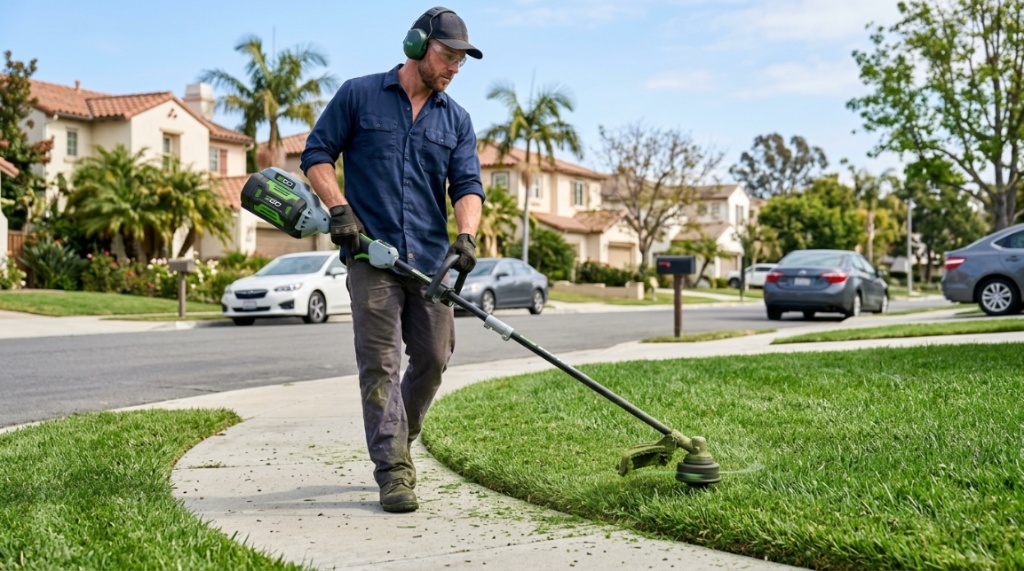
Finding the right string trimmer in California can feel more complicated than it should be. You aren’t just choosing between gas, electric, and battery power. You are also navigating the unique realities of California life: from drought-tolerant landscaping and fire-safe clearance zones to strict air quality regulations that have changed what you can even buy in the state. The key is matching the tool’s design to your specific property, not just picking the one with the most power. This article walks you through the exact decision criteria that matter most for California yards, so you can buy the right tool once—and avoid wasting money on a trimmer that is either too weak or too heavy for your needs.
Key Takeaways
- California’s strict emission rules mean gas-powered trimmers are increasingly restricted; battery-powered models are now the most practical and future-proof choice for most homeowners.
- Match the trimmer’s power source to your property size: corded electric for small, flat yards; battery for medium yards up to 1/2 acre; gas only if you need maximum power for brush or very large properties and can legally find one.
- Prioritize features like adjustable cutting width, variable speed trigger, and a bump-feed head for efficiency, especially when tackling fire-clearance work near fences and structures.
- Consider the cost of a second battery when buying a cordless model—runtime, not the tool itself, is the most common reason people upgrade their trimmer within the first year.
Why California Is Different: Emission Rules and What You Can Actually Buy
California has implemented strict regulations to meet federal air quality standards, and these rules directly affect what string trimmers are legally available. As of 2024, the California Air Resources Board (CARB) is enforcing a phased transition that makes it illegal to sell new gas-powered small off-road engines (SORE), which includes most gas string trimmers. This means if you walk into most major retailers in California, the inventory is almost exclusively electric or battery-powered. While that may feel like a limitation, it actually simplifies the decision process: you do not need to spend time evaluating gas models that aren’t for sale new.
This is a major shift. Even though used gas trimmers remain available on the secondary market, the vast majority of new equipment purchased now is cordless. When considering what to buy today, focusing on the electric category isn’t just an eco-friendly choice; it is the only realistic path for buying new equipment from authorized dealers. That means your decision centers on ergonomics, battery platform, and power output rather than engine size or fuel mix.
What the “Zero-Emission” Transition Means for Your Next Purchase
The transition to zero-emission equipment affects the types of best string trimmer in california options you have. Brands are investing heavily in battery technology, so you are not settling for a weak tool. Modern lithium-ion trimmers can match the cutting speed of older gas models while being significantly quieter and lighter. For the average California homeowner, this is a win. You get instant torque, no pull-start frustration, and no need to mix fuel or store gasoline, which is a significant safety advantage in a state prone to droughts and heat waves.
Match the Power Source to Your Yard Size and Terrain
There is no single “best” trimmer, only the best one for your property. The calculation is straightforward: the larger the cutting area, the more runtime and power you need. For a small yard with a postage-stamp lawn, a corded electric trimmer works perfectly—just keep the extension cord in mind. For a typical suburban lot up to half an acre, a cordless battery trimmer with a 4.0Ah or 5.0Ah battery is the sweet spot. If you are managing a multi-acre property or have heavy brush and thick weeds at the fence line, you may need gas, but the regulations mean you will likely be looking at used equipment or large commercial-grade units that may still be sold legally in some volume.
Best Use Cases for Corded Electric Trimmers
Corded trimmers are predictable. They offer unlimited run time and consistent power at a low cost. The drawback is the cord: you are tethered to an outlet, which is not practical for cutting along long driveways or over rough terrain where the cord can wrap around shrubs or the trimmer head itself. If your total cutting perimeter is under 100 feet of trim area and the yard is flat, these are an excellent, lightweight starter tool, If you are planning your backyard landscaping alongside your lawn maintenance tools, check out these useful Medicinal Herbs to Grow in your Garden to create a functional and eco-friendly outdoor space.
Best Use Cases for Battery-Powered Trimmers
Battery-powered trimmers give you freedom to move around the yard without the cord or the maintenance of a gas engine. You pay more upfront and for extra batteries, but you gain convenience. Look at the battery’s amp-hour (Ah) rating—a 2.0Ah battery might give you 15-20 minutes of steady cutting, while a 5.0Ah can push past 40 minutes. For drought-tolerant landscaping that involves ornamental grasses and native plants, battery trimmers handle light to moderate growth flawlessly.
Critical Features to Evaluate Before Buying
Once you have settled on battery power, the features you choose determine how comfortable and efficient the job will be. You should ignore marketing buzzwords and focus on these three performance factors: cutting swath, shaft design, and feed mechanism. A wider cutting swath (the width of the cut) means you finish faster. Look for a unit with a 15-inch or 16-inch cutting width to handle parallel passes along sidewalks and flower beds without missing spots.
The shaft design matters for ergonomics. A curved shaft is lighter and easier to maneuver for smaller users, but it forces you to bend slightly. A straight shaft transfers power more efficiently to the head and is easier to reach under low-hanging branches and fences. Almost all serious models now offer a straight shaft because it reduces back strain over longer sessions.
Understanding Cutting Head Mechanisms
The trimmer head is the most underappreciated component. Bump-feed heads let you tap the bottom on the ground to release more line, which is simple and reliable. Fixed-line heads require a manual replacement when the line wears down. For California-specific conditions, where you might be trimming along dry soil or gravel, a bump-feed head with a “no-tangle” design is worth the extra ten dollars. It prevents the line from wrapping around the spindle, which is the most common cause of frustration mid-job.
Ergonomics and Weight: The Hidden Deciding Factor
Weight is the single biggest reason people end up not using their trimmers. A heavy machine will fatigue you quickly, especially when you are doing fire-hardening cleanup along brushy areas or edging along a long driveway. A lightweight trimmer around 8-10 pounds is ideal for most residents. However, lighter weight sometimes means less power. The trick is to look for a high-performance battery (voltage matters—check for 40V or 56V systems) that can push enough torque without needing a massive, heavy motor.
Pay attention to handle design. An adjustable auxiliary handle lets you grip comfortably with both hands, reducing fatigue. Some models offer a rotating handle that allows you to keep your wrist straight when switching from trimming to edging. This prevents strain, which is a big deal if you maintain your own landscaping every two weeks in the dry season.
Noise Considerations for Dense Neighborhoods
Noise pollution is a real concern if you live in a planned community or near a park. Gas trimmers operate at around 100+ decibels, which is not only uncomfortable but also often regulated by city noise ordinances. Battery trimmers operate at 75-80 decibels—about the same as a vacuum cleaner. This is a major practical advantage. You can trim in the early morning or late evening without upsetting your neighbors.
Battery Platform and Long-Term Value
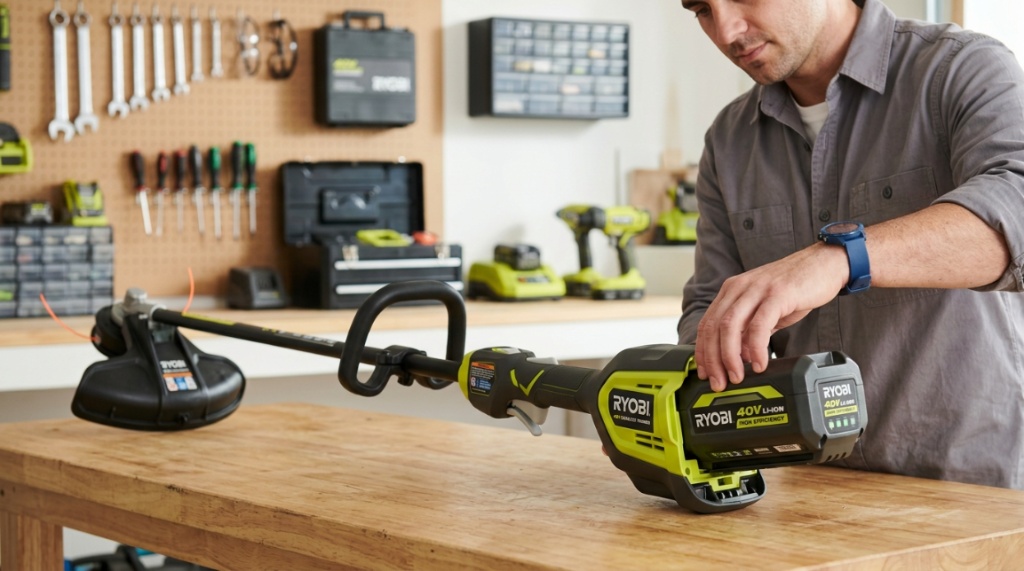
Buying a cordless trimmer is not just buying a trimmer; you are buying into a battery ecosystem. Before you choose, consider what other tools you already own. If you have a cordless leaf blower or chainsaw from a specific brand, sticking with that same battery platform saves you the cost of buying a new battery and charger. This is one of the most financially smart things you can do. Buying a trimmer that uses a unique battery means you are paying for a charger and battery that you might not need if you already have a compatible system at home.
You should also evaluate whether the trimmer comes with a charger and battery in the box or as a “tool only” option. Tool-only trimmers are cheaper if you already have a compatible battery. If this is your first cordless tool, buying a kit with a larger battery is worth the extra cost.
The Cost of Extras: Replacement Line and Batteries
Don’t forget ongoing costs. .080-inch diameter line is fine for standard weeds, but you need .095-inch line for thicker brush that can snap standard line quickly. Ensure the trimmer you pick accepts standard replacement spools, not proprietary ones that are expensive to replace. Also, consider the cost of a second battery. Even a 5.0Ah battery will drain in 30-45 minutes, and some larger properties require swapping once or twice. Purchase a fast charger if possible—it can recharge a battery in 30 minutes instead of several hours, making your work uninterrupted.
Top-Rated Categories for California Households
If you want to narrow down the market, most California homeowners find that 40V to 56V cordless trimmers from major brands like EGO, Greenworks, Ryobi, and Milwaukee perform excellently. EGO is known for its 56V power and battery longevity. Greenworks offers great budget options with solid 24V and 40V lines. Ryobi is the best choice if you already own their 18V or 40V tools—they have a wide range of attachments. Milwaukee’s M18 Fuel line is expensive but unmatched in durability and torque.
| Brand | Voltage | Best For | Typical Battery |
|---|---|---|---|
| EGO | 56V | Large yards, heavy brush | 5.0Ah – 7.5Ah |
| Greenworks | 24V/40V | Budget-friendly, medium yards | 2.0Ah – 4.0Ah |
| Ryobi | 18V/40V | Battery compatibility, DIY users | 4.0Ah – 6.0Ah |
| Milwaukee | 18V (M18) | Professional-grade durability | 5.0Ah – 12.0Ah |
Choose the brand based on the size and vegetation type you have. You don’t need a 56V high-torque motor if you are trimming Bermudagrass along a sidewalk in a condo complex. Save the money and buy a lighter unit.
Common Mistakes When Buying a Trimmer in California
Many people buy a trimmer that is either too powerful or too weak. The most common mistake is basing the decision solely on the tool’s peak horsepower or motor wattage. The real limiting factor is runtime and line weight. Another mistake is ignoring the cutting line type. Trimmers that accept only “fixed line” often need more frequent manual replacement, which is a drag. Opt for speed spool systems that let you reload without taking apart the head.
The biggest California-specific mistake is underestimating how much work is needed to maintain dry brush and weeds during fire season. A trimmer that is great for a damp lawn in Ohio is not necessarily capable of cutting down dry, stalky weeds that can clog a standard guard. Look for models with a guard that is designed to allow air to flow—they clog less often in dry conditions.
Frequently Asked Questions
Are gas string trimmers still sold in California?
New gas-powered string trimmers are essentially banned for sale in California due to small off-road engine regulations. You can still find used ones occasionally, but most retailers only stock battery or corded electric models. For most people, buying a new battery trimmer is the only legal path for new equipment.
How long does a battery string trimmer last on a single charge?
Runtime depends on the battery amp-hour (Ah) rating and the cutting load. A 2.0Ah battery typically lasts 15-20 minutes, while a 5.0Ah battery can last 40-50 minutes under normal trimming conditions. Heavy grass or thick brush will drain the battery much faster.
Can I use a corded trimmer on a large property?
You can, but it is not practical. The 100-foot extension cord will tangle, limit your range, and create tripping hazards. Corded trimmers are best for small, flat yards with easy access to an outdoor outlet.
What is the difference between a curved and straight shaft trimmer?
Curved shafts are lighter and better for small, basic trimming, but they require more bending. Straight shafts allow better reach under shrubs and reduce back strain, making them the preferred choice for larger areas and extended use.
Should I buy a trimmer from a brand that matches my other tools?
Yes. Choosing a trimmer that uses the same battery brand as your existing leaf blower or chainsaw means avoiding the cost of a new charger and battery. It also makes charging logistics easier—you only need one or two batteries for all tools.
Is a higher voltage always better?
Higher voltage (like 56V vs. 24V) generally means more torque and the ability to cut thick grass without stalling. But it also usually means a heavier tool and more expensive batteries. For standard residential yard maintenance, a 40V system is often the best balance.
Conclusion
Selecting the right string trimmer in California comes down to matching the tool to your property size, vegetation type, and budget while acknowledging that battery technology is now the standard. You will most likely be choosing a cordless model, and that is a good place to be. Focus on a straight shaft, a bump-feed head, and a battery platform that fits your existing tools or a reputable brand with a strong warranty. Prioritize a model with at least a 4.0Ah battery capacity for medium-sized yards, and always consider the long-term cost of replacement batteries and cutting line. By following the criteria here, you can cut through the marketing noise and end up with a trimmer that makes yard maintenance easier, quieter, and more efficient for years to come.