
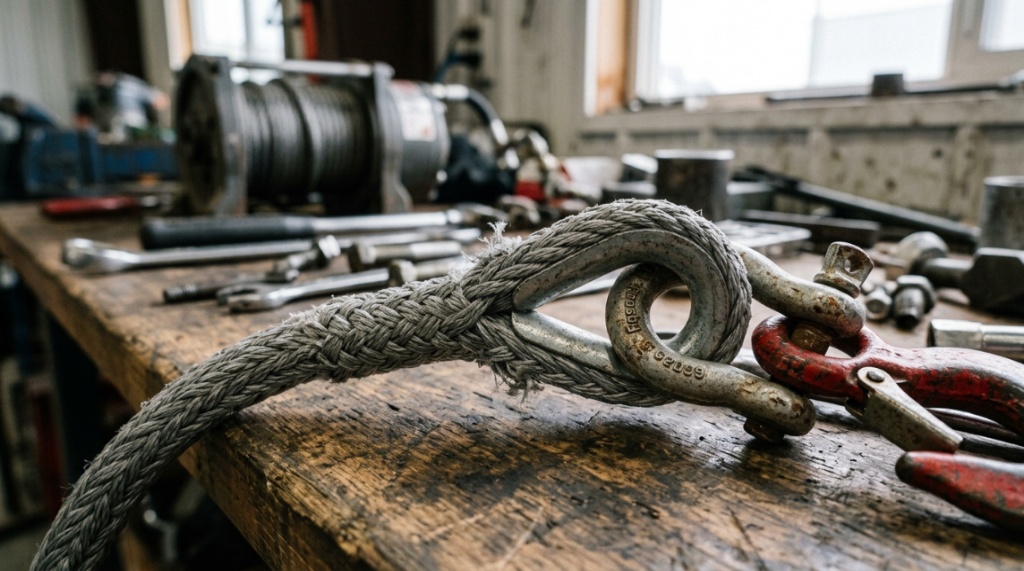
You trust your Amsteel rope with your safety, your rigging, and your expensive gear. So when it fails—whether during a recovery, a sail change, or a heavy lift—it’s not just frustrating; it’s dangerous. The harsh reality is that most Amsteel ropes don’t break because they are weak. They fail because of user error: improper splicing, wrong applications, UV neglect, or heat damage. You don’t need a stronger rope; you need to know how to avoid Amsteel rope failure before it causes an accident. In this guide, you will learn the exact causes of failure and the specific actions you can take today to keep your dyneema rope reliable.
What Actually Causes Amsteel Rope to Fail?
Amsteel rope fails primarily due to three hidden enemies: heat, sharp edge abrasion, and compromised splices. Understanding these threats is the first step to prevention.
Heat Friction and Creep
Amsteel is made of Dyneema (UHMWPE), which has a melting point around 300°F. However, it loses strength dramatically above 160°F. Rapid cycling under load, especially around winches or pulleys with bearing failure, generates internal heat that “creeps” the fibres. This leads to sudden failure without visible warning. Never let the rope slip rapidly through your hands or across a stationary object.
Sharp Edge Abrasion
Amsteel has poor cut resistance compared to steel cable. A burr on a fairlead, a rough cleat, or a sharp rock can sever 50% of the rope’s strength immediately. You must inspect every contact point before applying load.
Compromised Splices
A factory splice that buries less than the required tuck distance (usually 72 diameters for Amsteel in most applications) will pull out under load. Even a perfectly done splice weakens if dirt or sand works its way into the cover. A splice is the weakest link; treat it as such.
How Can You Identify Early Warning Signs of Rope Degradation?
You cannot rely on visual inspection alone. Amsteel often fails internally before the outer jacket shows wear. You must use a combination of touch, bend tests, and light inspection.
The “Soft Spot” and “Hockle” Checks
Run the entire length of the rope through your fingers. If you find a “soft spot” where the core feels mushy or thinner, the internal fibres are damaged. A hockle (a kink or twist) indicates that the rope was twisted under load, which permanently weakens the core. Discard the rope immediately if you find either.
Discolouration and Powdery Residue
If you rub the rope and a white, powdery dust comes off, that is degraded Dyneema fibre breaking down. This happens from UV exposure or chemical contamination (battery acid, fuel). Any stiffness or crunchy feeling also signals loss of lubricant within the braid.
Chafe Testing on High-Wear Zones
Focus your inspection on the first 12 inches from the splice and any section that regularly contacts a fairlead. Use a blunt probe to open the outer braid and look for fused or glazed inner fibres. If you see any shiny, melted-looking strands, the rope is compromised.
Why Does Splicing Quality Directly Dictate Rope Lifespan?
The splice is the engine of the rope’s strength. A poor splice reduces working load to 20% of rating. A perfect splice retains 95–100% of the rated breaking strength. There is no middle ground.
Critical Splice Dimensions You Must Verify
Every splice must have a specific bury length (tail length), taper, and number of stitches for the specific rope diameter. For standard 12-strand Amsteel, the bury should be a minimum of 72 times the rope diameter (e.g., 72 inches of bury for a 1-inch rope). If you didn’t make the splice yourself, ask the manufacturer for the specific chart. A shorter bury guarantees failure under cyclic loading.
Lock Stitching vs. Whipping
Do not rely on a simple whipping (wrapping thread around the tail). A proper lock stitch passes through the rope core and exits the cover, locking the tail inside. This prevents the bury from slipping out during relaxation cycles. Use waxed polyester thread and make at least 8–10 stitches.
Which Environmental Conditions Accelerate Amsteel Rope Failure?
Amsteel is resistant to rot and most chemicals, but it is not invincible. You need to adapt your care routine based on your environment.
UV Exposure in Marine and Solar Applications
Direct sunlight degrades Dyneema over time. While UV damage is slow compared to polyester, it is cumulative. Ropes left on deck in the sun for 18+ months will show significant strength loss. The best solution is a removable UV sleeve or storing the rope in a bag when not in use.
Chemical Contact (Fuel, Acid, and Chlorine)
Amsteel is resistant to most marine chemicals, but concentrated sulfuric acid (battery acid) and chlorine bleach cause rapid degradation. If your rope touches a battery terminal or is exposed to pool chemicals, rinse it immediately with fresh water and dry it. Never soak AmSteel in bleach.
Salt and Sand Abrasion
Salt crystals act like microscopic knives inside the braid. Sand gets embedded in the weave and grinds the fibres during flexing. Rinse your rope in fresh water after every saltwater use and let it dry completely before coiling. Shake out sand before storing.
How Should You Properly Inspect Amsteel Rope for Hidden Damage?
A simple “looks good” check is not enough. You need a systematic, hands-on inspection routine that takes less than five minutes but catches 90% of failures.
The Four-Step Inspection Routine
- Visual Scan: Look for fuzziness, discolouration, or flat spots. Fuzziness is normal on the surface. Discolouration is not.
- Compression Test: Squeeze the rope between your thumb and forefinger along a 3-inch section. It should feel firm and round. If it flattens easily, the core is damaged.
- Flex Test: Bend the rope sharply over your finger. Listen for a crackling sound. That sound indicates internal fibre breakage.
- Load Test (Low Risk): Apply a gentle hand-tension to the rope after inspection. Watch the splice area. If the cover shifts or the tail moves, retire the rope.
When to Use a Break-Strength Test
If you suspect damage but cannot confirm it visually, cut a 6-inch sample and send it to a certified rope testing lab. This costs less than replacing a full line blind. Never perform destructive testing on a line you intend to keep using—it will alter its properties.
Can You Use a Thimble or Sleeve to Prevent Abrasion Failure?
Yes. Using a thimble in the eye of the splice and a protective sleeve over the wear zone is the single most effective way to double your rope’s service life.
Metal vs. Composite Thimbles
Stainless steel thimbles are strong but can gall the Dyneema if rough. Use a polished stainless thimble or a plastic composite thimble designed specifically for high-modulus ropes. A plastic thimble is lighter and less likely to damage the fibre, but it can deform under extreme heat. For heavy lifting, use a metal thimble lined with leather or rubber.
Heat-Shrink Sleeves and Abrasion Jackets
Heat-shrink sleeves (polyolefin) are excellent for protecting the eye of the splice from chafe. For long runs over rough surfaces, use a Dyneema or polyester abrasion jacket that slides over the line. This is standard practice in arborist rigging and marine towing. It prevents the outer braid from wearing down to the core.
What Is the Correct Way to Store Amsteel Rope?
Incorrect storage causes permanent deformation and weakness. You must store Amsteel loosely coiled, dry, and away from heat sources.
Coiling Methods That Prevent Hockles
Always coil Amsteel in a figure-eight pattern. Do not wrap it around your elbow like a climbing rope—this introduces twists that become hockles under load. Lay the rope in a loose bundle in a breathable bag. A tight coil in a plastic bag traps moisture and heat.
Temperature and Humidity Guidelines
Store Amsteel between 40°F and 80°F. Avoid attics, vehicle trunks in summer, and direct sunlight. Humidity below 60% is ideal. If the rope gets wet, hang it to dry in a shaded, ventilated area. Never use a heater or hair dryer to speed up drying—localized heat weakens the fibres.
How Often Should You Replace Amsteel Rope?
You cannot put a universal calendar date on Amsteel replacement because usage varies dramatically. Instead, use a “cycles and incidents” rule.
The 3 Incidents Rule
Retire the rope after any of these three events: (1) it has been shock-loaded beyond 30% of its breaking strength, (2) it has been exposed to a chemical spill (fuel, acid, or solvent), or (3) it has been run over by a vehicle. Immediately. Do not re-purpose it for a lighter job. The internal damage is not visible.
The General Replacement Timeline for Moderate Use
| Usage Type | Replace Every |
|---|---|
| Marine halyard (daily use) | 1–2 years |
| Recovery rope (occasional off-road) | 3–4 years |
| Arborist rigging (weekly use) | 6–12 months |
| Static tie-down (UV exposed) | 1 year |
These are maximum intervals. If your rope looks or feels different than the day you bought it, replace it early. Your safety is worth more than the cost of a new line.
How Do You Choose the Right Amsteel Rope for Your Specific Job?
Using the wrong diameter or construction type for your load is a guaranteed path to failure. You must match the rope to the application, not the other way around.
Breaking Strength vs. Working Load Limit
Never use the breaking strength as your working load. The working load limit (WLL) should be 20% of the breaking strength (5:1 safety factor) for lifting humans and 25% (4:1) for pulling vehicles. For example, a 1/4-inch Amsteel breaks at 8,600 lbs, but your safe working load for a vehicle recovery is only 1,720 lbs.
Flexibility vs. Abrasion Resistance
Standard 12-strand Amsteel is very flexible but abrades easily. For high-abrasion environments (like winching over rocky terrain), choose a braid-on-braid or covered Dyneema rope. The outer cover adds significant life at the cost of some flexibility. For marine halyards where low stretch is critical, stick with a single-braid Amsteel,Before setting up your rigging gear, always ensure you pick a strong multi-purpose rope that matches your load requirements and environmental exposure limits.
Is It Safe to Splice Amsteel Rope Yourself?
Yes, but only if you are willing to invest in learning the specific technique for your rope construction. A bad DIY splice is more dangerous than any factory-made splice.
Learning Materials and Practice
Watch splicing tutorials from the rope manufacturer, not from a general YouTube channel. Use a fid kit designed for hollow braid ropes. Practice on cheap polypropylene rope for 10 splices before touching your expensive Amsteel. Always test your first five splices to destruction in a controlled environment.
When to Hire a Professional Splicer
If your application involves life safety (climbing, crane rigging, or rescue) you should pay a certified rigger to splice your lines. They can perform a proof load test and certify the splice. This costs a small fraction of a hospital bill.
Your best defense is knowledge and discipline. By eliminating heat, abrasion, and poor splicing from your rope management routine, you can dramatically extend the lifespan of your gear. To get started with a high-quality, affordable option designed to avoid Amsteel rope failure, consider verified synthetic ropes that come with clear manufacturer splice charts and UV warranties.
Frequently Asked Questions
Can Amsteel rope be repaired after being damaged?
No. Once Amsteel fibres are damaged (fused, melted, or broken), the rope cannot be repaired. You can cut out the damaged section and re-splice the good ends together, but this reduces overall strength and length significantly. Replacement is safer.
Does Amsteel rope break suddenly or does it show warning signs?
Amsteel often breaks suddenly without visible fraying because the inner core fails first. This is why you must perform the compression test and flex test regularly. Do not rely on visual fraying as your only cue.
Is Amsteel rope UV resistant?
Amsteel has moderate UV resistance, but it is not UV-proof. Dyneema degrades slowly in direct sunlight over many months. For long-term outdoor exposure, use a UV-protective sleeve or store the rope indoors when not in use.
Can I use Amsteel rope for a winch line?
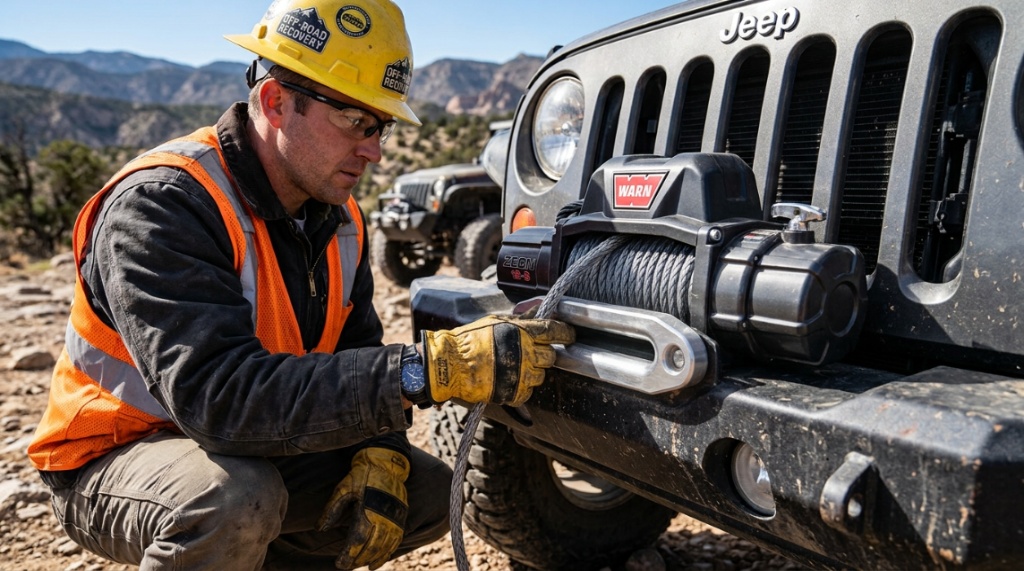
Yes, but only if you use a synthetic rope winch with a fairlead designed for round ropes. You must also use a “rope saver” or protective sleeve over the first few feet to prevent abrasion on the drum. Amsteel winch lines require more care than steel cable.
Why is my new Amsteel rope stiff?
New Amsteel is often stiff due to a manufacturing lubricant called spin finish. This is normal and will soften with use and flexing. If stiffness persists after 20 hours of use, the rope may have been stored incorrectly or is a low-quality variant.
Can I tie a knot in Amsteel rope?
You should avoid knots in Amsteel because knots reduce strength by 50–70% due to the rope’s low friction coefficient. Use a spliced eye instead. If you must tie a knot in an emergency, use a figure-eight loop and never load it at full capacity.
How do I clean dirty Amsteel rope safely?
Wash Amsteel in cool water with a mild soap (like Woolite). Do not use bleach, fabric softeners, or detergents with enzymes. Rinse thoroughly and air dry away from heat. Machine washing is acceptable only on a gentle cycle in a mesh bag.