
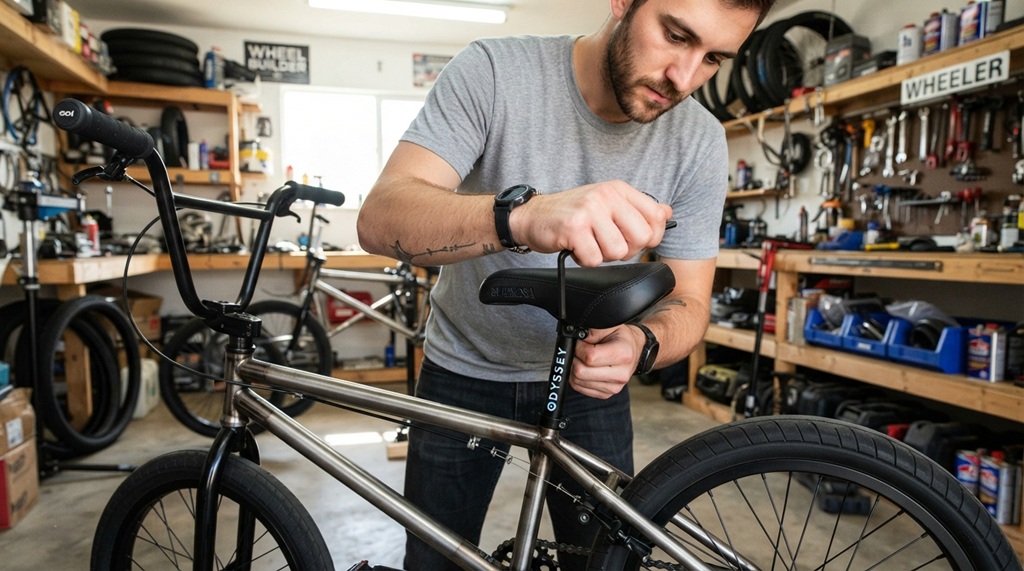
Your BMX saddle is where you and your bike connect—and if that connection is uncomfortable, nothing else matters. Whether you’re hammering laps at the skatepark, cruising the streets, or slogging through a trail race, the wrong seat can turn a great session into a painful one. Yet most riders treat the saddle as an afterthought. The truth is that finding the right BMX saddle isn’t just about looks; it’s about matching your riding style, body mechanics, and personal preference to a component that can genuinely make or break your experience.
Key Takeaways
- Your riding discipline (street, park, race, or dirt) should dictate the saddle’s shape, padding, and materials—not just its color or brand.
- Width, length, and nose angle matter more than most riders think; a poorly matched saddle can cause chafing, numbness, and even lower-back pain.
- Material choices like plastic, leather, or composite involve real trade-offs between durability, weight, grip, and water resistance.
- Always consider the bolt pattern and rail size—most modern BMX bikes use a specific standard, but older frames and certain aftermarket posts may differ.
- “Breaking in” a saddle is a myth for most modern materials; if it feels terrible on the first ride, it probably always will.
Why Saddle Choice Is More Important Than You Think
Unlike road or mountain bike saddles, BMX saddles are often short, wide at the rear, and thickly padded—but that’s a broad generalization. The reason saddle choice is so critical is that BMX riding is highly dynamic. You’re constantly shifting your weight: forward for manuals, back for landing, and standing most of the time. When you do sit, you need a platform that supports your sit bones without interfering with your legs’ natural movement for cranking and spinning.
Many riders assume that “bigger and softer is better,” which is generally a mistake. Excess padding can cause friction, leading to chafing and saddle sores. Conversely, a saddle that’s too narrow may not support your pelvis correctly, leading to discomfort on longer trail rides or park sessions with frequent seated carving.
Finding the right BMX saddle is a matter of matching the component to your discipline, your body dimensions, and the type of riding you spend the most time doing.
Understanding the Main BMX Riding Disciplines
Before you even start browsing, you need to be honest about where you ride the most. Each BMX discipline has unique saddle demands.
Park and Street Riding
Park and street riders typically run a shorter saddle with a slim profile. Why? Because a compact saddle is easier to move around when you’re doing barspins, tailwhips, or pulling the bike up for grinds. A shorter length means less material in the way when rotating the rear end. Also, a flatter top profile helps with jumping manuals and provides a stable surface for quick seated flicks.
Medium-density padding is usually the sweet spot here. You want enough cushion for seated rolling around the park, but not so much that it adds bulky weight or catches on your pants. Many park riders also prefer a saddle with a slight downward angle at the nose to allow for easier weight shifts toward the rear when landing fakie.
Race and Dirt Jumping
Racers and dirt jumpers face a different challenge: they often sit down more frequently, especially on the starting hill and when pumping through rhythm sections. For racing, a slightly longer silhouette gives you more fore-aft placement options. You’ll want a stiffer base and thinner padding because micro-adjustments matter when trying to keep power transfer efficient.
Dirt jumpers, on the other hand, tend to spend most of their time standing upright in the air, but they do sit when rolling around between hits. A robust, slightly wider saddle with a grippy surface helps keep you planted during the run-up to a lip.
Key Saddle Dimensions: Width, Length, and Nose Angle
Once you’ve identified your discipline, the next step is the geometry. This is where many riders mess up because they just buy the same saddle their friend runs.
Saddle Width and Sit Bone Support
Width is about matching your sit bone distance. When you sit on a saddle, your pelvis rotates, and the rear of the saddle should support your ischial tuberosities (the bones you feel when you sit on a hard chair). If the saddle is too narrow, you’ll feel pressure on your soft tissue, causing numbness in the perineal area. If it’s too wide, it can chafe the inside of your thighs, especially when you’re cranking hard out of the saddle.
Most BMX saddles range from about 5.5 inches to 6.5 inches wide. As a rough rule, if you have a wider pelvis, you’ll need a wider rear platform. But don’t overthink it—sit on the saddle at a shop if possible, or measure your sit bone distance on a piece of corrugated cardboard at home.
Length and Nose Angle
Length affects how far forward you can slide when climbing or when you want to shift weight for a manual. Shorter saddles (around 8 inches) are common for street and park because they’re less intrusive. Race saddles can extend to 10 inches or more for that extra adjustment range.
Nose angle is a matter of preference, but typical BMX saddles have a fairly flat top. A slight upward tilt can help hold you in place during hard acceleration, but too much upward tilt causes groin pressure. A downward tilt relieves pressure but makes it easier to slide forward when you don’t want to. Aim for flat or a 5-degree downward angle for the first test ride.
Balancing Durability and Comfort: Materials, Padding, and Rail Types
Selecting the ideal BMX saddle requires navigating the key trade-offs between weight, padding density, and structural rail strength to prevent premature wear during high-impact landings. While lightweight slim seats suit race setups, thicker padded options offer essential cushioning for street riding, making it vital to prioritize your specific riding style over aesthetics alone—much like how safeguarding your head requires equal precision, which you can master by reading our guide on buy a helmet that fits well and saves money.
Saddle Base and Cover Materials
You’ll typically encounter three base materials:
- Plastic (Polypropylene): Inexpensive, waterproof, and easy to clean. But it flexes under heavy loads and can crack over time, especially if you jump a lot.
- Composite / Fiberglass-reinforced: Stiffer than plastic, better for racing because it doesn’t flex, but heavier and usually more costly.
- Leather (or synthetic leather): Classic look, durable, and often conforms slightly to your shape over time. But it’s heavier, tricky to maintain, and slippery when wet.
For cover material, you’ll see combinations of microfiber, vinyl, and Kevlar. Kevlar is the most resistant to tears from grinding—worth it if you slide on concrete frequently.
Padding Thickness and Density
Pad density is often overlooked. Soft padding feels nice in the shop but compresses too easily, causing pressure on your sit bones after 20 minutes of riding. Firm padding offers better support and reduces friction, but it can be harsh on rough terrain. The best compromise is medium-density polyurethane foam that’s about 1 to 1.5 inches thick.
Rail Types and Compliance
Most BMX saddles use steel rails because they’re cheap and strong. But some premium options use hollow chromoly or titanium to save weight. Rails also come in different diameters:
- Standard 7mm round rails: Fit almost all BMX seat posts and come on most aftermarket saddles.
- Oval or oversize rails: Used on some race-specific saddles; they need a compatible post clamp.
Also, check whether you need a “pivotal” or “aluminum” mount system. Many modern BMX complete bikes use pivotal seats, which use a single bolt on the underside and a flat plastic base. Traditional “two-rail” seats attach with two clamps. Deciding which is “better” comes down to your post—pivotal is simpler and lighter, but two-rail offers more fore-aft adjustment.
How to Test a Saddle Without Buying It Blind
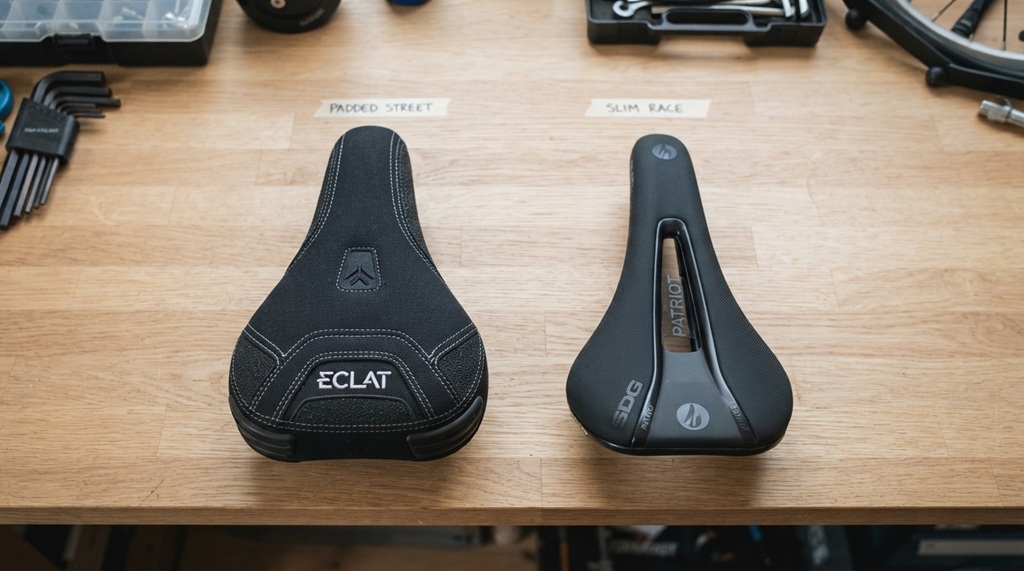
The best advice is to never settle for a saddle without some kind of test phase. Here’s a practical method:
- Do the pressure test: Press the center of the saddle with your thumb. If it bottoms out to the rails easily, it’s too soft for you.
- Check the nose flex: Grab the nose and try to twist it. If it flexes excessively, it might be too compliant for aggressive moves.
- Check the rear profile: Place the saddle on a flat surface. It should wobble slightly if the back is rounded, which is good for park. A flat base is better for racing.
- Test shorter—not longer: When you install it, start by sliding the saddle slightly forward. Most riders prefer a position slightly nose-low for BMX. You can’t test that in a shop.
One important note: if you feel pressure on your genitals or a burning sensation on your inner thighs during a quick test ride, that’s a red flag. It won’t get better with time—the shape is wrong for your body.
Common Mistakes Riders Make When Choosing a Saddle
Many riders sabotage themselves before even getting the saddle onto the bike. Steer clear of these pitfalls:
- Prioritizing weight over comfort: Cutting 50 grams is pointless if the seat causes you to stand up more than you need to.
- Copying a pro rider’s saddle: Pro riders are often sponsored and don’t have the same body geometry as you. Their saddle is tuned to their body, not yours.
- Ignoring the post compatibility: You’d be surprised how many riders buy a two-rail saddle and then realize their seat post only accepts pivotal. Always check before ordering.
- Thinking “break-in” is a thing: For most modern polyurethane and plastic saddles, there’s no significant break-in. If it hurts in the first 10 minutes, it will hurt in a month.
Frequently Asked Questions
How do I know if my BMX seat post is pivotal or two-rail?
Look at the top of your seat post. Pivotal posts have a single vertical clamp with a central bolt hole and usually have a matching slotted rail adapter on the saddle. Two-rail posts have two horizontal clamps that side the rails from either side.
Should I get a wider saddle if my sit bones are wide?
Yes, but only within the typical BMX range. If you’re on the wider end of the spectrum, opt for a 6-inch-plus wide rear platform. A saddle that’s too narrow for your sit bones can cause perineal pressure and numbness.
Is a lighter saddle better for park riding?
Not necessarily. Lighter saddles often use thinner foam and less robust bases, which can be uncomfortable or crack under heavy impacts. Park riding benefits from durability more than from saving a few grams.
Can a BMX saddle be used on a mountain bike?
Technically yes, if the rails match the seat post clamp. But BMX saddles are shorter and often wider at the rear, which may not provide enough fore-aft support for mountain bike climbing. It’s not recommended for prolonged trail riding.
Does a padded saddle absorb landing shocks better?
Marginally, but that’s not its main job. The saddle’s base is what handles landing forces; foam padding is there to support your sit bones when seated. Don’t rely on a saddle to absorb your landing—your knees and legs should do that.
What is the best saddle for a beginner?
A mid-priced pivotal saddle with medium-density foam, a flat profile, and a durable Kevlar or plastic cover is a safe starting point. Avoid the cheapest option and avoid the race-only super-slim models until you know your preference.
Conclusion
Finding the right BMX saddle requires you to shift your mindset from “what looks good” to “what fits my riding.” Ask yourself three questions: Where do I ride most? What does my sit bone width require? What rail system does my post use? Once you answer those, the choice becomes finite and practical. Start with a medium-profile saddle that balances padding and durability. Buy from a shop that allows returns, and don’t be afraid to try two at a time. Your body is the only one that can tell you what’s correct—so listen to it, and don’t compromise.