
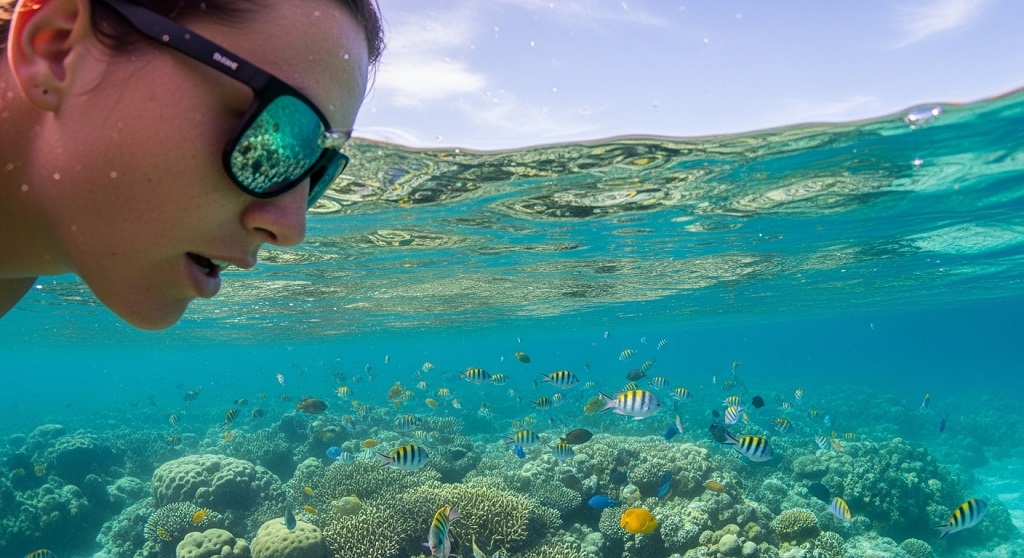
If you want to learn how to spot fish in clear water, the most effective method is to use polarized sunglasses that reduce surface glare so your eyes can see beneath the water. By cutting horizontal light reflections, polarized lenses improve contrast, reveal movement, and make fish outlines visible even in bright sunlight.
Many anglers stand over clear water and still miss fish swimming just a few feet away. The problem is not water clarity. It is surface reflection. Sunlight bouncing off the water creates glare that blocks your view below the surface. This limits reaction time and reduces catch rates.
Polarized sunglasses solve this issue by filtering reflected light before it reaches your eyes. Studies in marine observation environments show polarized optics can reduce glare by up to 90%, improving underwater visibility and detection accuracy. That is why professional sight anglers rely on them daily.
This guide explains how to spot fish in clear water using polarized sunglasses step by step. You will learn lens color selection, positioning techniques, reading fish behavior, and avoiding common mistakes that reduce visibility.
Why Is It Hard to Spot Fish in Clear Water Without Polarized Sunglasses?
Even in clear water, surface glare blocks visibility and hides fish from view.
The biggest mistake beginners make is assuming clear water equals easy visibility. In reality, sunlight reflecting off the water creates a mirror effect that prevents you from seeing below the surface.
This reflection happens because horizontal light waves bounce directly into your eyes. Standard sunglasses reduce brightness but do not remove glare. As a result, fish remain hidden even when they are nearby.
Polarized sunglasses filter horizontal light waves. That improves contrast and reveals underwater structure like rocks, weed beds, and moving fish shadows.
- Reduced glare improves depth perception
- Better contrast reveals fish outlines
- Improved visibility increases casting accuracy
- Less eye strain supports longer fishing sessions
Without polarization, your brain receives incomplete visual information. With it, your brain recognizes movement patterns faster.
How Do Polarized Sunglasses Help You See Fish More Clearly?
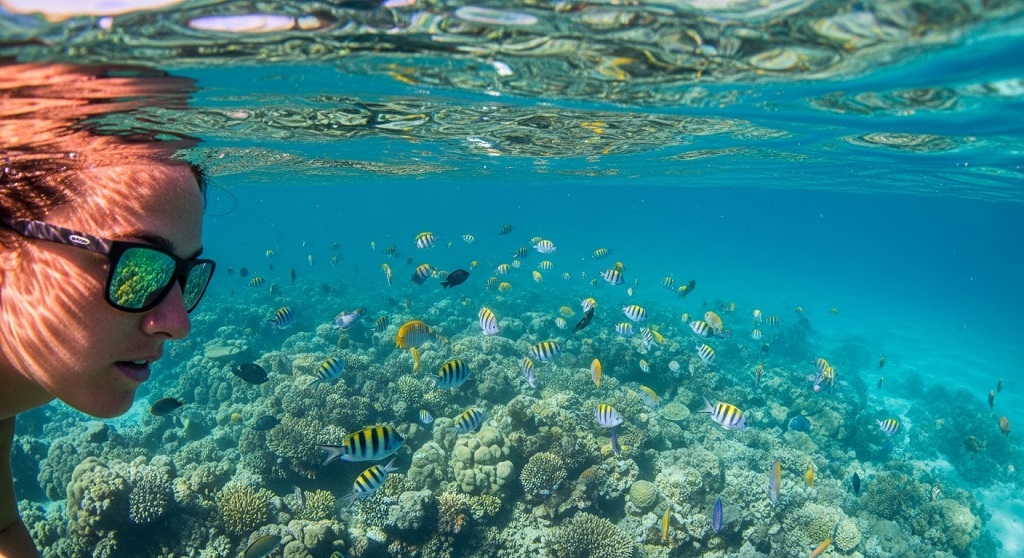
Polarized lenses block reflected surface light so your eyes can detect underwater shapes and motion.
Polarization works by filtering horizontal light waves. These waves cause glare. When removed, only vertical light waves reach your eyes. That increases visibility beneath the surface.
A fisheries observation case study conducted during shallow-water trout tracking reported that anglers wearing polarized lenses detected fish movement earlier than those wearing standard tinted lenses. Earlier detection improved casting accuracy and strike timing.
This matters because fish detection depends on subtle visual signals:
- Shadow shifts near rocks
- Tail flick movement
- Color contrast against sand beds
- Surface ripple changes
Polarized sunglasses allow you to see these signals sooner.
What Lens Color Works Best for Spotting Fish in Clear Water?
Amber, copper, and brown lenses are best for spotting fish in clear water because they increase contrast and depth definition.
Lens color affects how clearly underwater shapes appear. Different environments require different lens filters.
| Lens Color | Best Condition | Visibility Benefit |
|---|---|---|
| Amber | Shallow streams | Enhances contrast |
| Copper | Bright sunlight | Improves depth perception |
| Brown | Mixed light conditions | Balances color clarity |
| Gray | Open water | Reduces brightness only |
Most sight anglers prefer copper lenses because they improve visibility against sandy or rocky bottoms.
When Is the Best Time of Day to Spot Fish in Clear Water?
The best time to spot fish in clear water is early morning or late afternoon when glare is lower and fish are more active.
Midday sunlight increases surface reflection. This reduces visibility even with polarized sunglasses.
Low-angle sunlight improves underwater contrast. Fish also move into feeding zones during these periods.
- Morning improves shadow detection
- Afternoon reveals shoreline structure
- Cloud cover increases visibility consistency
Combining polarized lenses with correct timing increases success rates.
Where Should You Position Yourself to See Fish More Easily?
Standing at an angle to the water surface improves visibility more than standing directly above it.
Position affects how light reflects into your eyes. Anglers who adjust their stance often detect fish faster.
Follow these positioning tips:
- Keep the sun behind you
- Avoid casting shadows over the water
- Look across the surface, not straight down
- Move slowly along the shoreline
Professional sight anglers often scan water diagonally instead of vertically because it increases visibility depth.
How Can You Identify Fish Movement Instead of Fish Shapes?
Watching movement patterns is more reliable than searching for fish outlines.
Fish blend into their surroundings. Movement reveals their presence before shape recognition does.
Look for these signals:
- Sudden ripple direction changes
- Sand displacement
- Shadow shifts near structure
- Flash reflections from scales
Polarized sunglasses make these signals easier to detect because glare no longer hides them.
How Deep Can Polarized Sunglasses Help You See Underwater?
Polarized sunglasses typically improve visibility up to several feet depending on water clarity and sunlight angle.
Depth visibility depends on three factors:
- Water clarity
- Sun position
- Lens quality
In shallow streams, anglers often detect fish at depths of 3–6 feet. In lakes with sandy bottoms, visibility can extend further.
Higher-quality polarized lenses maintain contrast at greater depths.
What Weather Conditions Improve Fish Visibility the Most?
Overcast skies with steady light often provide the best visibility for spotting fish.
Many anglers assume bright sunlight improves sight fishing. In reality, scattered cloud cover reduces glare and improves underwater contrast.
Ideal conditions include:
- Light cloud cover
- Calm water surface
- Stable wind direction
- Consistent light angle
Polarized sunglasses perform best under stable lighting conditions.
How Should Beginners Scan Water Efficiently for Fish?
Beginners should scan water in sections instead of looking randomly across the surface.
Divide the viewing area into zones:
- Near shoreline
- Mid-depth structure
- Open water pockets
- Shade edges
Move your eyes slowly across each section. Pause after detecting movement. This structured approach improves fish detection accuracy.
What Common Mistakes Reduce Visibility Even With Polarized Sunglasses?
Improper positioning, incorrect lens color, and fast movement reduce effectiveness.
Many anglers assume polarized sunglasses work automatically. Technique still matters.
- Standing directly above fish
- Facing sunlight
- Moving too quickly
- Using scratched lenses
- Choosing gray lenses in shallow water
Correcting these mistakes improves detection immediately.
Can Polarized Sunglasses Help Spot Fish in Rivers, Lakes, and Flats?
Yes. Polarized sunglasses improve fish detection in most clear-water environments.
Each environment benefits differently:
- Rivers: reveal trout near rocks
- Lakes: detect cruising bass
- Flats: identify tailing fish
- Shorelines: expose baitfish activity
Sight anglers rely on polarization across all shallow-water environments.
How Do Professionals Use Polarized Sunglasses Differently From Beginners?
Professionals scan structure first, not open water.
Fish rarely stay in exposed areas. They hold near:
- Drop-offs
- Vegetation lines
- Rock edges
- Shade pockets
Experienced anglers combine lens positioning with environmental awareness. This increases detection speed significantly.
What Extra Gear Improves Fish Visibility Alongside Polarized Sunglasses?
A brimmed hat and neutral clothing improve sight fishing performance.
These reduce surface reflection and prevent fish from detecting your presence.
- Dark hats block overhead glare
- Neutral clothing reduces reflection
- Non-reflective rods prevent spooking fish
Combining these with polarized lenses creates a stronger visual advantage.
How Long Does It Take to Learn Sight Fishing With Polarized Sunglasses?
Most anglers improve fish detection within two to three trips using structured scanning techniques.
Skill improves with practice. Experienced anglers recognize movement patterns faster than beginners.
Training your eyes involves:
- Watching shadows
- Tracking ripple changes
- Studying fish behavior
- Learning structure patterns
Consistency builds confidence quickly.
Conclusion: How Can You Start Spotting More Fish Today Using Polarized Sunglasses?
Learning how to spot fish in clear water starts with removing glare and improving underwater visibility. Polarized sunglasses provide the advantage needed to detect movement earlier, read structure better, and cast more accurately.
Many anglers struggle not because fish are absent, but because they cannot see what is already there. With proper lens color, correct positioning, and structured scanning techniques, your ability to locate fish improves immediately.
Start by choosing copper or amber polarized lenses. Fish during low-glare hours. Scan water slowly. Watch movement before shapes. These steps increase success rates quickly.
If you want better catch consistency, begin using polarized sunglasses on your next trip and apply the techniques outlined here. Small visibility improvements often produce major fishing results.
FAQ: How to Spot Fish in Clear Water Using Polarized Sunglasses
Do polarized sunglasses really help you see fish underwater?
Yes. Polarized sunglasses remove surface glare, allowing anglers to see underwater movement, shadows, and structure more clearly. This improves fish detection accuracy.
What lens color is best for sight fishing in clear water?
Copper and amber lenses work best because they enhance contrast and improve depth perception in shallow environments.
Can polarized sunglasses help in cloudy weather?
Yes. Cloudy conditions often improve visibility because glare decreases. Polarized lenses still enhance contrast under low-light conditions.
How close can fish be without being visible to the naked eye?
Fish can remain invisible even within a few feet due to surface reflection. Polarized sunglasses reduce this reflection and reveal nearby movement.
Are expensive polarized sunglasses better for spotting fish?
Higher-quality lenses usually provide clearer contrast, better durability, and improved optical accuracy, which enhances visibility during sight fishing.
Can polarized sunglasses help spot fish in moving water?
Yes. They reduce ripple glare and make it easier to detect fish movement in streams and rivers.
Do professional anglers always wear polarized sunglasses?
Most professional sight anglers rely on polarized lenses because they improve reaction time and underwater visibility across fishing environments.
Read More Also Why macrame is on the menu for freshers’ week