
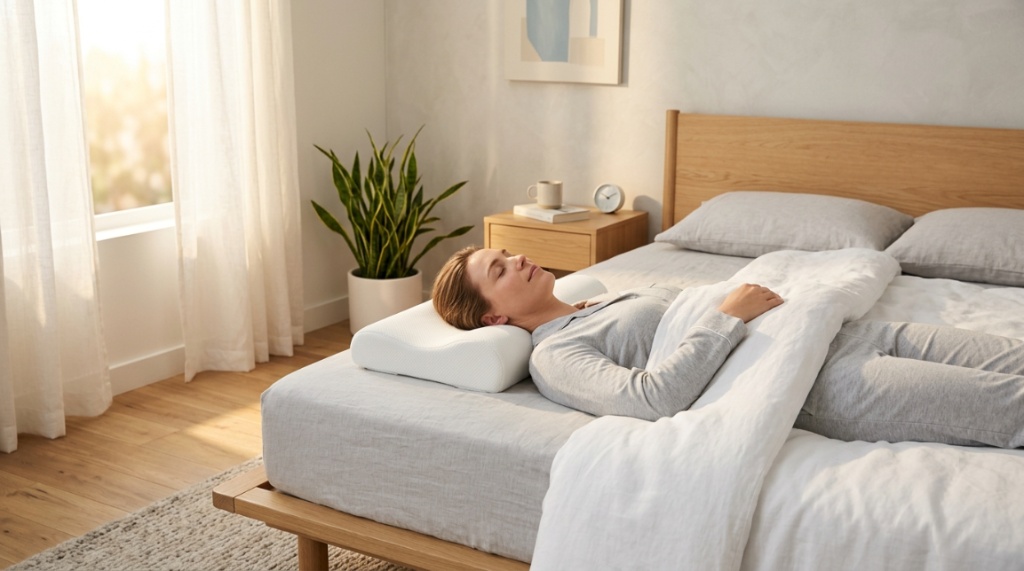
That telltale rumble isn’t just a nuisance—it’s a sign that your airway is partially blocked while you sleep. Snoring disrupts your rest, damages relationships, and often signals an underlying issue with posture and breathing. If you’re tired of waking up exhausted, the culprit might not be your sinuses or weight—it could be the angle of your neck. The right head and neck support can dramatically open your airway, and a medically-designed cervical pillow for snoring addresses this problem at its physical root. This guide shares exactly how these ergonomic pillows work, what features matter most, and how to adapt to one for quieter, deeper sleep.
What Exactly Is a Cervical Pillow and How Does It Stop Snoring?
A cervical pillow is an orthopedic support designed to maintain the natural inward curve of your neck. Unlike fluffy standard pillows that push your head forward and kink your windpipe, these pillows support the cervical spine. By keeping your head aligned with your torso, soft tissues don’t collapse into the airway, which is the primary mechanical cause of vibration—what we call snoring.
The Mechanics of Sleep Apnea and Airway Collapse
When you lie flat on a thick pillow, your neck flexes, narrowing the pharyngeal airway. This collapse increases air velocity, causing the soft palate and uvula to vibrate. A contoured pillow prevents this flexion. Research indicates that consistent cervical support reduces the Apnea-Hypopnea Index (AHI) in many positional sleepers by maintaining a neutral breathing corridor.
Key Differences from Standard Sleeping Pillows
Standard pillows offer uniform loft, but cervical models have an elevated contour (or wing) and a central depression. The depression cradles the head while the higher edge supports the neck. This dynamic shape promotes cervical lordosis, whereas traditional pillows often only support the head, leaving the neck unsupported and strained.
Who Benefits Most from This Type of Support?
Side and back sleepers with mild to moderate positional snoring see the most dramatic results. If your snoring worsens when lying on your back, a cervical pillow encourages side-sleeping through its angled design. Individuals with a short neck, stiff shoulders, or a flat cervical curve also find relief from morning stiffness alongside reduced noise levels.
Why Does Pillow Loft and Firmness Matter for Snoring Reduction?
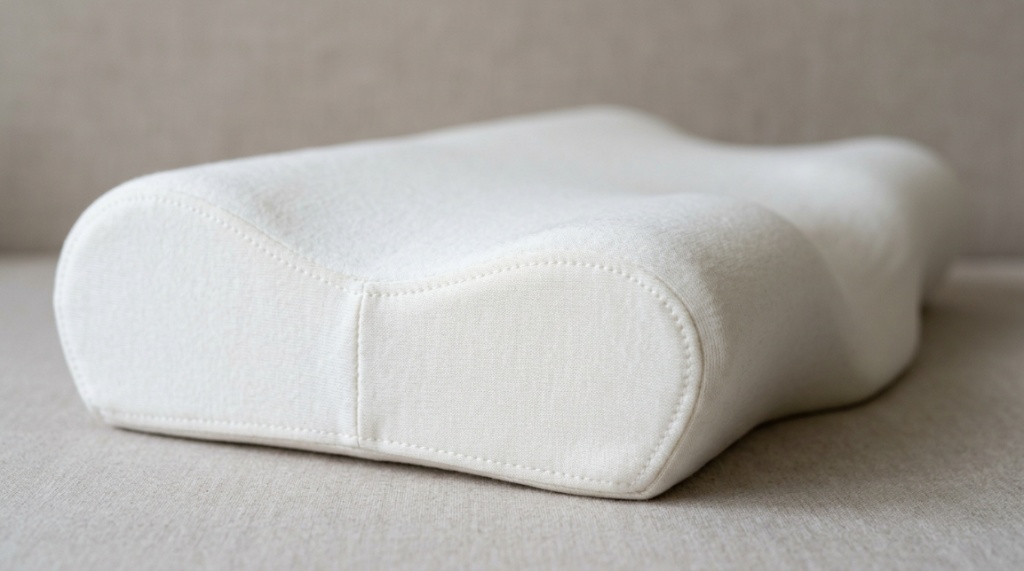
The correct pillow height isn’t about preference—it’s about anatomical alignment. A pillow that’s too high tilts your chin toward your chest; one too low lets your head drop backward. Both positions strain the neck and narrow the airway. For snoring reduction, the “sweet spot” aligns the ear, shoulder, and hip in a straight line.
Measuring Your Perfect Pillow Height at Home
Stand against a wall and measure the distance from your shoulder edge to the base of your skull. This measurement (typically 4 to 5 inches for side sleepers) indicates your ideal compressed loft. For back sleepers, this distance multiplied by 0.7 gives the optimal height. Use a firm pillow with adjustable filling to fine-tune this setup.
Sleeping Position: Side vs. Back vs. Stomach
Stomach sleeping is impossible with a cervical pillow, which is a benefit for snorers—this position torques the neck severely. Back sleepers should use the lower contour of the pillow. Side sleepers should contact the higher wing. If you switch positions at night, a pillow with two distinct heights is essential for maintaining airway patency.
The Role of Temperature and Material Density
Memory foam contours closely but retains heat, which can disrupt sleep. Gel-infused or latex cervical pillows offer similar support but regulate temperature better. The density matters: a pillow that is too soft will compress under head weight, losing the necessary lift. Look for a density of 35–50D in solid foam cores for optimal support.
How Should You Sleep on a Cervical Pillow for the First Time?
Start by placing the pillow so the lower curve supports your neck and the higher lip rests under the base of your skull—not your shoulders. Lie on your back for 15 minutes to assess comfort. Sleep on a firmer surface initially; a sagging mattress will counteract the pillow’s alignment benefits.
Step-by-Step Guide to Positioning
- Lie on your back and place the head in the central depression.
- Ensure your forehead is slightly higher than your chin (neutral posture).
- For side sleeping, use the higher edge and tuck the lower edge under your neck.
- Keep your shoulders on the mattress, not on the pillow.
- Adjust the pillow’s depth until you feel a gentle stretch at the back of the neck.
Common Positioning Mistakes to Avoid
The most frequent error is placing the pillow under the shoulders, which elevates the torso. Another mistake is keeping the pillow too far forward or backward, causing the chin to jut. Always slide the pillow down or up until the neck feels lengthened, not compressed.
Adaptation Timeline and Muscle Soreness
Expect mild neck soreness for the first 3–5 nights as the deep stabilizing muscles relax. This is a normal response to restoring the cervical curve. To ease the transition, use the pillow for 2 hours during the evening while watching TV, then progress to full-night use. If pain persists beyond 10 days, reduce the loft.
Which Cervical Pillow Features Have the Most Impact on Airway Support?
Look for a contoured shape with a pronounced central depression, moderate to firm support, and a cutout for the shoulder. A key feature is an occipital notch—an indentation that supports the head’s base while elevating the neck. Without this notch, the head often slides forward, defeating the purpose.
Contour Depth vs. Neck Roll Design
Deep contours provide aggressive support for those with large neck circumference, while subtle rolls suit petite frames. A neck roll that is too rounded creates a fulcrum, flexing the head backward unnaturally. The ideal shape is a gradual slope from the thoracic spine to the cranium, not a sharp ridge.
Material Composition: Memory Foam, Latex, or Water?
Memory foam (viscoelastic) is the most common for snoring reduction due to its even pressure distribution. Natural latex offers a bouncier feel and better airflow plus anti-microbial properties. Water-based pillows allow infinite loft adjustability, but their sloshing motion can be disruptive. For most, a high-resilience polyurethane foam with a cooling gel layer balances support and comfort.
Adjustable vs. Fixed Height Pillows
Fixed-loaf options are simpler but can be too high/low during positional changes. Adjustable shredded-foam fill uses a zipper system where you can add or remove filling to alter loft. For snoring relief, adjustable options are superior because you can dial in the exact height for the narrowest airway clearance.
Can a Cervical Pillow Eliminate Severe Sleep Apnea?
No—a cervical pillow is not a substitute for CPAP or oral appliances in cases of moderate to severe obstructive sleep apnea (OSA). However, it can be an effective adjunct therapy. For people with mild OSA or primary snoring, these pillows often eliminate the vibrations entirely, but they do not treat central sleep apnea or complete obstructions.
When to See a Doctor for Snoring
Seek medical evaluation if you experience gasping, choking, witnessed apnea episodes, or excessive daytime sleepiness. A home sleep test can determine your AHI. If AHI is above 15, rely on medical treatment and use the pillow only for comfort. Always ensure a diagnosis precedes self-treatment.
Combining Pillow Therapy with Other Lifestyle Changes
Weight loss, alcohol avoidance, and lying on your side are the foundational strategies. Combine a cervical pillow with a wedge pillow (to elevate the upper body) for severe positional snoring. Nasal strips address nasal collapse, but a cervical pillow for snoring focuses specifically on the pharyngeal area, making it a complementary partner to other devices.
Monitoring Your Progress: Key Metrics
Use a sleep tracking app to record snoring duration and intensity before and after a two-week trial. Track your partner’s subjective rating on a scale of 1–10. Also, note your morning headache frequency—a reduction indicates improved oxygen intake. Document this data to share with your physician if needed.
How Long Should You Use a Neck Support Pillow Before Judging Its Effectiveness?
Trial a cervical pillow for a minimum of two continuous weeks. The first week is adaptation; the second shows real physiological results. If your head and neck feel aligned but snoring persists, you may need a different height or a pillow with more substantial lateral support.
Short-Term Discomfort vs. Long-Term Benefits
It’s normal to wake up with a slightly tired neck during the adjustment week. This indicates muscle activation, not damage. Short-term (2–3 days) mild discomfort is an expected trade-off for the long-term benefit of stable airways and reduced inflammation in the cervical joints.
Replacing Your Pillow: Lifespan and Hygiene Signals
Replace cervical pillows every 18–24 months if you use them nightly. Visible yellowing, persistent odor, or a loss of rebound speed (memory foam staying compressed) are signs of degradation. A worn-out pillow can no longer maintain the neck curve and may contribute to increased snoring.
Is a Cervical Pillow Enough to Stop Mouth Breathing During Sleep?
It helps, but it is not a guarantee. Mouth breathing often results from nasal airway obstruction, causing the jaw to drop and the tongue to fall back. A cervical pillow maintains the head-neck alignment that keeps the tongue positioned forward, reducing the chance of oral breathing, but allergic congestion may still require nasal treatment.
The Link Between Neck Posture and Tongue Position
When the head tilts forward, the tongue shifts backward into the pharynx, increasing airway resistance. Proper cervical support unlocks the upper cervical spine, allowing the hyoid bone to stay elevated. This subtle change reduces the tissue collapse that accompanies mouth breathing.
Using Cervical Support with a Chin Strap or Nasal Dilator
For some, combining a cervical pillow with a soft cervical collar or a chin strap provides double assurance. These devices keep the jaw closed and the neck extended. If you use a CPAP mask, a cervical pillow can reduce air leaks by preventing the mask from shifting due to head rotation.
Which Materials Are Best for Hot Sleepers?
Opt for a cervical pillow with copper-infused or gel-bead memory foam. These materials draw heat away from the neck and dissipate it. If you sweat heavily, consider shredded latex—its open-cell structure promotes rapid airflow, keeping the neck and face cooler than solid memory foam.
Cooling Gel Layers vs. Phase Change Materials
Cooling gel layers (applied to the foam surface) provide immediate but temporary coolness. Phase-change materials (PCMs) absorb body heat and release it as you cool, dynamically regulating temperature. PCM-infused pillows are more expensive but offer superior temperature stability for the entire sleep cycle,
For enhanced spinal alignment and full-body relaxation, check out our guide on choosing the right Orthopedic Wedge Pillow for Maximum Bed Support to elevate your nightly comfort.
Ventilation Channels and Airflow Design
Look for contours and grooves on the surface or a breathable mesh cover design. These channels allow hot air to escape and cool air to circulate. A pillow without these features will trap body heat, leading to awake micro-arousals, which can worsen apnea events and snoring frequency.
How To Clean and Maintain Your Pillow for Optimal Performance?
Always check the care tag—most cervical pillows have a removable, machine-washable cover. Wash the cover weekly in cold water and dry flat. Spot-clean the foam core monthly with a damp cloth and mild detergent, then air-dry upright. Never put memory foam in the washer or dryer.
Protecting Against Allergens and Dust Mites
Use a waterproof, allergen-proof zippered encasement underneath the pillow cover. This barrier blocks dust mites, pet dander, and body oils from penetrating the foam. High-efficiency particulate air (HEPA) purifiers in the bedroom reduce allergen load, lessening nasal congestion that contributes to mouth breathing.
Extending Pillow Lifespan with Proper Care
Allow the pillow to air out for an hour weekly to release trapped moisture. Fluff if the foam has a molded shape (do not bend or fold). Place it in a cool, dry, dark place when not in use. Sunlight can degrade foam particles and cause them to crumble.
Where Should You Place This Pillow in Your Sleep Setup?
Place the cervical pillow directly on your mattress, but avoid putting a second standard pillow over it. The extra pillow will elevate your head too high. For side sleepers, a thin flat pillow between your knees keeps your hips aligned, which indirectly preserves neck alignment by preventing spine rotation.
Adjusting Your Mattress Firmness for Optimal Effect
A plush mattress will absorb the pillow’s support. If your mattress sinks more than 2 inches at your shoulder, place a high-density foam board under the pillow area. A firm mattress provides the necessary counterpressure for the cervical pillow to work effectively.
Using the Pillow for Travel and Naps
For travel, consider an inflatable cervical pillow that mimics the contour shape, but be aware that firmness control is less precise. For naps on a couch, the same positional rules apply—support the neck, don’t just cushion the head. Consistent use, even for short sleep periods, conditions your airway to stay open.
Frequently Asked Questions
Will a cervical pillow hurt my neck at first?
Mild soreness for the first few nights is normal because the muscles are being stretched back to alignment. This should subside within a week. If severe pain or numbness occurs, stop use immediately and consult a healthcare professional.
Can I use this pillow if I sleep on my stomach?
No, stomach sleeping is not recommended with any device. It requires severe neck rotation, which negates the alignment benefits. The pillow will feel too high, and you may need to transition to side sleeping gradually.
What is the ideal firmness for a snoring relief pillow?
You want medium-firm to firm. The pillow should not compress more than 25% under the weight of your head. If it feels brick-like, it’s too hard; if it flattens completely, it’s too soft to open the airway.
How quickly can I expect to see reduced snoring?
Many users notice a significant reduction at night, but verified results via sleep trackers often appear within 7 to 10 nights. Immediate effects occur if your snoring was purely postural. Those with anatomical factors may need concurrent therapies.
Does a cervical pillow replace the need for a CPAP machine?
For moderate to severe sleep apnea, absolutely not. CPAP provides pneumatic splinting, a level of treatment no pillow can match. However, for mild cases or simple snoring, this pillow can be incredibly effective as a primary or supplementary solution.
Should I choose a contoured pillow or a wedge pillow for snoring?
For snoring caused by tongue collapse, a wedge elevates the entire torso, offering general upper airway relief. A cervical pillow targets the neck curvature specifically. Many use a wedge for the body and a cervical pillow for the head—this combination is often superior in complex cases.
Are more expensive cervical pillows always better?
Not necessarily; price reflects material quality levels (certiPUR-US certified foam vs. unbranded) and advanced features. A mid-priced pillow with adjustable fill and a cooling cover is often the best value. The most critical factor is a proper fit, not the price tag.
Final Thoughts: Quiet Nights Start with Proper Alignment
Snoring is a mechanical problem, and solving it requires a mechanical solution. A cervical pillow directly addresses the root cause—a kinked cervical spine that compresses your breathing tube. While no pillow cures apnea on its own, the right one is an indispensable, drug-free strategy for sleeping quieter and waking clearer. If you are committed to better sleep, make the switch today and give your airway the support it deserves. Are you ready to silence the night?