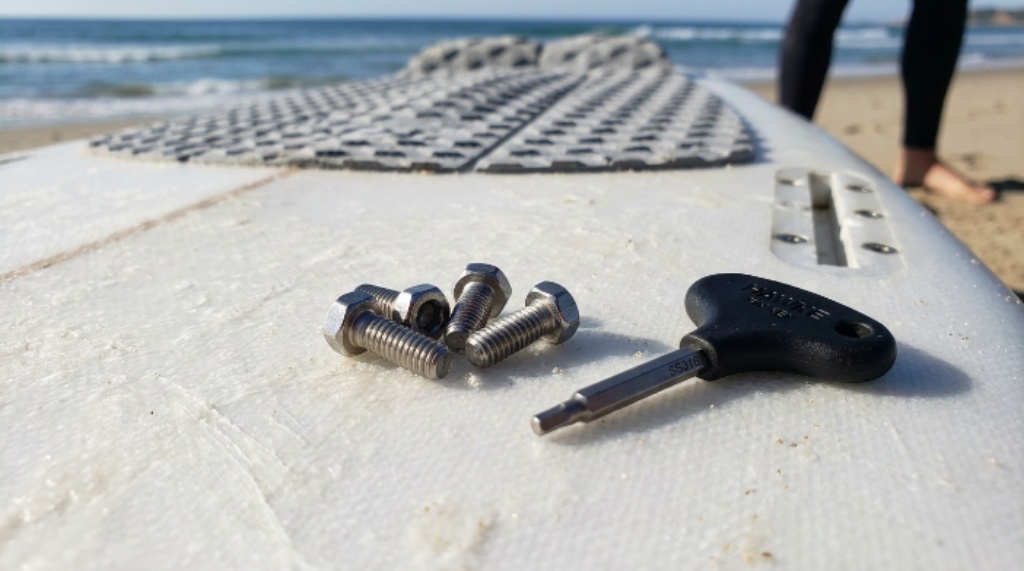
Surfing is all about connection. The connection between you, your board, and the wave beneath your feet. Most surfers obsess over board shape, fin design, and wax. However, there is one small component that holds everything together — literally. Fin screws. These tiny fasteners secure your fins to your board, and choosing the wrong ones can ruin a session or even damage your equipment. This guide will help you understand exactly what to look for so you can surf with total confidence in any condition.
Why Fin Screws Deserve More Attention Than They Get
It is easy to overlook fin screws. They are small, inexpensive, and easy to replace. Yet a loose or stripped fin can completely change how your board handles a wave. At best, a failing screw causes unwanted fin movement that throws off your turns. At worst, a fin detaches mid-ride, sending you into an uncontrolled wipeout.
Additionally, the wrong screw can strip the fin box threads over time. Replacing a fin box is far more expensive and time-consuming than simply choosing the right hardware from the start. Therefore, treating fin screws as a genuine part of your surfboard hardware setup is a smart investment in the long run.
Understanding How Fin Systems Work
Before choosing screws, it helps to understand the fin systems they are used in. There are three main fin box systems used on modern surfboards: FCS, FCS II, and Futures. Each system has its own design philosophy and screw requirements.
FCS (Fin Control System) is one of the oldest and most widely used systems. It uses two plug boxes per fin, each requiring its own screw. The system is known for its reliability and wide range of compatible fins.
FCS II is the updated version. It uses a click-in mechanism that does not require screws for everyday use. However, a screw and plate are still available as an optional security lock for surfers who prefer the extra peace of mind.
Futures is a single-tab system. Each fin uses one tab and one screw to lock into a single long box. The design is simple and creates a very solid, connected feel between the fin and the board.
Knowing which system your board uses is the first step in finding the right fin bolt types and screws for your setup.
Breaking Down Fin Bolt Types
Not all fin bolts are the same. Understanding the differences between fin bolt types helps you choose one that fits your fin box properly and holds up under pressure.
The most common bolt types used in surfboard fin systems include:
- Flat-head screws: These sit flush with the fin base and are the standard choice for most FCS and Futures boxes. They distribute pressure evenly across the fin tab.
- Phillips-head screws: Identified by the cross-shaped drive, these are widely available and easy to tighten with a standard screwdriver or fin key.
- Flat-head driver screws: These use a single straight slot and are found on some older or budget fin boxes. They are functional but less common today.
- Stainless steel security screws: These use a specialized key driver for extra tamper resistance. They are popular among rental shops and traveling surfers who want added security.
Additionally, some manufacturers have moved toward hex-drive or allen-key screws. These offer a more secure grip during tightening and reduce the risk of cam-out, which is when the screwdriver slips and damages the screw head.
Screw Sizes: What the Numbers Mean and Why They Matter
Getting the right screw size is essential. Use one that is too short and the fin will not be held securely. Use one that is too long and it can crack the base of your fin box from the inside.
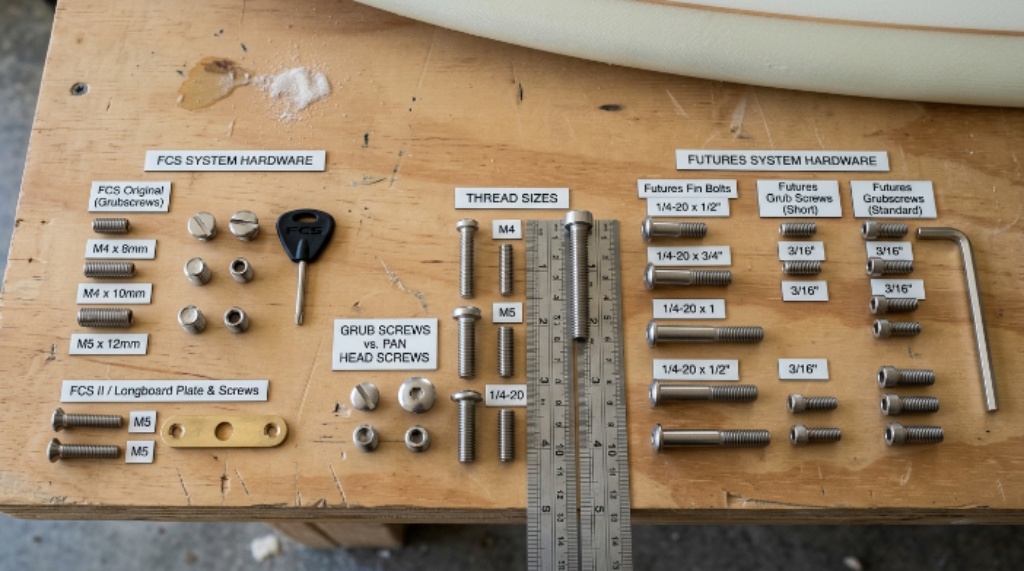
Most standard surfboard fin screws fall into a narrow size range. The most common screw sizes used in FCS boxes are M4 screws with a length of approximately 10 to 12 millimeters. Futures fin boxes typically use a slightly longer screw, often around 15 millimeters, due to the deeper single-tab design.
Therefore, before buying replacement screws, check which fin system your board uses and confirm the correct screw sizes for that specific box. Most surf shops stock the correct screws for each system, and manufacturers often list the specifications on their websites.
It is also worth noting that head diameter matters. A screw head that is too wide will not sit flush in the countersunk recess of the fin tab. A head that is too narrow will not distribute load properly. Always match the head dimensions to your fin tabs as closely as possible.
Material Choices and Why Stainless Steel Wins
Fin screws are exposed to saltwater, sand, and constant pressure. The material they are made from determines how long they will last and how well they will perform under those conditions.
Stainless steel is by far the best material for fin screws. It resists corrosion exceptionally well, maintains strength under load, and is easy to clean. Most quality surfboard hardware uses stainless steel for exactly these reasons. Additionally, stainless steel screws are less likely to seize in the fin box due to salt buildup, which makes them easier to remove when you need to swap fins.
Zinc-plated or standard steel screws are cheaper but corrode quickly in saltwater environments. They may look fine at first, but rust sets in fast. A rusted screw is difficult to remove and can permanently damage the threads of your fin box.
Titanium screws are a premium option. They are even lighter and stronger than stainless steel. However, they come at a higher price point and are not necessary for most recreational surfers. They are worth considering if you surf competitively or very frequently.
Matching Your Screws to Wave Conditions
Different wave conditions place different demands on your fin setup. In small, gentle surf, fin security is relatively easy to maintain. However, in powerful, heavy waves, the forces acting on your fins increase dramatically. Therefore, matching your hardware to your conditions is a practical step that many surfers overlook.
For small to medium waves, standard stainless steel screws tightened properly are more than adequate. Check them before each session and retighten as needed.
For large or powerful surf, consider using a thread-locking compound on your screws. This is a liquid adhesive applied to the threads before installation. It prevents vibration from slowly loosening the screw during an intense session. Make sure to use a removable-grade compound, not a permanent one, so you can still swap fins later.
For travel and surf trips, carry a small kit of spare screws in every size that matches your fin system. Losing a screw on a remote beach with no surf shop nearby is one of the most frustrating experiences in surfing. A small waterproof case with a few spare screws and a fin key costs almost nothing and solves that problem entirely.
How to Install and Maintain Fin Screws Correctly
Proper installation matters as much as choosing the right screw. Start by cleaning the fin box threads with fresh water before inserting a new screw. Any sand or salt crystals in the threads can cause galling, which is a type of friction damage that strips the threads over time.
Insert the screw by hand first to ensure it catches the threads cleanly. Then tighten with a fin key or screwdriver until snug. Do not overtighten. Over-tightening is one of the most common causes of stripped screws and cracked fin bases. The screw needs to be firm, not forced.
After each surf session, rinse your fins and fin boxes with fresh water. This removes salt and debris that accelerate corrosion. Every few sessions, remove your fins entirely, clean the boxes thoroughly, and inspect the screws for any signs of wear, rust, or damage.
Building a Complete Fin Hardware Kit
Every serious surfer should have a dedicated fin hardware kit. It does not need to be elaborate. A small, organized kit protects you from common setbacks and keeps you in the water longer.
A basic kit should include spare screws in the correct screw sizes for your fin system, a fin key or screwdriver that fits your specific screw heads, a small tube of removable thread-locking compound, and a waterproof travel case to keep everything together. Additionally, if you use more than one board with different fin systems, carry screws for each system separately so there is no confusion at the beach.
Conclusion
Fin screws are a small part of your setup, but they carry a lot of responsibility. Choosing the right fin bolt types ensures your fins stay locked in through every turn and every wipeout. Understanding screw sizes means your fin box threads stay intact for years of use. Selecting quality stainless steel surfboard hardware protects against the relentless effects of saltwater and sand.
Take a few minutes to check your screws before each session. Carry spares. Rinse everything after you surf. These simple habits will keep your fins secure and your sessions uninterrupted, no matter what conditions you are paddling out into.
Frequently Asked Questions
How often should I replace my surfboard fin screws?
There is no fixed schedule, but inspect your screws regularly for signs of rust, stripped heads, or thread damage. Replace them immediately if you notice any of these issues. As a general rule, replacing all screws once per season is a good habit for regular surfers.
Can I use any screw in a fin box, or does it need to be a specific type?
You should always use screws designed for your specific fin system. Using the wrong screw can strip the threads in your fin box, which is a much more costly repair than buying the correct hardware in the first place.
What is the best tool for tightening fin screws?
A dedicated fin key is the best tool. Most surf brands sell these inexpensively, and they are designed specifically to fit surfboard fin screws without slipping. A flat-head or Phillips screwdriver can also work, but a proper fin key gives you more control.
Why does my fin screw keep coming loose during sessions?
This is usually caused by vibration from powerful waves working the screw loose over time. Try applying a small amount of removable thread-locking compound to the screw before installation. Also, check that you are using the correct screw size for your fin box, as an incorrect fit can cause movement.
Is it safe to surf with one fin screw missing?
It depends on the fin system. In an FCS system, which uses two screws per fin, losing one screw significantly reduces fin security and is not recommended for anything beyond calm, small surf. In a Futures system, which uses a single screw, surfing without it is not safe. Always replace a missing screw before paddling out.
Related Topics:
How to Choose the Best Spinning Rod for Surf Fishing
Perfect Gift Ideas for Kids Who Love to Draw