
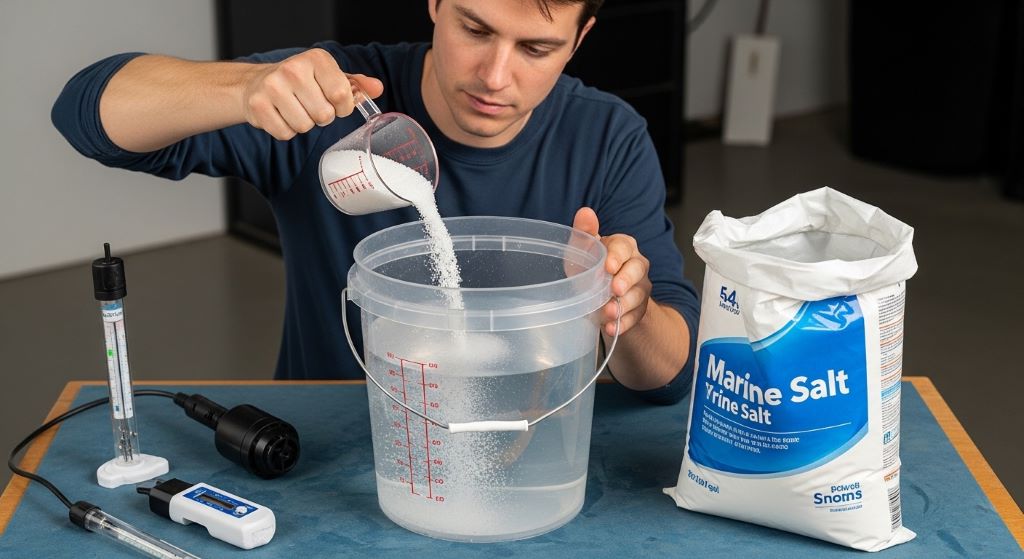
Setting up a saltwater aquarium at home is an exciting journey. The colors, the movement, and the life inside a reef tank are unlike anything else in the hobby. However, before you add your first fish or coral, you need to get the water right. And getting the water right starts with choosing the correct marine salt.
Marine salt is not just table salt dissolved in water. It is a carefully blended mix of minerals and trace elements that recreates the chemistry of the ocean. Choosing the wrong product, or using it incorrectly, can harm your aquatic life before it even has a chance to thrive. Therefore, understanding your options early on is one of the most important reef care basics you can learn.
This guide is written for beginners. It covers everything you need to know in plain, simple language. By the end, you will feel confident making your first salt purchase and mixing your first batch of seawater.
What Marine Salt Actually Is
Natural ocean water contains dozens of dissolved elements. Sodium chloride, or common salt, makes up the largest portion. However, ocean water also contains magnesium, calcium, potassium, sulfate, and many trace minerals. All of these play a role in the health of marine life.
Marine salt mixes are designed to replicate this chemistry. They come as dry powder or crystals that you dissolve in purified fresh water. The result is artificial seawater that fish, invertebrates, and corals can live in comfortably.
Not all salt mixes are identical. Different brands formulate their products with slightly different mineral ratios. Some are designed for fish-only tanks. Others are enriched with elevated calcium and alkalinity for reef tanks with corals. Therefore, your tank type will influence which product you choose.
Fish-Only Tanks Versus Reef Tanks
Before you pick a salt, you need to decide what kind of tank you are building. This is a fundamental question, and it shapes nearly every purchasing decision you will make.
A fish-only tank keeps marine fish without corals or most invertebrates. These tanks are generally easier to maintain. The salt requirements are more forgiving because fish are less sensitive to minor fluctuations in water chemistry.
A reef tank, on the other hand, includes corals and other invertebrates. These organisms are far more sensitive. They require precise levels of calcium, magnesium, and alkalinity to build their skeletons and stay healthy. Therefore, reef tanks require a higher-quality salt mix with elevated and stable mineral content.
If you are still deciding, it is worth knowing that many beginners start with a fish-only setup and upgrade later. However, if you already know you want corals, start with a reef-grade salt from day one. It will save you from switching products later and disrupting your established water chemistry.
Reading the Label: Key Parameters to Check
When you look at a bag of marine salt, the label can feel overwhelming. However, a few key numbers are all you need to focus on as a beginner.
Salinity and Specific Gravity
Salinity measures how much dissolved salt is in your water. Natural seawater has a salinity of around 35 parts per thousand. Most marine tanks are kept between 33 and 36 parts per thousand. Specific gravity is a related measurement used by many hobbyists. A reading of 1.025 to 1.026 is ideal for most marine setups.
Good salt mixes will tell you how much product to dissolve per gallon to reach the correct salinity. Always follow these instructions carefully.
Calcium and Alkalinity
Calcium is essential for coral growth. Alkalinity, sometimes called carbonate hardness or dKH, supports stable pH and helps corals form their skeletons. For reef tanks, look for a salt that mixes to a calcium level of around 400 to 450 parts per million and an alkalinity of 8 to 12 dKH.
Fish-only tanks do not require these elevated levels. Standard salt mixes will suffice for those setups.
Magnesium
Magnesium works alongside calcium and alkalinity. It helps maintain the balance between the two. Low magnesium causes calcium and alkalinity to drop faster than expected. A target level of 1250 to 1350 parts per million is appropriate for most marine tanks.
Natural Seawater Versus Synthetic Salt Mix
Some aquarium stores sell natural seawater collected from the ocean. This might sound ideal, but it comes with risks. Natural seawater can contain pathogens, parasites, and pollutants that are invisible to the naked eye. Introducing these into your tank can cause disease outbreaks that are very difficult to manage.
Synthetic salt mixes, on the other hand, are sterile and consistent. You know exactly what you are getting because the product is manufactured under controlled conditions. Additionally, synthetic mixes are available everywhere and easy to store.
Therefore, for home aquariums, synthetic salt is always the recommended choice. It is one of the core aquarium essentials that every beginner should keep stocked at home.
Popular Marine Salt Brands Worth Knowing
The market offers many reputable salt mix brands. Each has loyal followers in the aquarium community. Here is a brief overview of some well-known options:
- Instant Ocean is one of the most widely used brands in the hobby. It is reliable, affordable, and widely available. It works well for fish-only tanks and beginner setups.
- Instant Ocean Reef Crystals is the reef-grade version of the same brand. It has elevated calcium and alkalinity, making it suitable for tanks with corals.
- Red Sea Salt and Red Sea Coral Pro Salt are premium options known for their consistent mineral ratios. Coral Pro is particularly popular among reef keepers with demanding coral collections.
- Fritz RPM and Fritz Reef Pro are newer entrants that have gained strong reviews for their consistency and clean formulation.
- Tropic Marin is a German brand with a long history in marine science. It is considered one of the most precise mixes available, though it comes at a higher price point.
Each of these brands has its strengths. For a beginner, Instant Ocean or Reef Crystals is a solid starting point. As your experience grows, you can explore premium options.
How to Mix Marine Salt Correctly
Mixing salt correctly is just as important as choosing the right product. Many beginners make avoidable mistakes during this step.
Use Purified Water
Never mix marine salt with tap water. Tap water contains chlorine, chloramines, and other chemicals that are harmful to marine life. It also often contains phosphates and nitrates that fuel unwanted algae growth.
Instead, use reverse osmosis and deionized water, commonly called RO/DI water. Many fish stores sell it by the gallon. Alternatively, you can purchase a home RO/DI unit, which pays for itself quickly if you do regular water changes.
Mix in a Clean Container
Use a dedicated plastic bucket or mixing container. Avoid containers that have been used for soap, chemicals, or cleaning products. Even trace residue can harm your tank. A clean five-gallon bucket works perfectly for most home aquariums.
Aerate and Wait
Add the salt to the water, not the other way around. Then use a powerhead or air stone to circulate and oxygenate the mixture. Let it mix for at least 30 minutes. However, waiting 24 hours gives you more stable and accurate readings.
After mixing, measure the salinity with a reliable refractometer or digital salinity meter. Adjust as needed before adding the water to your tank.
Tools You Need for Measuring Salinity
Measuring salinity accurately is non-negotiable. It is one of the most fundamental aquarium essentials for any marine hobbyist.
There are three main tools available:
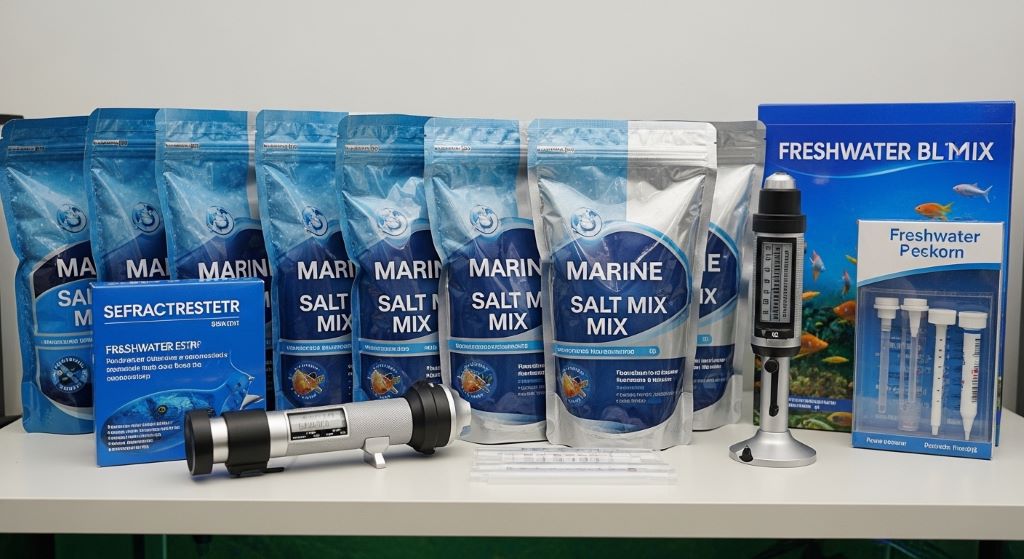
- A swing-arm hydrometer is the cheapest option. However, it is also the least accurate. Air bubbles and temperature changes can throw off the reading. Many beginners start with one, but it is worth upgrading quickly.
- A refractometer gives more accurate readings. It measures how light bends through a water sample. Look for one that is calibrated for seawater and comes with an automatic temperature compensation feature.
- A digital salinity meter is the most precise tool available. It is easy to use and gives instant readings. However, it is the most expensive of the three options.
For a beginner on a budget, a refractometer offers the best balance of accuracy and affordability. Calibrate it regularly with calibration solution to keep it reliable.
How Often Should You Change the Water?
Water changes are a key part of maintaining a healthy marine tank. They replenish trace elements that get consumed over time. They also dilute waste products that build up in the water column.
For most beginner tanks, a 10 to 15 percent water change every two weeks is a good starting point. Reef tanks may benefit from more frequent changes, especially if they are heavily stocked with corals.
Additionally, always match the temperature and salinity of your new water to the existing tank water before adding it. A sudden change in either parameter can stress or shock your animals.
Keeping a consistent water change schedule is one of the most effective reef care basics you can practice. It is simple, inexpensive, and makes a measurable difference to water quality.
Common Mistakes Beginners Make With Marine Salt
Even with the best intentions, beginners often make a few predictable mistakes. Knowing about them in advance can save you a lot of frustration.
Adding undissolved salt directly to the tank is one of the most harmful mistakes. Dry salt crystals in contact with fish or corals can cause chemical burns. Always pre-mix your saltwater before adding it to the aquarium.
Using the wrong type of salt is another frequent error. Regular table salt, cooking salt, or sea salt used for food is not appropriate for aquariums. These products contain additives like iodine and anti-caking agents that are toxic to marine life.
Inconsistent salinity levels also cause problems. Evaporation raises salinity over time because only pure water evaporates, not the dissolved salt. Therefore, top off your tank regularly with fresh RO/DI water to maintain a stable salinity level.
Finally, switching salt brands too frequently can disrupt water chemistry. Different brands have slightly different mineral ratios. Constant switching makes it harder to keep your parameters stable. Once you find a product that works, stick with it unless you have a good reason to change.
How to Store Marine Salt Properly
Proper storage extends the shelf life of your salt and preserves its chemical properties. Here are a few simple rules to follow:
- Keep the bag or bucket tightly sealed after each use. Exposure to air and humidity causes clumping and can degrade trace elements.
- Store salt in a cool, dry location away from direct sunlight. Heat and moisture accelerate chemical reactions that can reduce the effectiveness of the mix.
- Avoid storing salt near your aquarium. Splashing water or humidity from the tank can get into an open bag.
- Use a dedicated scoop for measuring. Do not use the same tools that have been in contact with your tank water, as contamination can affect the dry mix over time.
Most salt mixes have a long shelf life when stored correctly. However, if you notice clumping, discoloration, or a strange smell, it is safer to start with a fresh batch.
Conclusion
Choosing the right marine salt is one of the first and most important decisions you will make as a new saltwater aquarium keeper. It sets the foundation for everything that lives in your tank. The process does not have to be complicated.
Start by deciding what kind of tank you want: fish-only or reef. Then choose a reputable salt mix that matches those needs. Use purified RO/DI water, mix thoroughly, and always measure before adding water to your tank. Take care of your parameters consistently, and your aquarium will reward you with vibrant, healthy life.
Remember to use the right tools for measuring salinity, follow a regular water change schedule, and avoid the common beginner mistakes covered in this guide. These steps form the backbone of reef care basics that experienced aquarists rely on every day.
The saltwater hobby has a learning curve, but it is one of the most rewarding hobbies you can pursue. With the right start and the right salt, you are already well on your way.
Frequently Asked Questions
1. Can I use regular sea salt or table salt in my marine aquarium?
No. Regular sea salt and table salt contain additives such as iodine and anti-caking agents that are toxic to marine life. They also lack the essential minerals and trace elements that aquarium-grade salt mixes provide. Always use a salt mix specifically designed for marine aquariums.
2. How much marine salt do I need per gallon of water?
Most marine salt brands recommend approximately half a cup of salt per gallon of water to reach a salinity of around 1.025 specific gravity. However, this varies slightly between brands. Always follow the instructions on the packaging and measure with a refractometer or salinity meter to confirm accuracy.
3. Is there a difference between reef salt and regular marine salt?
Yes. Reef salt mixes are formulated with higher levels of calcium, magnesium, and alkalinity to support coral growth. Regular marine salt mixes are balanced for fish-only tanks. If you plan to keep corals, it is worth investing in a reef-specific salt from the beginning.
4. How long does it take to mix marine salt before it is ready to use?
Salt should be mixed for a minimum of 30 minutes with active circulation from a powerhead or air stone. However, waiting 24 hours gives you the most stable and accurate readings. Never add freshly mixed saltwater to a tank immediately after dissolving, as the chemistry may still be shifting.
5. How do I maintain salinity between water changes?
Salinity rises as water evaporates from your tank because salt stays behind while pure water evaporates. To compensate, top off your tank regularly with fresh RO/DI water rather than saltwater. This keeps salinity stable between water changes. Automated top-off systems can handle this process for you if you want a hands-free solution.
Related Topics:
Six Types of Paint And Their Applications
Look Out for Window Issues in the Winter