
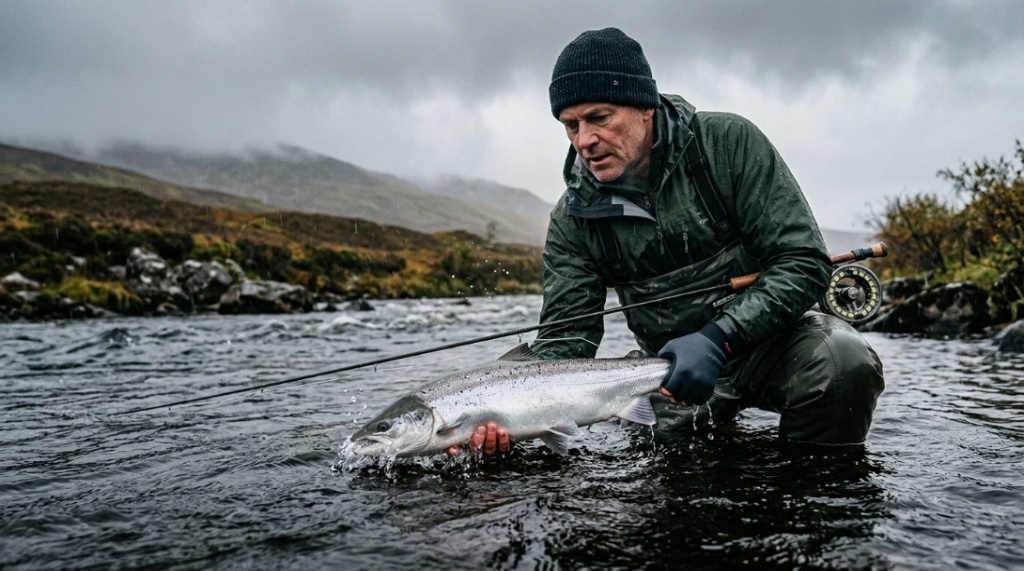
A charter captain in Kenai told me he has seen grown men cry from cold hands on his boat — not from pain exactly, but from the frustration of watching king salmon roll on the surface while their frozen fingers physically could not manage a reel. Alaska does not care about your fishing skills if your hands stop working. Choosing the right fishing gloves Alaska weather demands is not a comfort decision; it is a functionality decision that determines whether you actually catch fish or simply exist miserably in one of the world’s greatest fishing destinations. Insulated fishing gloves engineered for Alaska’s specific combination of cold rain, glacial wind, and saltwater spray keep your hands operational — maintaining the blood flow, dexterity, and tactile sensitivity that separate successful anglers from those who quit by noon. This guide matches glove specifications to Alaska’s specific regional conditions so your hands perform as well as the fishing opportunities deserve.
How Does Alaska Weather Differ From Other Cold Fishing Environments?
Alaska combines three factors simultaneously that other cold fishing regions rarely produce together: persistent precipitation (rain 60–70% of fishing days), sustained wind (10–25 mph average on coastal waters), and cold temperatures (35–50°F summer, below freezing spring/fall) — creating a wet-cold-wind combination that defeats gloves designed for any single condition alone.
Regional Alaska conditions by fishing destination:
| Region | Typical Temps | Rain Frequency | Wind | Glove Priority |
|---|---|---|---|---|
| Kenai Peninsula | 40–55°F summer | 50–60% of days | Moderate (river-sheltered) | Waterproof + moderate warmth |
| Southeast (Juneau, Sitka) | 45–60°F summer | 70–80% of days | Light-moderate | Maximum waterproofing priority |
| Bristol Bay | 40–55°F summer | 40–50% of days | Strong (exposed tundra) | Wind protection + waterproof |
| Kodiak Island | 40–55°F summer | 60–70% of days | Strong (coastal exposure) | Maximum protection all categories |
| Interior (Fairbanks region) | 55–75°F summer | 20–30% of days | Light | Lighter gloves adequate, rain backup |
The universal Alaska truth: conditions change rapidly. A morning that starts sunny and 55°F can become rainy and 38°F by afternoon. Your gloves must handle the worst likely condition of the day, not just the conditions present when you leave camp.
What Features Are Non-Negotiable for Alaska Fishing Gloves?
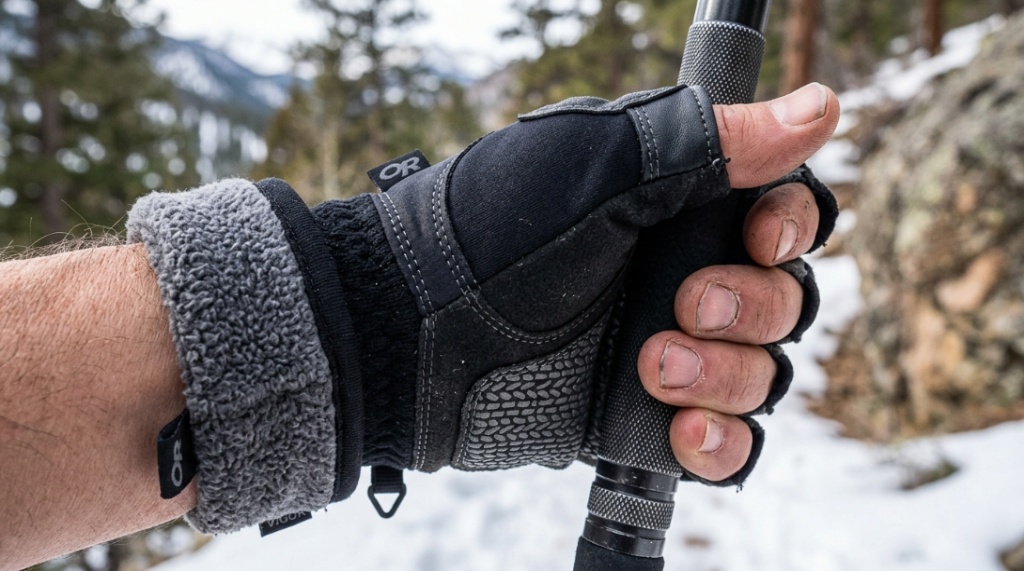
Three features are absolutely non-negotiable for Alaska: complete waterproofing that survives sustained rain (not just splash resistance), windproof construction that blocks Alaska’s persistent coastal and river-valley winds, and synthetic insulation that maintains warmth even when internal moisture accumulates during long fishing days.
Non-negotiable specifications:
- Waterproofing (non-negotiable): Alaska rain is not occasional showers — it is 8–12 hour steady precipitation. Gloves must maintain dry interiors for hours of continuous rain exposure. Only neoprene or sealed-membrane construction achieves this. DWR coatings fail within 1–2 hours of Alaska rain.
- Wind blocking (non-negotiable): Alaska wind strips heat from hands faster than cold air alone. Wind penetrating through breathable fabrics eliminates insulation effectiveness. The outer layer must be completely windproof — neoprene, sealed softshell, or solid membrane.
- Wet-warm insulation (non-negotiable): Despite best waterproofing, internal moisture accumulates during 8+ hour fishing days from perspiration and occasional water entry during fish handling. Insulation must maintain warmth when damp. Only synthetic materials (Thinsulate, PrimaLoft, neoprene itself) qualify. Fleece and down fail catastrophically when wet.
Negotiable features (nice to have but not critical):
- Touchscreen compatibility (useful for phones/fish finders but not essential)
- Carabiner attachment loop (convenient for drying but not performance-critical)
- Reflective elements (safety feature for low-light but not warmth-related)
- Camo patterns (aesthetic preference with zero performance impact)
How Do You Choose Between Neoprene and Membrane-Based Gloves for Alaska?
Neoprene provides better inherent waterproofing and wet-insulation at lower cost, while membrane-based gloves (Gore-Tex/eVent) offer superior breathability and dexterity at higher cost — most Alaska anglers choose neoprene for reliability and value, with membrane gloves preferred by those who prioritize dexterity for fly fishing.
Decision framework:
- Choose neoprene (3mm) if:
- Budget is under $60
- You fish in sustained heavy rain and spray
- Warmth priority exceeds dexterity priority
- You spin fish, troll, or use techniques requiring less fine dexterity
- Reliability matters more than comfort refinement
- Choose membrane-based if:
- Budget allows $60–$120
- You fly fish (requires maximum finger sensitivity for line management)
- Dexterity priority exceeds maximum warmth
- You run warm and perspiration management matters more than insulation
- You fish shorter sessions (under 6 hours) where breathability prevents moisture buildup
For most Alaska visitors on guided fishing trips (spin fishing, combat fishing, charter boats), neoprene at $35–$55 provides the best value and most reliable performance. Fly anglers working technical water benefit from spending more on membrane-based options that allow the finger sensitivity fly line management demands.
What Is the Ideal Alaska Fishing Glove Kit?
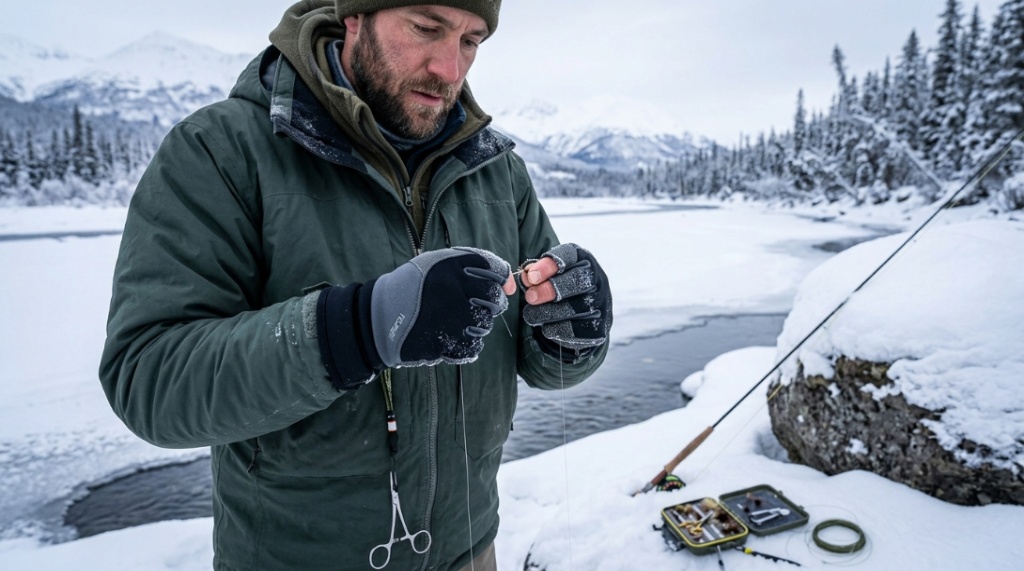
The complete Alaska fishing glove kit includes: primary neoprene fishing gloves (daily use), backup pair (identical or similar), thin liner gloves (for bait/fly changes), waterproof storage bag, and Aquaseal repair adhesive — total investment $80–$130 for a system that handles any Alaska condition for a full week of fishing.
- Primary pair ($35–$55): 3mm neoprene, fold-back fingers, textured palm. Your workhorse all-day gloves.
- Backup pair ($35–$55): Same or similar spec. Rotated daily for drying. Emergency replacement if primary pair fails.
- Liner gloves ($10–$15): Thin merino or synthetic. Worn alone during brief dexterity tasks or inside outer gloves for extra warmth on severe days.
- Dry bag ($5–$10): Keeps backup pair guaranteed dry regardless of conditions. A wet backup defeats its entire purpose.
- Repair kit ($8): Aquaseal adhesive repairs seam separations and punctures overnight. Saves a glove that would otherwise be garbage mid-trip.
Total system cost: $93–$143. Protects your hands for a full week of Alaska fishing in any weather condition the state produces. Compare to a single day of a guided Alaska fishing trip ($400–$800) — gloves that fail and force you off the water early waste far more money than the glove system costs.
For tested budget options that handle Alaska’s full range of conditions, the best fishing gloves reviewed for Alaska conditions provides week-long performance evaluations from real Alaska fishing trips — confirming which budget options deliver on their promises when the weather turns ugly and quitting is not an option.
Conclusion
Choosing the right fishing gloves for Alaska’s harsh weather means accepting that Alaska conditions are harsher than most anglers expect — persistent rain, constant wind, and cold temperatures combine to defeat gloves designed for gentler environments. Non-negotiable features include: complete waterproofing (neoprene or sealed membrane), windproof construction, and synthetic insulation that works when wet. A two-pair rotation system at $35–$55 per pair provides reliable all-week hand protection for any Alaska fishing region and season.
Do not let your hands be the reason you leave fish in Alaska’s waters. The fishing opportunities are world-class; your hand protection should match. Invest $80–$130 in a complete glove system, pack backups in sealed dry bags, and focus on the fishing rather than your fingers. Alaska rewards prepared anglers — and punishes those who underestimate its weather with miserable, shortened trips that could have been legendary.
Which Alaska fishing destination challenged your gloves the most — and what worked when conditions got serious? Share your Alaska glove story below.
Frequently Asked Questions
What is the single most important feature for Alaska fishing gloves?
Waterproofing. Alaska rains 50–80% of fishing days depending on region. Cold hands from rain exposure end more Alaska fishing days than any other factor. A warm glove that leaks is useless within 30 minutes. A waterproof glove that is only moderately warm keeps you fishing all day. Prioritize waterproofing above all other features.
Can I fish Alaska in summer without gloves?
On rare warm, calm, dry days (15–25% of Alaska summer), yes. On typical Alaska summer days (45–55°F with rain probability), you need gloves for comfort and hand function. Bring gloves on every Alaska fishing day regardless of morning conditions — weather changes in hours and having gloves available prevents a miserable surprise.
Are neoprene gloves too hot for Alaska summer fishing?
Rarely. Alaska’s 45–55°F summer temperatures with wind and rain keep 3mm neoprene comfortable throughout the day. On the occasional 65°F+ day, you can switch to lighter gloves or go bare-handed. Overheating in fishing gloves is almost never an Alaska problem — being too cold is the consistent challenge.
Should I bring gloves for float plane and boat transfers in Alaska?
Yes — float plane and open boat rides in Alaska expose hands to significant wind chill and water spray. Even short transfers (15–30 minutes) in open boats can numb unprotected hands before you reach the fishing spot. Wear your fishing gloves during all water-based transportation in Alaska.
Do Alaska fishing lodges provide loaner gloves?
Some lodges provide basic gloves for guests who forget or bring inadequate gear, but quality and fit vary widely. Never rely on lodge-provided gloves for a trip you have invested $3,000–$10,000 to take. Bring your own properly fitted, tested gloves. Lodge loaners are emergency backup, not a gear strategy.
How do I keep my hands warm between fish on Alaska rivers?
Between fish (during drift or walk-and-wade pauses): clench fists repeatedly inside gloves to promote blood flow, tuck hands in armpits for 30-second warming bursts, use chemical hand warmers on severe days, and keep hands out of water unless actively fighting or landing a fish. Constant unnecessary water contact is the fastest path to cold hands in Alaska.