
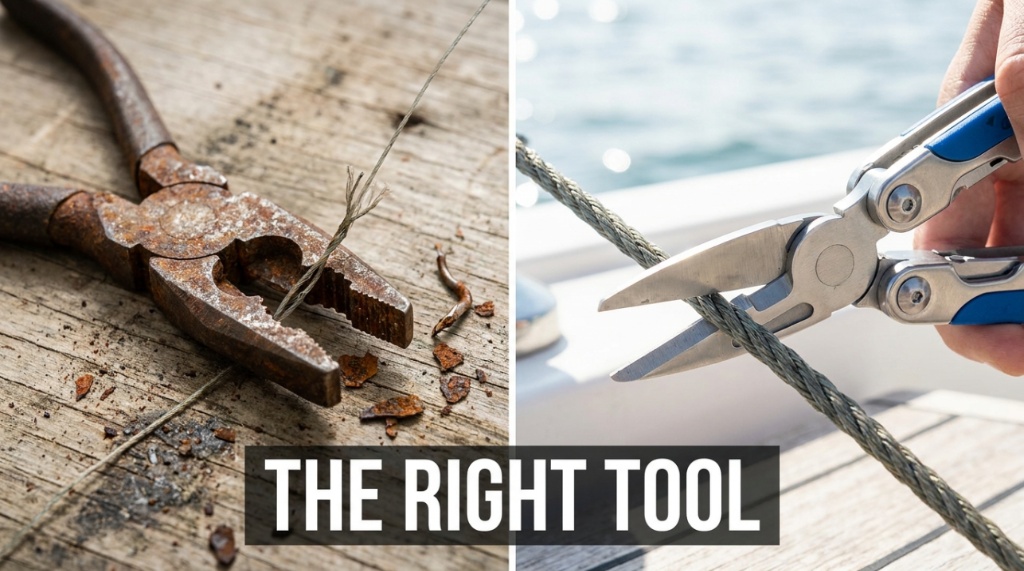
An angler in Florida bought a flashy 15-function fishing multi tool, excited by all the gadgets — then discovered on the water that the pliers couldn’t crimp, the line cutter dulled after a week, and the whole thing rusted within a month in saltwater. He’d been seduced by feature count when he should have focused on the few functions he’d actually use and the material that would survive his environment. Avoiding the wrong fishing multi tool means understanding that more functions don’t equal more value — the right tool nails the core functions you genuinely need (cutting line, removing hooks, crimping) with quality construction that lasts, rather than cramming in gimmicks that fail. As one of the true fishing gear essentials, a multi tool deserves careful selection based on real use, not marketing hype.
The fishing tool market is flooded with options ranging from $10 gimmicks to $80 premium tools, and the feature lists can be dazzling — but many anglers waste money on tools that disappoint on the water. The mistakes are predictable: prioritizing function count over function quality, ignoring corrosion resistance (fatal in saltwater), and overlooking the ergonomics that matter during actual use. Understanding these common pitfalls helps you choose a tool that performs when it counts. This guide reveals exactly how to avoid buying the wrong fishing multi tool so your money buys reliable performance, not regret.
What Are the Most Common Mistakes When Buying a Fishing Multi Tool?
The most common mistakes are prioritizing function count over function quality, ignoring corrosion resistance, overlooking ergonomics, buying for hypothetical needs, and choosing based on price alone — each leading to a tool that disappoints during actual fishing.
The five costly mistakes:
- Function count obsession: Buying a 15-function tool when you’ll use 4. More functions often mean lower quality per function and more failure points.
- Ignoring corrosion resistance: Choosing a tool without considering whether it’ll survive your environment. Saltwater destroys non-resistant tools fast.
- Overlooking ergonomics: A tool that’s uncomfortable or awkward to use gets left in the tackle box. Grip and handling matter.
- Buying for hypothetical needs: Paying for functions you imagine needing rather than the ones you’ll actually use regularly.
- Price-only decisions: Choosing the cheapest option (false economy that fails) or assuming the most expensive is best (often overpriced for features you don’t need).
Why Do More Functions Not Always Mean a Better Tool?
More functions often mean lower quality per function, more mechanical failure points, added weight and bulk, and a higher price for capabilities you won’t use — a 4-function tool that excels beats a 15-function tool that’s mediocre at everything.
The problem with function overload:
- Quality dilution: Manufacturers cramming many functions into one tool often compromise the quality of each. Core functions suffer to accommodate gimmicks.
- More failure points: Each moving part, blade, and mechanism is a potential failure. Fewer, better-built functions are more reliable.
- Bulk and weight: Multi-function tools get heavy and bulky, making them awkward to carry and use.
- Paying for unused features: That fish scaler, bottle opener, and screwdriver you’ll never use still add to the price.
- Compromised ergonomics: Designing around many functions often hurts the comfort and usability of the functions that matter.
The smarter approach: identify the 3–5 functions you’ll actually use regularly (typically line cutting, hook removal, crimping, split-ring opening), then find a tool that does those exceptionally well. A focused, quality tool outperforms a feature-packed mediocre one every time on the water.
Which Functions Actually Matter in a Fishing Multi Tool?
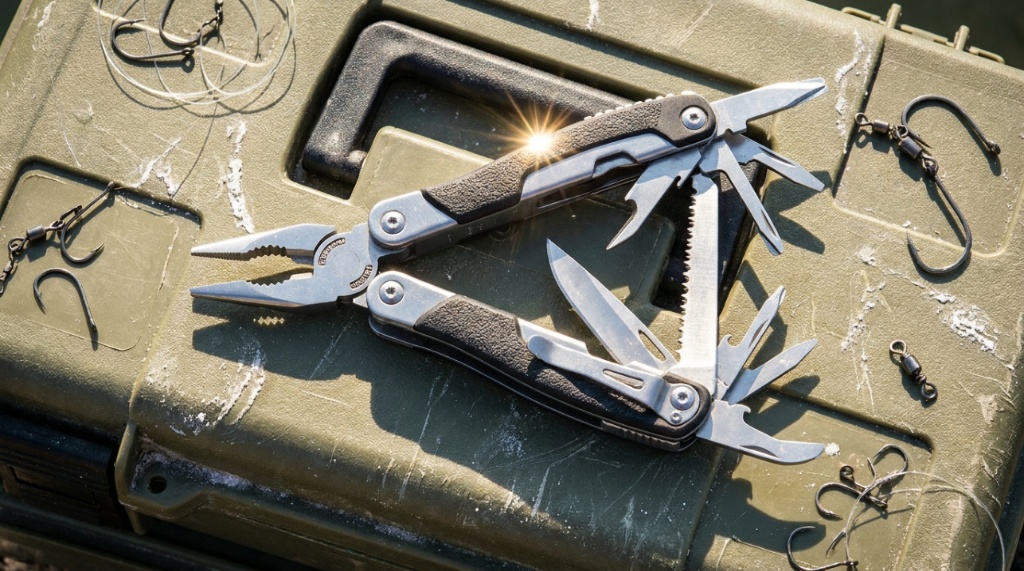
The functions that matter most are line cutting, hook removal/disgorging, split-ring pliers, crimping, and gripping — these cover the majority of on-water tasks. Functions like scalers, screwdrivers, and bottle openers are rarely essential.
Functions ranked by real-world importance:
| Function | Importance | Why |
|---|---|---|
| Line cutter | Essential | Used constantly; must cut braid and mono cleanly |
| Hook removal/needle nose | Essential | Safely removes hooks from fish and snags |
| Split-ring opener | High | Changing lures and hooks quickly |
| Crimping | High (some anglers) | Securing leaders and rigs |
| Gripping pliers | High | General handling, bending wire |
| Fish scaler | Low | Rarely used; better done with dedicated tool |
| Screwdriver/bottle opener | Very low | Gimmicks that add little fishing value |
Why Is Corrosion Resistance So Critical?
Corrosion resistance is critical because fishing tools constantly contact water — and in saltwater especially, non-resistant tools rust, seize, and fail within weeks. The material (stainless steel, titanium, or coated metal) determines whether your tool lasts months or years.
The corrosion problem:
- Saltwater is brutal: Salt accelerates corrosion dramatically. A non-resistant tool can show rust after a single saltwater trip and seize within weeks.
- Freshwater still corrodes: Even freshwater and humidity cause rust over time in non-resistant tools.
- Seized mechanisms: Corrosion locks up pliers and cutting mechanisms, rendering the tool useless.
- Dull cutters: Rust degrades cutting edges, making line cutting ragged and difficult.
Material recommendations:
- Titanium: Best corrosion resistance, lightweight, premium price. Ideal for serious saltwater anglers.
- Stainless steel (marine grade): Excellent resistance, durable, reasonable price. The practical choice for most.
- Aluminum (anodized): Good resistance, lightweight, affordable. Decent for moderate use.
- Coated carbon steel: Resistance depends on coating integrity. Risky once the coating chips.
- Uncoated carbon steel (avoid for saltwater): Rusts quickly. Only acceptable for occasional freshwater use with diligent care.
How Do You Know if a Fishing Multi Tool Will Last?
Judge durability by material (stainless/titanium for corrosion resistance), construction quality (solid joints, smooth mechanisms), cutter quality (replaceable blades are a plus), and brand reputation backed by warranty and verified reviews.
Durability indicators:
- Corrosion-resistant material: Stainless steel or titanium construction. The #1 longevity factor for fishing tools.
- Solid construction: No wobbly joints, smooth-operating mechanisms, tight tolerances. Cheap tools feel loose and rough.
- Quality cutters: Sharp, hardened cutting edges. Replaceable cutter blades extend tool life significantly.
- Smooth spring action: Pliers should open and close smoothly. Sticky or stiff action indicates poor quality or impending corrosion issues.
- Warranty: Quality brands offer warranties. A good warranty signals manufacturer confidence in durability.
- Verified reviews: Look for reviews mentioning long-term durability and corrosion resistance after real use.
Does Ergonomics Matter in a Fishing Multi Tool?
Yes — ergonomics significantly affects usability. A tool that’s uncomfortable, slippery when wet, or awkward to operate one-handed gets used less and performs worse, regardless of its features or materials.
Ergonomic factors that matter:
- Grip texture: Must be secure when wet and with slimy hands. Smooth metal handles become dangerously slippery.
- Comfortable handle shape: Fits your hand without pressure points during extended use.
- One-handed operation: Many fishing tasks require one hand (other hand holding fish/rod). The tool should work one-handed where possible.
- Weight balance: Well-balanced tools feel natural; poorly balanced ones feel awkward and tiring.
- Sheath/lanyard: A good sheath and lanyard attachment prevent dropping the tool overboard — a critical practical consideration.
Ergonomics is often overlooked in favor of function lists and materials, but a tool you can’t comfortably use when your hands are wet and cold is a tool that fails when you need it. Prioritize comfortable, secure handling alongside function and durability.
How Do You Match a Fishing Multi Tool to Your Type of Fishing?
Match the tool to your fishing by considering your environment (saltwater needs corrosion resistance), target species (big fish need heavy-duty tools), and techniques (lure anglers need split-ring pliers, bait anglers need disgorgers).
Matching by fishing type:
- Saltwater fishing: Prioritize titanium or marine-grade stainless steel for corrosion resistance. Heavy-duty for larger species. Crimping for leaders.
- Freshwater bass/lure fishing: Split-ring pliers essential for changing lures. Good line cutters for braid. Moderate corrosion resistance acceptable.
- Bait/bottom fishing: Long-nose pliers or disgorger for deep hook removal. Sturdy gripping.
- Fly fishing: Fine-tip tools for small flies and tippet. Precision over brute strength.
- Big game/offshore: Heavy-duty crimping, strong cutters for heavy line, maximum corrosion resistance.
- Casual/mixed fishing: A versatile mid-range tool with core functions and good corrosion resistance.
What’s the Right Budget for a Quality Fishing Multi Tool?
Budget $20–$50 for a quality fishing multi tool with good corrosion resistance and reliable core functions. Below $15, quality and corrosion resistance suffer. Above $60, you’re often paying for premium materials or brand prestige beyond most anglers’ needs.
Price tier guide:
- Under $15: Risky. Often poor corrosion resistance and dull cutters. Fine for very occasional freshwater use only.
- $20–$50 (sweet spot): Marine-grade stainless steel, reliable core functions, decent ergonomics. Best value for most anglers.
- $50–$80: Premium materials (titanium), replaceable cutters, superior construction. Worth it for frequent saltwater anglers.
- $80+: Top-tier brands (Van Staal, etc.), exotic materials. For serious saltwater enthusiasts who demand the best.
For most anglers, a $20–$50 tool with marine-grade stainless steel construction and quality core functions delivers everything needed. Reserve premium spending for frequent saltwater anglers who genuinely benefit from titanium’s superior corrosion resistance and the longevity of replaceable-blade designs.
Conclusion
Avoiding the wrong fishing multi tool comes down to resisting the seduction of feature count and focusing instead on what actually matters: quality core functions (line cutting, hook removal, crimping), corrosion-resistant material matched to your environment, comfortable ergonomics, and durable construction. A focused 4-function tool that excels beats a 15-function tool that’s mediocre at everything — and a tool that survives your saltwater environment beats one that rusts in weeks.
Identify the functions you’ll genuinely use, prioritize stainless steel or titanium for corrosion resistance, ensure the tool feels secure in wet hands, and match it to your specific fishing type. Budget $20–$50 for quality without overpaying for premium features you don’t need. Make these your buying criteria instead of function count and flashy marketing, and you’ll choose a tool that performs reliably for years — turning one of your fishing gear essentials into a trusted companion rather than a tackle-box disappointment.
What type of fishing do you do and what functions do you actually use? Share in the comments — I’ll help you identify the right tool and steer you away from the gimmicks that waste money. Picking a tool that slips out of your hands when wet is an easy mistake to make, especially when fishing in freezing, damp climates. To maintain a secure grip and protect your hands while managing heavy gear, it is equally important to pair your equipment with the Right Fishing Gloves for Alaska’s Harsh Weather. Having the right combination of weatherproof handwear and an ergonomic tool ensures you can safely crimp sleeves or cut lines without losing feeling in your fingers.
Frequently Asked Questions
What functions matter most in a fishing multi tool?
Line cutting, hook removal (needle-nose tips), split-ring opening, crimping, and gripping cover the majority of on-water tasks. These are the functions you’ll actually use regularly. Functions like fish scalers, screwdrivers, and bottle openers are rarely essential and often add bulk without value.
Why does my fishing multi tool keep rusting?
Because it’s not made from corrosion-resistant material. Saltwater especially destroys non-resistant tools within weeks. Choose marine-grade stainless steel or titanium for corrosion resistance. Also rinse your tool with fresh water after every use, especially in saltwater, to extend its life.
Are expensive fishing multi tools worth it?
Premium tools ($50–$80+) with titanium construction and replaceable cutters are worth it for frequent saltwater anglers who need maximum corrosion resistance and longevity. For most anglers, a $20–$50 marine-grade stainless steel tool delivers everything needed without the premium markup.
How many functions should a fishing multi tool have?
Focus on quality, not quantity. A tool with 4–6 well-built core functions (cutting, hook removal, split-ring, crimping) outperforms a 15-function tool that’s mediocre at everything. More functions mean more failure points, added bulk, and often compromised quality per function.
What material is best for a fishing multi tool?
Titanium offers the best corrosion resistance and is lightweight but premium-priced. Marine-grade stainless steel is the practical choice — excellent resistance, durable, and reasonably priced. Avoid uncoated carbon steel for saltwater, as it rusts quickly. Match the material to your fishing environment.
How do I choose a fishing multi tool for saltwater?
Prioritize corrosion resistance above all — choose titanium or marine-grade stainless steel. Ensure quality crimping for leaders, strong cutters for heavy line, and a secure grip for wet hands. Budget $30–$80 depending on how frequently you fish saltwater. Always rinse with fresh water after use.
What’s the most common fishing multi tool buying mistake?
Prioritizing function count over function quality. Anglers get seduced by 15-function tools when they’ll use only 4–5 functions. This leads to lower quality per function, more failure points, and wasted money on gimmicks. Focus on a tool that does your core functions exceptionally well.


