
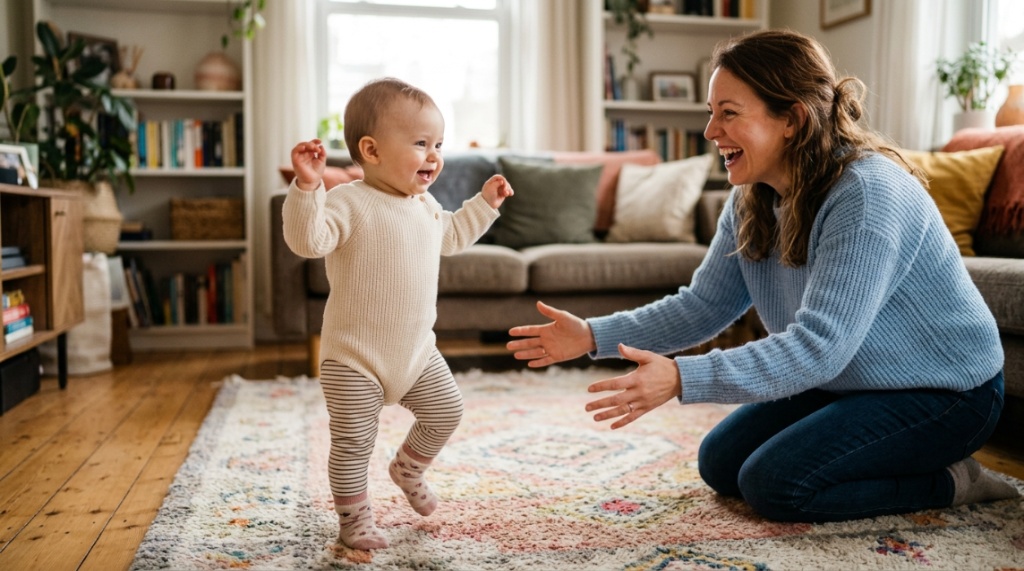
You have watched your little one pull up on the coffee table for weeks. Now they cruise along the couch with a proud grin, but you are wondering if there is more you can do to speed up those first independent steps. Every parent wants to celebrate that milestone sooner, yet the nagging worry about tumbles, bumps, and developmental risks always lingers.
The challenge is real: how do you encourage faster walking without compromising safety? The answer lies in choosing the right support tools—specifically understanding baby walking toys baby walker safety—and using evidence-based techniques that respect your child’s natural rhythm. This guide will walk you through practical, safe strategies to help your baby walk faster while keeping them protected every step of the way.
What Is the Safest Way to Encourage Faster Walking?
The safest approach combines tummy time, assisted standing, and push toys—not traditional baby walkers. When you focus on building core strength and balance first, walking happens naturally and more quickly. Skip seated walkers with wheels, which can delay walking and pose fall risks. Instead, use stationary activity centers and push-walkers that require your baby to stand and propel themselves. Always stay within arm’s reach during practice sessions to catch wobbly moments before they become falls.
Build a Strong Foundation with Floor Play
Walking begins long before the first step. Time spent on the floor—tummy time, rolling, crawling—develops the neck, back, shoulder, and hip muscles your baby needs to stand and walk. Aim for at least 30 minutes of supervised floor play spread throughout the day. Place toys just out of reach to encourage scooting and crawling, which naturally strengthens the legs.
Use Push Toys Correctly
Push-walkers with sturdy handles and non-slip wheels are excellent tools. They provide stability while allowing your baby to practice weight shifting and stepping. Avoid toys that tip easily or have small parts. Demonstrate pushing slowly at first, then let your child explore at their own pace. Never leave a baby unsupervised with a push toy near stairs or uneven surfaces.
Why Do Traditional Baby Walkers Delay Walking?
Traditional seated baby walkers can actually slow down walking development. In a walker, babies sit in a harness that supports their weight, so they never fully engage their leg and core muscles needed for independent walking. The walker also lets them move before they are ready, bypassing crucial stages like crawling and pulling up. Studies show that babies who use walkers may walk one to two months later than those who do not. Additionally, walkers are responsible for thousands of emergency room visits each year due to falls down stairs and tip-overs.
What the Research Says
Pediatricians and child development experts widely advise against traditional walkers. The American Academy of Pediatrics has called for a ban on their sale due to safety concerns. Walkers give babies mobility before they have the strength or coordination to control it, leading to dangerous accidents. Even with supervision, a child can roll toward a staircase or fireplace faster than a parent can react.
Safer Alternatives to Traditional Walkers
- Stationary activity centers: These let babies bounce and spin without rolling away.
- Push-walkers: Require standing and stepping, building real walking skills.
- Ride-on toys without pedals: Encourage leg movement while seated low to the ground.
How Can I Strengthen My Baby’s Legs for Walking?
Simple daily exercises build the leg strength needed for walking. Start with assisted standing while holding a stable surface, then progress to supported squatting and stepping. Practice weight shifting from one foot to the other while you hold your baby’s hands. Bouncing gently on your lap also strengthens leg muscles. These activities are safe, natural, and can be done during diaper changes or playtime.
Step-by-Step Leg Strengthening Routine
- Assisted standing: Hold your baby under the arms while they stand on a soft mat. Let them bear weight on their legs for 10–15 seconds at a time.
- Supported squatting: While standing, help your baby bend and straighten their knees. This builds the quadriceps and glutes needed for walking.
- Weight shifting: Gently rock your baby from side to side while they stand, encouraging them to shift weight onto one leg.
- Step practice: Hold both hands and guide your baby through a few steps. Gradually reduce support as they gain confidence.
Which Baby Walking Toys Are Both Effective and Safe?
The best baby walking toys combine stability, non-slip features, and developmental benefits. Look for push-walkers with wide bases, rubberized wheels that grip floors, and adjustable speed settings. Activity tables that convert into push-walkers offer long-term value. Avoid toys with sharp edges, small detachable parts, or unstable designs. Always check weight limits and age recommendations before purchasing.
Features to Prioritize
| Feature | Why It Matters |
|---|---|
| Wide, sturdy base | Prevents tipping during use |
| Rubber or non-slip wheels | Reduces sliding on hard floors |
| Adjustable speed control | Slows the toy as your baby learns |
| Removable activity panel | Offers play options as your baby grows |
| Easy-grip handle | Provides stable hand support |
Can Barefoot Walking Help My Baby Walk Faster?
Yes, barefoot walking is one of the best ways to help your baby walk faster. Bare feet allow toes to grip the floor, which improves balance and builds foot muscles. Without shoes, your baby can feel the ground and adjust their steps more naturally. Let your baby walk barefoot on safe, clean surfaces like carpet, foam mats, or hardwood floors. Once they start walking outdoors, choose soft-soled shoes that mimic being barefoot.
While floor time is critical for developing the leg muscles needed for those first steps, your child still needs dedicated rest periods. Transitioning them from active play to a relaxing session in a comfortable seat—as detailed in our Ingenuity Baby Swing Review—gives their little legs a break while keeping them safely contained.
The Science Behind Barefoot Development
Walking barefoot sends sensory information from the feet to the brain, helping your baby learn how to correct their balance in real time. This sensory input is critical for developing proper gait and preventing flat feet. Even short periods of barefoot walking each day accelerate coordination and confidence. Keep the floor free of hazards and at a comfortable temperature.
When Should I Be Concerned About My Baby’s Walking Development?
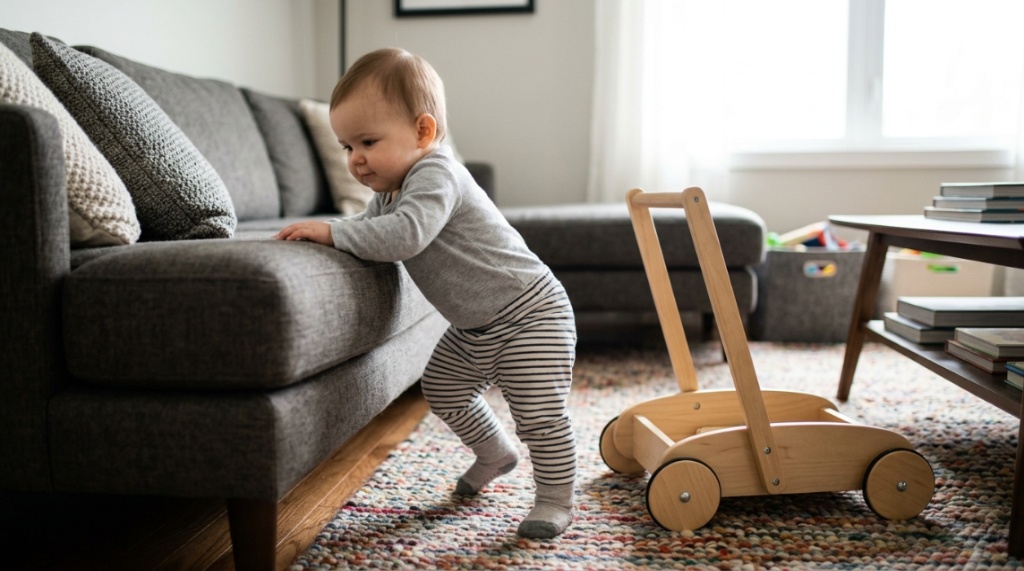
Most babies take their first steps between 9 and 15 months. If your baby is not walking by 18 months, consult your pediatrician. Earlier signs that warrant attention include not pulling to stand by 12 months, cruising only on one side, or walking solely on tiptoes. Premature babies may reach milestones slightly later, but your doctor can assess if physical therapy might help. Remember that every child develops at their own pace, and early intervention makes a significant difference.
Red Flags to Watch For
- No interest in standing by 12 months
- Unable to bear weight on legs by 12 months
- Walks exclusively on toes after 18 months
- Frequent falling beyond 18 months
- Limping or favoring one leg
How Do I Baby-Proof for a Walker That Is Learning to Walk?
Baby-proofing becomes critical once your child starts cruising or walking. Cover sharp corners with foam guards, secure furniture that could tip, and install baby gates at the top and bottom of stairs. Lock cabinets within reach and move breakable items higher. Use non-slip rugs or pads to prevent sliding. Remove low tables with glass tops and ensure all electrical cords are out of the way. A safe environment allows your baby to practice walking without constant redirection.
Room-by-Room Checklist
- Living room: Anchor bookshelves and TVs, cover outlets, remove small objects.
- Kitchen: Lock lower cabinets, move knives and cleaners high, use stove knob covers.
- Bedroom: Secure dressers to the wall, lower the crib mattress, remove loose bedding.
- Bathroom: Use toilet locks, keep toiletries out of reach, place non-slip mats.
What Role Does Tummy Time Play in Walking Development?
Tummy time directly influences walking ability by strengthening the core, back, and neck muscles that control posture and balance. Babies who spend regular time on their stomachs develop the muscle tone needed to pull up, stand, and eventually walk. Start tummy time from birth with short sessions and gradually increase duration. Place toys at different angles to encourage reaching and twisting, which further engages the core. Even after your baby learns to roll over, continue tummy time daily.
Tummy Time Milestones That Lead to Walking
- Lifting head (2 months): Builds neck strength for upright posture.
- Pushing up on arms (4 months): Develops shoulder and upper back muscles.
- Rolling over (5–6 months): Strengthens rotational core muscles.
- Sitting unsupported (6–8 months): Stabilizes the trunk for standing.
- Crawling (7–10 months): Coordinates arms and legs for walking patterns.
Is It Safe to Use a Baby Walker with Wheels for Practice?
No, wheeled baby walkers are not safe for walking practice and are not recommended by pediatricians. They allow babies to move too quickly for their developing coordination, increasing the risk of falls down stairs, burns from reaching hot surfaces, and poisoning from accessing cabinets. While they may entertain a baby temporarily, they do not teach walking skills. Instead, choose stationary activity centers or push-walkers that require standing and stepping. If you already own a wheeled walker, stop using it immediately and dispose of it safely.
How Many Hours of Practice Does a Baby Need to Walk Faster?
Quality matters more than quantity when it comes to walking practice. Short, frequent sessions of 5–10 minutes throughout the day are more effective than one long session. Aim for a total of 30–60 minutes of supported standing, cruising, and stepping practice daily. These sessions should be playful and positive—never force a baby to practice when they are tired or fussy. Follow your baby’s cues and build practice into natural routines like after naps or before bath time.
Sample Daily Walking Practice Schedule
- Morning playtime: 10 minutes of floor play with toys positioned to encourage pulling up.
- Midday: 10 minutes of supported standing and bouncing on your lap.
- Afternoon: 10 minutes of cruising along furniture with verbal encouragement.
- Evening: 10 minutes of push-walker practice with you nearby for stability.
Frequently Asked Questions
At what age do most babies start walking?
Most babies take their first steps between 9 and 15 months. Some walk as early as 8 months, while others wait until 16 or 17 months. Both ranges are normal.
Does using a baby walker cause bow legs?
No, baby walkers do not cause bow legs. Bow legs are a normal part of infant development and typically correct themselves by age two. However, walkers can delay walking and increase injury risk.
Can I use a jumper instead of a walker to help my baby walk?
Jumpers strengthen leg muscles but do not teach walking skills because they do not require standing or weight shifting. Use a jumper for fun in short sessions, but rely on push-walkers and floor play for walking practice.
Should I buy shoes for my baby before they walk?
No, shoes are unnecessary before walking. Barefoot practice improves balance and foot strength. Once your baby walks outdoors, choose soft-soled shoes with flexible soles.
What if my baby only walks on tiptoes?
Walking on tiptoes is common in early walkers and often resolves on its own. If tiptoe walking persists beyond 18 months or is done exclusively, consult your pediatrician to rule out muscle tightness or sensory issues.
How can I encourage my baby to let go of furniture while cruising?
Place a favorite toy or snack a short distance from where they are cruising. Encourage them to take one or two steps toward it without support. Celebrate every attempt, even if they fall back to cruising.
Is it safe to use a baby walker on carpet?
No, walkers on carpet can tip more easily and may still roll toward stairs or hazards. No surface makes wheeled walkers safe. Use stationary alternatives instead.
Conclusion
Helping your baby walk faster does not require risky gadgets or rushed timelines. The most effective path involves building strength through floor play, using safe push toys, and allowing plenty of barefoot practice. By understanding which baby walking toys baby walker safety principles to follow, you can create an environment where your little one gains confidence at their own pace. Skip the traditional wheeled walkers and focus on tools that promote standing, balancing, and stepping naturally. Stay patient, stay close, and celebrate every wobbly step as the meaningful progress it is. Your baby will walk when they are ready—and with your smart, safety-first approach, they will take those first steps with strength and joy.
Focus Keyphrase: baby walking toys baby walker safety
Meta Description: